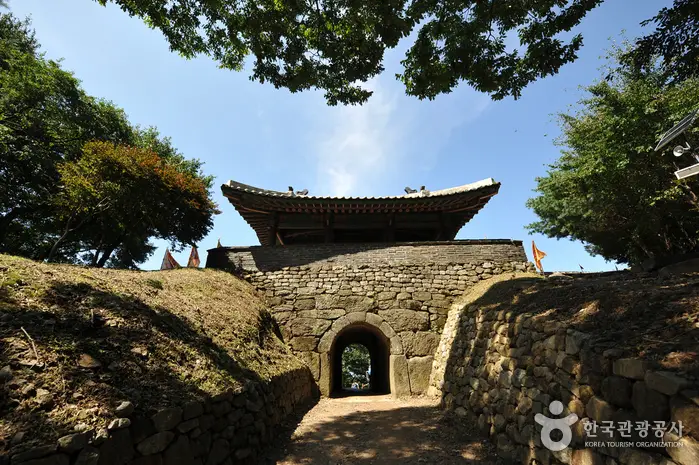
Enchanted by the Night View from a World Heritage Fortress
3 stops · 5 hours
Namhansanseong Fortress, designated as Korea's 11th UNESCO World Heritage site, boasts captivating night views. After enjoying a leisurely daytime walk through the forest and along the fortress trail among historical ruins, immerse yourself in the enchanting night view as the sun sets. The panoramic night view of Seoul seen from above the West Gate (Seomun) of Namhansanseong creates timeless memories. The best spot to appreciate the night scenery is atop the West Gate fortress wall.
- Duration
- 5 hours
- Distance
- 6.78km
Along the way
- 1Namhansanseong Provincial Park
남한산성도립공원
There were four major outskirt fortresses that protected Seoul: Gaeseong in the north, Suwon in the south, Ganghwa in the west, and Gwangju in the east. In Gwangju to the east stood Namhansanseong Fortress. Located on Namhansan Mountain, 24 km southeast of Seoul and 6 km northeast of Seongnam-si, it has a total length of 11.76 km (9.05 km for the main fortress, 2.71 km for the outer fortress) and a height of 7.3 m. Records state that it was originally the royal fortress of King Onjo, the founder of Baekje and son of King Dongmyeong of Goguryeo about 2,000 years ago, and other records mention it as Jujangseong Fortress built in Hansanju in the 13th year of King Munmu of Silla (673) during the Silla-Tang War. Utilizing these old ruins, it was rebuilt several times over subsequent generations and was constructed in earnest during the reign of King Gwanghaegun of the Joseon Dynasty (1621).MoreLess
- 2
Sueojangdae Command Post
수어장대
Sueojangdae Command Post, located on the western side of the fortress, is one of the four command posts of Namhansanseong Fortress and is a pavilion built for military purposes between the 2nd and 4th years of King Injo's reign (1624–1626). A Sueojangdae is where the Sueosa (commanding officer in charge of fortress defense) gave commands and directives. At the time of construction, it was a single-story pavilion called 'Seojangdae.' In the 27th year of King Yeongjo (1751), Magistrate Yi Gi-jin expanded it into a two-story pavilion, naming the inner side Mumangnu and the outer side Sueojangdae. It was here that King Injo personally commanded the defense forces during the Byeongja Horan (Manchu Invasion of 1636), holding out for 45 days against the Qing Emperor Taizong's army of 120,000 soldiers, before suffering a humiliating surrender at Samjeondo after 45 days of resistance.MoreLess
- 3
Dandae-dong Chicken Porridge Village
단대동 닭죽촌
The chicken porridge eateries that had gathered around the hiking trail leading up to Namhansanseong Fortress in the 970s were relocated collectively by Seongnam City in 1998 to form the Chicken Porridge Folk Village, which continues to this day, offering local dishes such as dakbaeksuk (whole chicken soup), dakdoritang (spicy braised chicken), and oritang (duck soup).MoreLess

Source: Korea Tourism Organization (TourAPI) · Machine-translated