A Summer Night in Silla on Foot
4 stops · 1 Night 2 Days
The highlight of Gyeongju's night view is the Wolseong Belt, one of the areas designated as part of the Gyeongju Historic Areas by UNESCO. The Wolseong Belt encompasses Wolseong, where the Silla royal palace once stood; Gyerim Forest, the birthplace of Kim Al-ji, the founder of the Gyeongju Kim clan; the Tomb of King Naemul; Cheomseongdae Observatory; and Donggung Palace and Wolji Pond, the site of a secondary palace of Silla. They are close enough to explore on foot, and it is also recommended to visit the Woljeonggyo Bridge under restoration and Gyochon Village nearby.
- Duration
- 1 Night 2 Days
- Distance
- 11.55km
Along the way
- 1Cheomseongdae Observatory
경주 첨성대
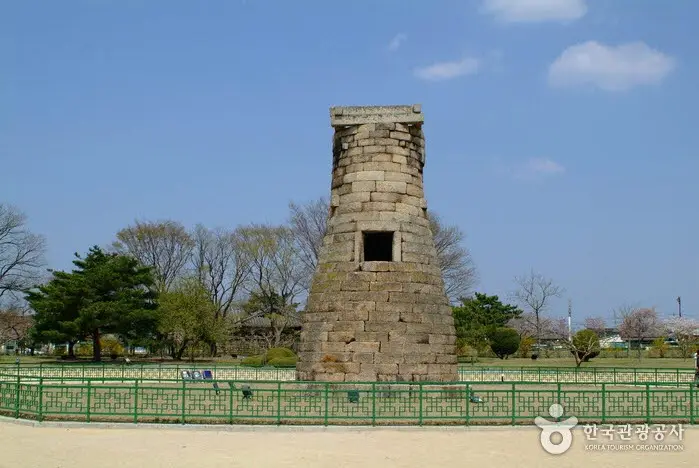
Built during the reign of Queen Seondeok of Silla, Cheomseongdae is an astronomical observatory and the oldest and only surviving stone astronomical structure in the East. Made of granite, it stands 9.17 meters high, with an upper diameter of 3.1 meters, a lower diameter of 5.17 meters, and foundation stone sides measuring 5.35 meters. The double-layered foundation stones and base are square-shaped, composed of 8 and 15 long stones respectively. On top of this, a cylindrical body is built in 27 tiers, wide at the bottom and tapering upward before becoming vertical at the very top.MoreLess
- 2Donggung Palace and Wolji Pond
경주 동궁과 월지
This is the site of a detached palace of the Silla royal court located to the west of Anapji Pond. Along with other auxiliary buildings, it served as Donggung (the Eastern Palace), the residence of the crown prince, and banquets were held here during national celebrations or when welcoming distinguished guests.\n It is also where King Gyeongsun of Silla hosted a banquet in 931 for King Taejo Wang Geon of Goryeo to appeal for help in an urgent situation following an invasion by Gyeon Hwon. \n After unifying the Three Kingdoms, in the 14th year of King Munmu's reign (674), Silla dug a large pond, created three islands in the center and 12 mountain peaks to the north and east of the pond, planted beautiful flowers and trees, and reportedly raised rare birds and beasts here. \n In Goryeo's Samguk Sagi (History of the Three Kingdoms), only records of Imhaejeon Hall appear without any mention of Anapji Pond, but Joseon's Donggukyeojiseungnam (Augmented Survey of the Geography of Korea) records that "to the west of Anapji lies Imhaejeon," leading to the presumption that the present location is Anapji Pond.\nMoreLess
- 3Gyeongju Daereungwon Ancient Tomb Complex
경주 대릉원 일원
These ancient Silla tombs located in the Nodong-dong area in central Gyeongju include Bonghwangdae, Singnichong, and Geumnyeongchong.\nBonghwangdae is the second largest tomb after Hwangnamdaechong, standing 22 meters high with a diameter of 82 meters. Singnichong, located south of Bonghwangdae, has a mound height of 6.5 meters and a diameter of 30 meters; excavations in 1924 revealed it to be a wooden chamber tomb with stone mound (jeokseokmokgwakbun). Excavated items inside include earrings, glass bead chest ornaments, silver belts, silver bracelets, ring-pommel swords (hwandudaedo), twin-dragon ring-pommel swords, horse harnesses (magu), and lacquered vessels. Notably, while no gold or gilt-bronze crowns were found, gilt-bronze shoes (singni) were discovered with unique and outstanding patterns, which led to the naming of the tomb as Singnichong. \n\nMoreLess
- 4Bomun Tourist Complex
경주 보문관광단지
As a UNESCO-designated world historic city where the millennium-long glory of Silla is preserved intact to the point of being called an open-air museum, Gyeongju is an optimal travel destination offering both sightseeing and relaxation, with a steady stream of tourists visiting from around the world.\nBomun Tourist Complex was developed around Bomun Lake at the old fortress site of Myeonghwalsan Mountain, located about 10 km east of downtown Gyeongju.MoreLess
Source: Korea Tourism Organization (TourAPI) · Machine-translated