Exciting Rhythm of Arirang, 'Arariyo'
6 stops · 2 days, 1 night
When traveling through Jindo, anyone will hear and hum along to lines from Jindo Arirang at least once. It is said that around 60 variations and over 3,600 verses of Arirang are passed down today. Representative places where visitors can listen to Jindo's unique Arirang include the Namdo National Gugak Center and the Jindo Folk Culture Center. Both are vibrant cultural spaces where travelers can experience traditional culture.
- Duration
- 2 days, 1 night
- Distance
- 91.16km
Along the way
- 1Jindodaegyo Bridge
진도대교
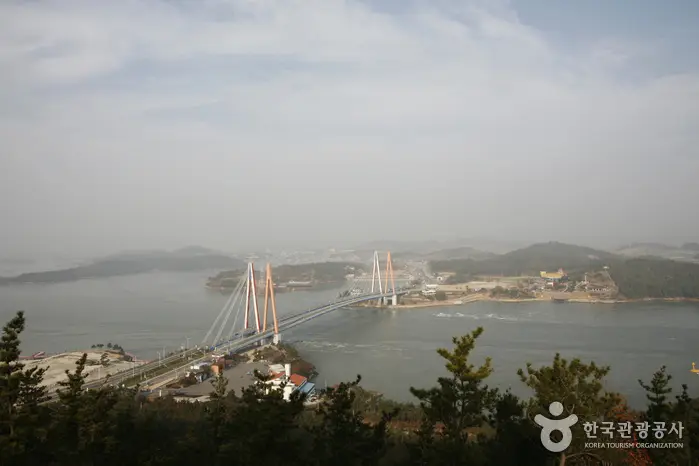
Spanning between Nokjin in Gunnae-myeon, Jindo-gun and Hak-dong in Munnae-myeon, Haenam-gun along National Route 18, this 484m-long, 11.7m-wide bridge is the only twin cable-stayed bridge in Korea. Completed on October 18, 1984, it has become a popular tourist attraction. The Second Jindo Bridge was opened on December 15, 2005. The bridge is famous for its stunning sunsets and night views, while the turbulent currents of the Uldolmok Strait beneath create a magnificent sight.MoreLess
- 2Yi Chungmugong's Byeokpajin Battle Monument
이충무공 벽파진 전첩비
Byeokpajin has long served as the gateway ferry dock to Jindo, guarding the entrance to the Myeongnyang Strait. Across the sea lies Hwangsan-myeon, Haenam-gun. Ascending the rocky hill behind the port, one finds the Battle Monument of Admiral Yi Sun-sin standing proudly. Erected in 1956, the monument is inscribed with text written by poet Lee Eun-sang: \"O blue sea of Byeokpajin, you hold a glorious history. This is where Chungmugong, the nation's sacred hero, achieved a shining and lofty victory at his loneliest and most difficult moment.\" These poetic lines sum up the legacy of Admiral Yi at Byeokpajin. On the left side of the stairs leading up to the monument, the history of its erection is detailed. \n During the Second Japanese Invasion (Jeongyu Jaeran), Admiral Yi Sun-sin defeated over 300 Japanese warships with just 12 vessels at the Myeongnyang Strait (Uldolmok), securing the historic victory of the Battle of Myeongnyang (1597).MoreLess
- 3Sebang Sunset Observatory
세방낙조 전망대
A place to see one of the most beautiful sunsets in Korea.\n The view of the Dadohae (archipelago) looking down from Sebang Sunset Observatory, widely regarded as the most picturesque spot along Jindo's coastal roads, is truly breathtaking. The sunset seen from here is fantastic. At dusk, the spectacular sunset that sinks between the scattered islands dyes the blue sky with a red hue even deeper than autumn leaves. The Korea Meteorological Administration even designated it the \"Best Sunset Viewing Point\" at the southernmost tip of the Korean Peninsula. This coastal road is the premier scenic drive in the country, offering panoramic views of the beautiful islands of Dadohae. Visitors can enjoy a scenic drive while breathing in fresh air from the lush forests and pristine sea.MoreLess
- 4Namdo National Gugak Center
국립남도국악원
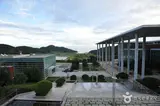
Set against the scenic backdrop of Yeogwisan Mountain and facing the vast South Sea, the Namdo National Gugak Center aims to popularize Korean traditional music (gugak) through specialized training and performances. It also seeks to cultivate wholesome leisure culture and enrich the public spirit, systematically spread gugak culture to culturally underserved areas to provide access to traditional culture, and establish regional cultural and artistic tourism resources by revitalizing gugak amidst natural surroundings.MoreLess
- 5Ullimsanbang
운림산방
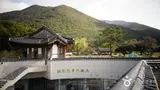
Master artist Sochi Heo Ryeon was born in 1809 in Ssangjeong-ri, Jindo-eup. Demonstrating artistic talent from an early age, he began studying under Monk Choui at Iljiam Hermitage in Daedunsa Temple, Haenam from the age of 28. In his early 30s, introduced by Monk Choui, he went to Seoul to formally study calligraphy and painting under Chusa Kim Jeong-hui, growing into a master of the Southern School of Chinese painting (Namhwa). Although he painted for the royal court and held several official posts, after Kim Jeong-hui's death, he ended his life in Seoul\n and returned to his hometown of Jindo, where he established Ullimsanbang and devoted himself to painting. This site is also where Heo Ryeon's third son Misan Heo Hyeong and grandson Namnong Heo Geon carried on the lineage of the Southern School, and where fellow clan artist Uijae Heo Baek-ryeon learned to paint, making it widely known as the holy ground of Korean Southern School painting.\nMoreLess
- 6
Jindo Folk Culture Center
진도향토문화회관
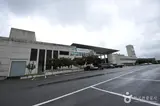
Numerous intangible cultural assets have been preserved in their original forms here, including four National Intangible Cultural Heritages such as Ssitgimgut (which won a gold prize at the 1979 World Folk Music Festival), Ganggangsullae, Namdo Deullorae, and Dasiraegi, as well as three Intangible Cultural Heritages including Buknori, Manga, and Jindo Hongju.\n \nTo foster a fresh appreciation of traditional culture through authentic folk arts, folk performances by human cultural assets and their apprentices are held every Saturday at the Jindo Folk Culture Center.MoreLess
Source: Korea Tourism Organization (TourAPI) · Machine-translated