Melodies in the Spring Sunshine, Tunes on the Spring Breeze
4 stops · 1 day
The Yeongdong Nangye Traditional Music Orchestra performs every Saturday. Visitors can enjoy a diverse range of Korean traditional music (gugak), from traditional pieces to arrangements tailored to modern sensibilities and fusion gugak combined with contemporary music. The performances are engaging and entertaining rather than rigid, featuring commentary and humor, and visitors can even try playing the instruments themselves if they are inspired. At the Nangye Gugak Museum, you can explore the life of Nangye Bak Yeon, various instruments, and related historical materials at a glance.
- Duration
- 1 day
- Distance
- 39.04km
Along the way
- 1Yeongdong Yeongguksa Temple
영국사(영동)
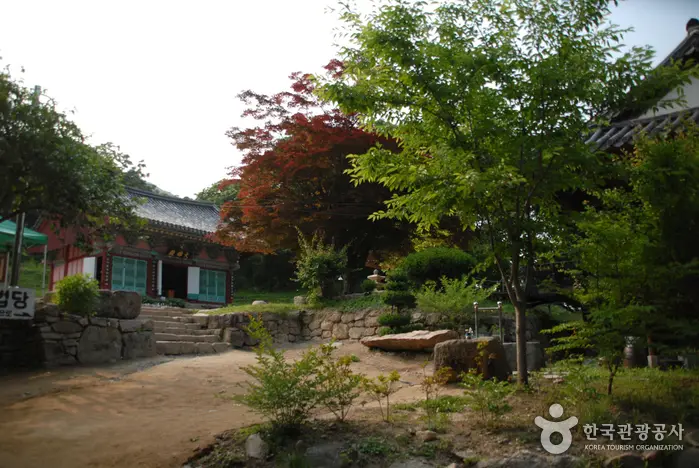
Yeongguksa Temple is located on Cheontaesan Mountain (714.7 meters above sea level) at the southernmost point of Chungcheongbuk-do, near the border with Chungcheongnam-do. The surrounding landscape is exceptionally beautiful. Although the exact history of its founding is uncertain, it is believed to have been established in connection with Seon Buddhism in the late Silla period. It began to flourish significantly in the mid-Goryeo dynasty when it became the retreat of State Preceptor Wongak, who succeeded State Preceptor Daegak Uicheon's Cheontae Order. The temple continued to prosper into the early Joseon dynasty, but its influence began to decline due to Joseon's anti-Buddhist policies, even as it maintained its legacy as a renowned temple. By the early 20th century, its standing had diminished to the extent that it may have been temporarily abandoned.MoreLess
- 2
Nangye Gugak Museum
난계국악박물관
Nangye Gugak Museum is a specialized traditional music museum imbued with the spirit of Nangye Bak Yeon. Visitors can explore his life and achievements in the Video Room and Nangye Hall. The Gugak Hall displays wind instruments such as the daegeum and nabal, string instruments including the gayageum, haegeum, and bipa, and percussion instruments such as the jing, buk, and pyeonjong by type. It offers a rare opportunity to see more than 60 different traditional Korean instruments. The Folk Materials Exhibition Hall houses valuable materials, including audio recordings of deceased or North Korea-defected traditional musicians and videotapes of live traditional music performances. A leisurely tour around the museum naturally brings visitors closer to traditional Korean music.MoreLess
- 3
Yeongdong Nangyesa Shrine
영동 난계사
Nangyesa is a shrine established in 1973 to house the portrait of Nangye Bak Yeon. To the left of the entrance, a statue and monument of Nangye welcome visitors, and the path from the entrance to the shrine's outer three-door gate (oesammun) is beautifully landscaped on both sides, making the lush lawn under generous tree shade a pleasant spot to take a rest.MoreLess
- 4
Birthplace of Nangye Bak Yeon
난계 박연선생 생가
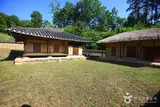
To honor his achievements, the main house (anchaeron, 39m²) and the men's quarters (sarangchae, 21.81m²) were restored in May 2000 based on academic research. The main house has a layout of 3 bays in front and side bays with front and rear veranda extensions in a double-roof house style, featuring a wooden deck (umulmaru) on the front porch, a gomi-banja (traditional ceiling structure), and a hipped tile roof equipped with an adjacent kitchen and grain storage. The outbuilding consists of one structure with a thatched roof comprising a cowshed, a storehouse, and one room.MoreLess
Source: Korea Tourism Organization (TourAPI) · Machine-translated