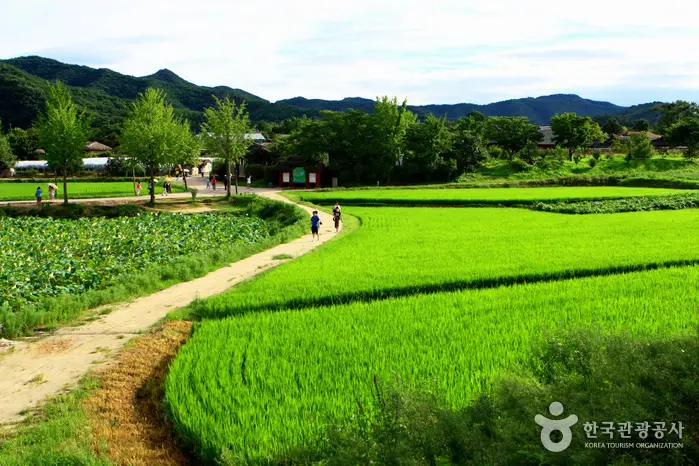
An Exhilarating Mask Dance Preserved for 800 Years
7 stops · 2 Days, 1 Night
The Hahoe Byeolsingut Talnori is a traditional mask dance-drama that the residents of Hahoe Village have performed since the Goryeo Dynasty. "Byeolsingut" means a "special shamanic ritual," named so because it was held as a grand village ritual once every 5 to 10 years to pray for communal peace and a bountiful harvest. Take a leisurely stroll through Hahoe Village. The village is full of scenic attractions, including neatly stacked earthen and stone walls, maze-like alleys, charming thatched-roof houses, the 600-year-old Samsin Tree, the riverside Mansongjeong Pine Forest, and Buyongdae Cliff, where you can overlook the entire village from atop the precipice.
- Duration
- 2 Days, 1 Night
- Distance
- 105.38km
Along the way
- 1
Andong Hanji Experience
안동한지체험
Located at the entrance of Hahoe Village—where our ancestors' traditional lifestyle and culture are best preserved—Andong Hanji is dedicated to producing traditional Korean paper that retains unique beauty and spirit. Alive with the breath of our ancestors, providing a learning space for students, and offering a variety of sights, Andong Hanji is emerging as a popular tourist attraction in Andong.MoreLess
- 2Andong Hahoe Folk Village [UNESCO World Heritage]
안동 하회마을 [유네스코 세계문화유산]
Hahoe Village gained international media attention as the destination visited by Queen Elizabeth II of the United Kingdom in 1999 and President George W. Bush of the United States in 2005. "Jingbirok" (the record of the Imjin War written by Ryu Seong-ryong) and the Hahoe Masks are designated as National Treasures, alongside 4 Treasures, 10 Important Folklore Cultural Properties, and 1 Historic Site. In 1984, the entire village was designated as Important Folklore Cultural Property No. 122.MoreLess
- 3Hahoedong Mask Museum
하회동 탈 박물관
The Hahoedong Mask Museum is located in Andong Hahoe Village, designated as Important Folklore Cultural Property No. 122. Hahoe Village is a representative traditional folk village in Korea and the home of the Hahoe Masks (National Treasure No. 121) and the Hahoe Byeolsingut Talnori (Important Intangible Cultural Property No. 69). The Hahoedong Mask Museum displays not only Hahoe masks but all kinds of Korean masks in one place for clear and systematic viewing. In addition, it has collected significant masks from around the world to display alongside Korean masks for comparison.MoreLess
- 4Byeongsanseowon Confucian Academy
병산서원
The predecessor of this seowon was Pungak Seodang in Pungsan-hyeon, which had served as an educational institution for Confucian scholars since the Goryeo Dynasty. In 1572 (the 5th year of King Seonjo), Master Ryu Seong-ryong (pen name Seogae) relocated it to its current location in Byeongsan. It played a major role in enshrining predecessors and educating local scholars, producing many prominent figures. It was spared from demolition when the Daewongun issued the Seowon Abolition Order in 1868 (the 5th year of King Gojong). Extensive renovations were carried out during the Japanese colonial period, with the lecture hall rebuilt in 1921 and the shrine in 1937. Hyangsa rituals are held every year on Jungjeong (the second Jeong day) of the third and ninth lunar months. Designated as Historic Site No. 260, it houses over 1,000 kinds and 3,000 volumes of literature, including the collected works of Master Ryu.MoreLess
- 5
Andong Folk Museum
안동민속박물관
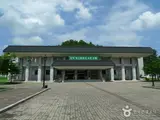
Andong Folk Museum consists of an indoor museum and an outdoor museum on a total site of 171,630㎡. The indoor museum focuses on Confucian culture, a key characteristic of the Andong region, especially the four ceremonial occasions (coming-of-age, wedding, funeral, and ancestral rites), alongside diorama displays of folk games unique to this area. It is also equipped with an audiovisual room and video hall for media screenings. The outdoor museum features about 20 relocated important living culture artifacts, including the Treasure-designated Seokbinggo (ice storage) and traditional old houses that were scattered across areas submerged during the construction of Andong Dam. This public facility was established to help visitors properly understand local culture and to serve as a civic relaxation area and social education venue by investigating, researching, preserving, and exhibiting the folk culture of the Andong cultural sphere.MoreLess
- 6
Andongho Lake
안동호
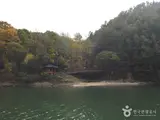
A popular spot for fishing and recreation, Andongho Lake was created as part of the Four Major Rivers Project by damming the uppermost reaches of the Nakdonggang River. Andong Dam measures 83 meters in height and 612 meters in length, making it the second largest after Soyanggang Dam. The natural scenery around Andongho Lake is spectacular, and there is a dock where visitors can take cruise ships, while the area is also renowned for fishing. Andongho Lake and the reregulation reservoir are famous lakeside tourist attractions due to their superb landscapes. Around Andong Dam, there are cultural assets such as Dosanseowon Confucian Academy and Andong Seokbinggo, along with diverse attractions like Andong Folk Village, Andong Folk Museum, and the filming set of the drama "Taejo Wang Geon." Near the auxiliary dam, there is also a folk scenic site designed as an outdoor museum by relocating folk cultural heritage from the submerged area during the construction of Andong Dam.MoreLess
- 7Imcheonggak House
안동 임청각
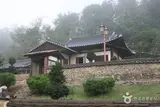
Imcheonggak House is the grand head house of the Goseong Yi clan in Andong, boasting a 500-year history and the largest scale among surviving residential houses in Korea. Yi Jeung, the Magistrate of Yeongsan-hyeon and sixth son of Yi Won (who served as Chief State Councillor during the reign of King Sejong of Joseon), was captivated by the beauty of this place and settled here, becoming the founding ancestor of this lineage branch. Later, Yi Myeong, the third son of Yi Jeung who served as Jwarang of the Ministry of Punishments during the reign of King Jungjong, built this detached villa-style pavilion. Imcheonggak House consists of the mid-Joseon head house building and Gunjeong Pavilion, a detached villa-style pavilion. Originally said to be a 99-kan mansion, only about 70 kan remain today.MoreLess
Source: Korea Tourism Organization (TourAPI) · Machine-translated