Tasting the Fragrance of Spring
4 stops
Gondre (Korean thistle), which appears in the Jeongseon Arirang folk song, is a signature spring green of Jeongseon. In May, Jeongseon is abundant with wild greens. Gondre, gomchwi (Ligularia fischeri), wild garlic, chamnamul (pimpinella), and chwinamul grow commonly in mountain hillside fields, and a wide variety of gondre appears at Jeongseon Market. With both a five-day market and a permanent market, finding wild greens is easy. The market adds joy to travel with diverse agricultural produce from Jeongseon as well as a vibrant food alley. In the outdoor performance arena, short performances are staged twice a day on market days.
Along the way
- 1
Jeongseon Arirang Market
정선 아리랑시장
Until the early 1980s, a relatively large commercial district was formed with a population of nearly 130,000 and the vitality of neighboring mines, but it has gradually declined due to the rapid decrease in the rural population following industrialization. At Jeongseon Market, agricultural produce such as chili peppers, bellflower roots, potatoes, and garlic are the main items alongside various vegetables grown in rural areas. Since most are retailed directly from the farms that grew them, fresh produce can be purchased at affordable prices.MoreLess
- 2Samtan Art Mine
삼탄아트마인
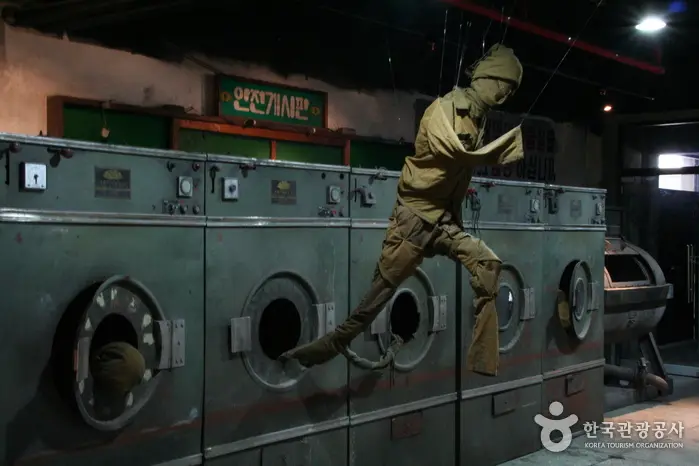
Located at the foot of Hambaeksan Mountain, the center of anthracite production in Korea, Samtan Art Mine takes 'Samtan' from Samcheok Coal Mine, one of Korea's major coal mines, and 'Art Mine' from 'coal mine.' It embodies the meaning of being reborn from a mine extracting coal into a cultural and artistic space that digs up art. Although there are many cultural and artistic spaces nationwide, Samtan Art Mine is special in that it utilizes an actual abandoned mine. Opening in 1964, prospering as a mecca of the industrial era, and closing in October 2001, it is deeply meaningful as it sprouted the seeds of art based on the dynamic yet poignant history of the coal mine.MoreLess

- 3Kangwon Land (Accommodation)
강원랜드(숙박)
Kangwon Land Hotel offers a variety of rooms ranging from Standard Rooms where you can enjoy the best service at reasonable prices to various suites including the Presidential Suite, decorated with dedication to provide guests with maximum satisfaction. With spacious rooms, refined interiors, open views, top-tier service, and high-class relaxation provided by a five-star hotel, it elevates the quality of life. World Fusion is a family-oriented specialized buffet restaurant offering an international evening buffet with over 100 menu items including live cooking showcasing various flavors with the finest dishes, Korean, and Western cuisine, as well as Western and Korean à la carte items. The Grand Ballroom is equipped with a 5-language simultaneous interpretation system for successful international business, state-of-the-art computer lighting, 3D surround sound systems, and a movable stage. Suitable for large-scale banquets such as international conferences, academic events, seminars, weddings, and various event functions, it can accommodate up to 1,000 seats and can be divided into three banquet halls.MoreLess
- 4
Jeongamsa Temple
정암사
Jeongamsa Temple on Taebaeksan Mountain is said to have been founded during the reign of Queen Seondeok of Silla when the high monk Jajangyulsa met Manjusri Bodhisattva at Unjesa Temple on Mt. Qingliang in Shanxi Province, Tang Dynasty, and received Sakyamuni Buddha's parietal bone sarira, teeth, Buddhist kasaya, and Pattra leaf sutras. Upon returning to Korea in the 14th year of the queen's reign, he built Geumtap (Gold Pagoda), Euntap (Silver Pagoda), and Sumanotap Pagoda, enshrining Buddha's true sarira and relics in Sumanotap Pagoda before erecting the temple. Inside the temple grounds are historical buildings such as Jeongmyeolbogung (Provincial Tangible Cultural Heritage Material No. 32), Beomjonggak Bell Pavilion, Yukhwajeongsa, Yosachae (monks' quarters), Samseonggak, and Jajanggak, and it is an ancient temple housing cultural heritage such as Sumanotap Pagoda (Treasure No. 410) and the Habitat of Manchurian Trout (Natural Monument No. 73).MoreLess
Source: Korea Tourism Organization (TourAPI) · Machine-translated