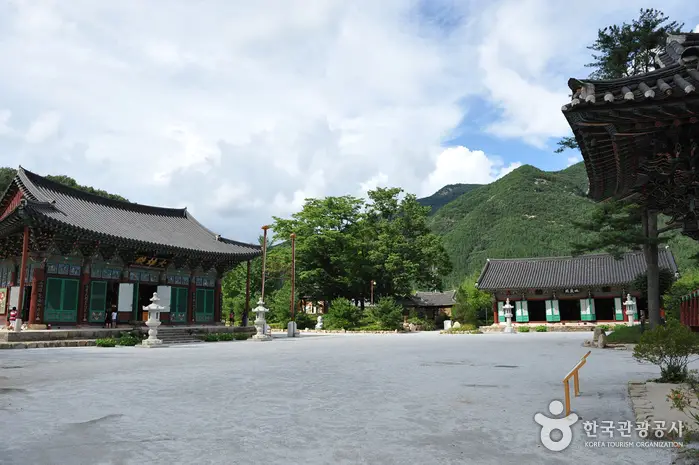
Enchanting Cherry Blossoms Like a Blanket of White Clouds
6 stops · 2 days, 1 night
There is a saying, "Chun-Songgwang, Chu-Haein," which means that Songgwangsa Temple is most beautiful in spring, and Haeinsa Temple is most beautiful in autumn. Cherry blossoms symbolize spring at Songgwangsa Temple. The cherry trees here have thick, sturdy trunks that show their considerable age, and their blossoms are as lush as cotton candy. When the full blossoms drift on the wind like flower clouds and touch your heart, the road to Songgwangsa Temple shines even brighter. As you drive leisurely and come upon Juamho Lake, the blue waters framed by cherry blossoms double the pleasure of the scenic drive.
- Duration
- 2 days, 1 night
- Distance
- 76.54km
Along the way
- 1
Songgwangsa Temple (Suncheon)
송광사(순천)
Situated at the northern foot of Jogyesan Mountain, Songgwangsa Temple is considered one of Korea's Three Jewel Temples (Sambosachal), alongside Haeinsa Temple in Hapcheon (Dharma Jewel) and Tongdosa Temple in Yangsan (Buddha Jewel). It began when Master Hyerin built a small hermitage in the late Silla period and called it Gilsangsa Temple. It became the Sangha Jewel Temple after National Preceptor Bojo Jinul moved the Jeonghye Gyeolsa movement here to make it a place of ascetic practice and Zen meditation. The temple has produced 16 National Preceptors, starting with National Preceptor Bojo Jinul.MoreLess
- 2Seonamsa Temple (Suncheon)
선암사(순천)
Located on the eastern foot of Jogyesan Mountain, Seonamsa Temple was first founded when Buddhist Monk Ado built Biroam Hermitage in the 7th year of King Seong of Baekje (529), and National Master Doseon founded the present Seonamsa Temple in the 1st year of King Gyeongmun of Silla as the Dongni Sanmun school among the Nine Mountain Zen Gates. On the mountainside to the west across the peak sits the famous Sangha Jewel temple, Songgwangsa Temple. The area around Seonamsa Temple is dense with oak, camellia, maple, and chestnut trees that are hundreds of years old, and its autumn foliage is especially famous. In addition, Seungseongyo Bridge (Treasure No. 400), an arched stone bridge in front of the temple, rests sturdily on natural bedrock, and the dragon head carved at its center evokes a profound sense of wonder. MoreLess
- 3Suncheon Traditional Wild Tea House
순천전통야생차체험관
Located along the path to Seonamsa Temple on Jogyesan Mountain, this cozy experience center harmonizes the sounds of the sky, water, and wind. Visitors can make and taste aromatic teas, as well as experience mountain retreats and meditation. Here, you can sample teas produced in Suncheon and participate in various programs, such as traditional tea ceremony experiences, by making group reservations.MoreLess
- 4Suncheon Naganeupseong Walled Town (Overnight Stay)
순천 낙안읍성(숙박)
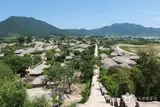
Naganeupseong was Mahan territory during the Samhan period, Pajiseong during the Baekje Kingdom, and the town center of Nagan-gun during the Goryeo Dynasty. Its fortress walls, Dongheon (government office), Gaeksa (guest house), General Im Gyeong-eop Monument, marketplace, and thatched-roof houses from the Joseon Dynasty remain preserved in their original forms, making it Korea's first combined fortress and village site designated as Historic Site No. 302. Built on a vast plain using square natural stones measuring 1–2 meters, the fortress stands 4 meters high, 3–4 meters wide, and stretches a total length of 1,410 meters. Sturdily erected in a rectangular layout that envelops the three residential villages of Dongnae, Namnae, and Seonae, it remains unbroken and imposing even today, nearly 400 years later. As an authentic folk village where many households still live, it is recognized not only as valuable folkloric material but also as a living classroom of history. MoreLess
- 5Suncheonman National Garden
순천만국가정원
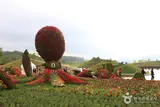
Suncheonman National Garden was created to protect Suncheon Bay. Across the 1,120,000㎡ (approx. 340,000 pyeong) garden site in the Dosa-dong area of Suncheon, 790,000 trees of 505 species and 3.15 million flowers of 113 species have been planted. Tulips and royal azaleas burst into bloom to create a spectacular view. The 30,000㎡ area around the Forest of Sharing was developed into a canola flower field, which creates a "yellow wave" as it fully blooms all at once in mid-May.MoreLess
- 6Suncheonman Natural Ecology Park
순천만자연생태공원
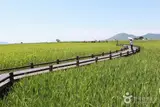
Spanning Gyoryang-dong, Daedae-dong, and the villages of Jungheung-ri, Haechang-ri, and Seonhak-ri in Haeryong-myeon, Suncheon, the Suncheon Bay reed field covers a total area of about 150,000 pyeong. Both sides of the water channel stretching about 3 km, from the confluence of Dongcheon Stream (flowing through Suncheon) and Isacheon Stream (flowing from Sangsa-myeon) to the estuary, are completely covered with reed fields. Unlike typical reed beds that are sparse or scattered, these reeds grow taller than a person and thrive in dense, thick clusters. Renowned as Korea's largest reed colony, the fluffy seed heads of the reeds create a breathtaking spectacle, taking on silver, gray, and golden hues depending on the sunlight. Moreover, the sight of the entire reed forest swaying gently in the sea breeze is as majestic and beautiful as rolling waves across a boundless sea. MoreLess
Source: Korea Tourism Organization (TourAPI) · Machine-translated