Cherry Blossom Walk by the Lake
5 stops · 1 night, 2 days
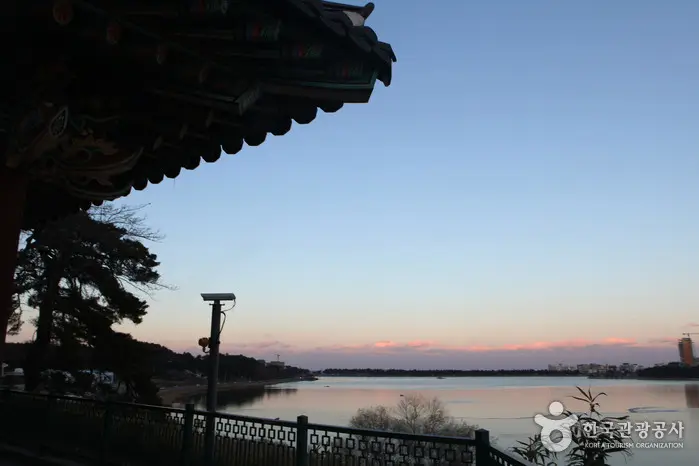
Spring in Gangneung begins with the cherry blossoms at Gyeongpoho Lake. In mid-April, cherry blossoms bloom profusely around Gyeongpoho Lake, celebrating the season. The cherry blossom path along Gyeongpoho Lake was created in 1960 when Gyeongpo Beach opened. Around Gyeongpodae Pavilion, there are about ten cherry trees that are roughly 100 years old, creating a spectacular scene as the bright petals bloom on the ancient branches. There are also many sights and stories to enjoy. You will never have a dull moment with attractions such as Hongjangam Rock, which carries the poignant love story of Park Sin, a Goryeo-era provincial inspector, and the gisaeng Hongjang, as well as the Hong Gildong Character Road and Gyeongpo Ecological Wetland Park.
- Duration
- 1 night, 2 days
- Distance
- 13.38km
Along the way
- 1Seongyojang House
강릉 선교장
Seongyojang House is the best-preserved and most dignified nobleman's residence in the Gangwon-do region. Located about 4 km toward Gyeongpo from Gangneung-si, Seongyojang represents upper-class residences of the Joseon Dynasty and has been designated as National Folklore Cultural Heritage No. 5. When Gyeongpoho Lake was wider than it is now, people crossed it by boat, and this neighborhood was called Baedari Village (Seongyori). The name Seongyojang originated from this history.MoreLess
- 2Gyeongpodae Pavilion
강릉 경포대
Gyeongpodae Pavilion is a pavilion on a hill north of Gyeongpoho Lake and is one of the Eight Scenic Views of Gwandong. Originally built in 1326 (the 13th year of King Chungsuk of Goryeo) by Park Suk-jeong, an official in Gangwon-do, on the former site of Inwolsa Temple behind Banghaejeong Pavilion, it was moved to its current location in 1508 (the 3rd year of King Jungjong of Joseon) by Gangneung Magistrate Han Geup. It took on its current appearance after several renovations. It measures 5 bays in front and 5 bays on the sides, with a hipped-and-gabled roof (paljak roof) resembling the Chinese character for eight (八) from the side. It consists of a total of 48 pillars and has a three-dimensional floor plan with different floor levels. The seal-script signboard bearing the name 'Gyeongpodae' was written by Yu Han-ji, and the regular-script signboard was written by Yi Ik-hoe.MoreLess
- 3
Charmsori Gramophone & Edison Science Museum
참소리축음기 & 에디슨과학박물관
Since its founding as "Charmsori Bang" in Songjeong-dong, Gangneung-si in 1982 by Director Son Seong-mok (Founder), it has built a history and tradition spanning about 30 years. Its main collection consists of around 5,000 items, including music boxes, gramophones, radios, TVs, automobiles, and inventions by Thomas Edison, making it the world's largest private museum in terms of collection size. The Charmsori Gramophone Museum covers an area of about 13,220 square meters, featuring four separate exhibition halls according to the nature of the exhibits and a dedicated music listening room of about 330 square meters, along with an observatory on the 3rd floor offering views of Gyeongpoho Lake. The Edison Science Museum spans the 1st and 2nd floors and showcases Edison's inventions, relics, and household items across three exhibition halls.MoreLess

- 4
Gyeongpoho Lake (Migratory Bird Sanctuary)
경포호(철새도래지)
Gyeongpoho Lake is a scenic destination loved and admired not only by the people of Gangneung but by the entire nation. In addition to the surrounding beautiful scenery, it is a site with prehistoric cultural remains, legends of the Hwarang, and the traces and breath of renowned figures throughout history. Furthermore, the reflection of the moon on Gyeongpoho Lake as viewed from Gyeongpodae Pavilion is exceptionally beautiful. Gyeongpoho Lake is a natural lagoon connected to the sea with an area of 1,256,204 m² (approx. 380,000 pyeong), bordered by a seaside road. It is also famous as a wintering site for migratory birds (such as mallards and mandarin ducks), making it an ideal resort destination where nature and traditional culture coexist. In addition, crucian carp, carp, mullet, snakehead, and eel thrive in large numbers, and fishing is prohibited as it is a designated nature conservation area.MoreLess

- 5Anmokhaebyeon Beach
안목해변
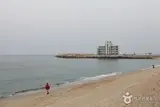
Located in Gyeonso-dong, Anmokhaebyeon Beach features a 500-meter-long white sand beach covering 20,000 square meters, making it ideal for family vacationers. The name "Anmok" originates from meaning a key pathway in front of the village heading to Songjeong from Namhangjin, which is located across the mouth of Namdaecheon Stream. "Gyeonso" was originally written as Gyeonjo (見潮) because looking down from Jukdobong Peak toward the water flowing into the sea from Namdaecheon Stream allowed one to see the water currents. Later, the Japanese referred to it as Gyeonso, which was easier to pronounce.MoreLess
Source: Korea Tourism Organization (TourAPI) · Machine-translated