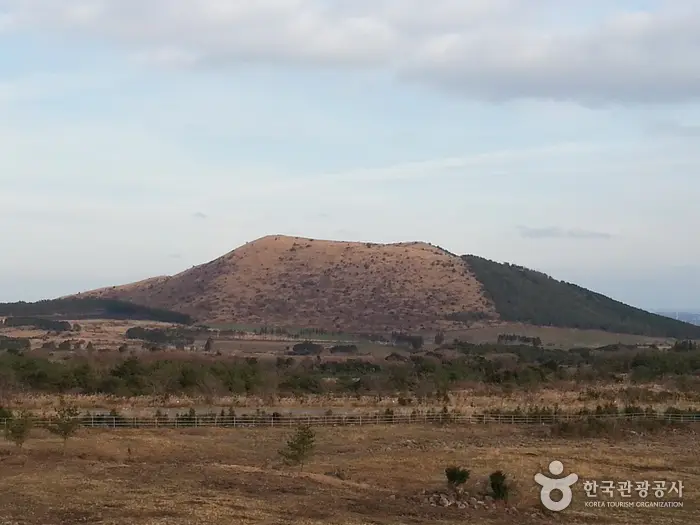
Discovering the Inner Essence of Volcanic Jeju Island
5 stops · 2 days, 1 night
The Geomunoreum trail, a UNESCO World Natural Heritage site, and Ttarabioreum Volcanic Cone serve as prime volcanic exploration courses in Jeju. Following the traces left by volcanic eruptions, visitors can take in unique and scenic views of the lava plateau not found anywhere else. When visiting Jeju Island, make sure not to miss the chance to ride a Jeju pony.
- Duration
- 2 days, 1 night
- Distance
- 82.95km
Along the way
- 1
Jeju World Natural Heritage Center
제주 세계자연유산센터
Opened on September 4, the Jeju World Natural Heritage Center was built to promote the value of Jeju as Korea's only UNESCO World Natural Heritage site. Visitors can experience the breathtaking nature of Jeju in a 4D theater, take a lift to experience the volcanic formation process of Jeju Island, and explore lava tube caves that are otherwise inaccessible, directly encountering the UNESCO World Natural Heritage features of Jeju found in textbooks. The Jeju World Natural Heritage Center is located at Geomunoreum, which was inscribed as a UNESCO World Natural Heritage site in 2007, selected as one of the 20 Ecotourism Sites by the Ministry of Environment in 2009, and designated one of the 10 Korean-style Ecotourism Models in 2010.MoreLess
- 2
Phoenix Jeju Seopjikoji (Accommodation)
휘닉스제주섭지코지(숙박)
Phoenix Jeju Seopjikoji is an eco-friendly marine resort where blessed nature and relaxing escapes coexist with lodging, recreation, leisure, and culture. Covering an area of 660,000 square meters across the entire bottle-shaped Seopjikoji peninsula jutting out toward the sea, it faces the UNESCO World Natural Heritage site Seongsan Ilchulbong Tuff Cone. Visitors can also admire modern architectural masterpieces such as Glass House and Genius Loci, designed directly by world-renowned architect Tadao Ando, as well as Agora designed by Mario Botta.MoreLess
- 3
Ttarabioreum Volcanic Cone
따라비오름
Its most prominent feature is the presence of three craters. Multiple large and small peaks connect smoothly along ridges to form a single volcanic body. Along the slope opening toward the horseshoe-shaped side, there are volcanic mudflow mounds similar to those at Dunjioleum in Gujwa-eup. The presence of these mudflow mounds indicates that it is a relatively recently erupted fresh volcano.MoreLess
- 4Jeju Horse Park
조랑말체험공원
Jeju Horse Park, where visitors can easily and enjoyably understand and experience Jeju's horse culture, preserves 600 years of ranching history at the site of Gasi-ri village, where Gapmajang, the premier horse farm of the Joseon Dynasty, once stood. Established as part of the 'New Cultural Space Project' supported by the Ministry of Agriculture and Forestry, it has been expanded through the efforts of the village council into a complex cultural space featuring Ttarabi Horseback Riding Ground, Maeum (Horse Sound) Cafe, a yurt guesthouse, a campsite, an art shop, and experience zones.MoreLess
- 5Haenyeo Museum
해녀박물관
The Haenyeo Museum was established across four floors with a total floor area of 4,002 square meters in connection with the Jeju Haenyeo Anti-Japanese Movement Memorial Park project to preserve and develop Jeju's unique culture of haenyeo (female divers), fishing villages, and the ocean. Its main facilities include four exhibition halls, an audiovisual room, an observatory, a rest lounge, and an outdoor exhibition area, and it opened on June 9, 2006. Preserving the history of survival, life, and pride of Jeju haenyeo, the museum features exhibitions themed around Jeju's iconic female divers, encompassing their lifestyle, shamanistic beliefs, seasonal customs, and haenyeo communities, as well as the broader traditional culture of Jeju including history, women, livelihood, economy, maritime life, faith, and performing arts.MoreLess
Source: Korea Tourism Organization (TourAPI) · Machine-translated