Carved with Buddhist Devotion, Preserved with Wisdom
5 stops · 2 days, 1 night
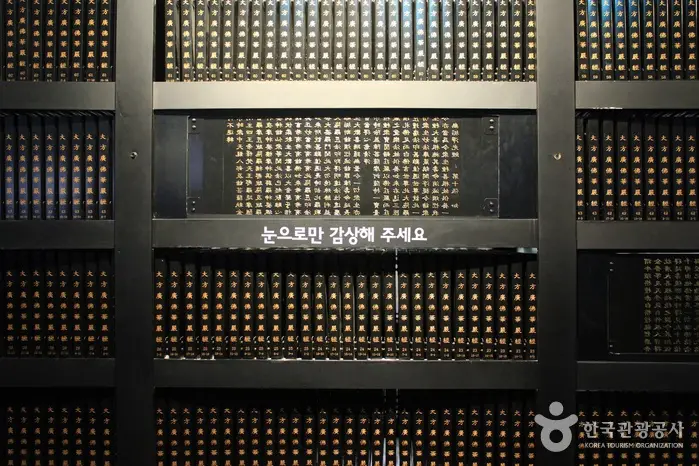
The Tripitaka Koreana (Palman Daejanggyeong) began its production during the Goryeo period to rally public sentiment during the Mongol invasions, and was completed during the reign of King Seongjong of the Joseon Dynasty, taking a staggering 530 years to create. Walking around the outer left side of Sudarajang, which is open to visitors, one can feel the depth of those long years from the displayed wooden printing blocks. Today, it is inscribed as a UNESCO World Heritage.
- Duration
- 2 days, 1 night
- Distance
- 118.71km
Along the way
- 1
Daejanggyeong Theme Park
대장경테마파크
The year 2011 marked the millennial anniversary of the publication of the Goryeo Tripitaka. To promote the excellence and historical significance of the Goryeo 'Re-carved Tripitaka' (Jaejo Daejanggyeong)—completed over 16 years from the 23rd to the 38th year of King Gojong of Goryeo and inscribed as a UNESCO World Heritage—and to prepare for the coming millennium, the Daejanggyeong Documentary Culture Theme Park was established in Gaya-myeon, Hapcheon-gun, along with the hosting of the '2011 Millennial Daejanggyeong World Culture Festival.' As a space of understanding and discovery that sheds new light on the thousand-year historical and civilizational significance of the Tripitaka for visitors and revives its value as a shared human heritage, visitors can appreciate a grand temporal and spatial historical journey spanning from before the carving of the Tripitaka plates to the transmission and compilation of the scriptures, and the hidden science of the Janggyeong Panjeon that has sustained it for a thousand years.MoreLess

- 2
Haeinsa Temple (Hapcheon)
해인사(합천)
Haeinsa is the Head Temple of the Dharma Jewel (Beopbo) and one of the ten Avatamsaka (Hwaeom) temples. According to Choe Chi-won's 'Record on the Wall of Seonanjuwon at Haeinsa Temple on Gayasan Mountain,' Haeinsa was founded in the 3rd year of King Aejang of Silla (802) by the monks Suneung and Ijeong, with the King's grandmother, Queen Dowager Seongmok, acting as the grand benefactor. The name 'Haein' originates from 'Haein Samadhi' (Ocean Reflection Samadhi) in the Avatamsaka Sutra, making Haeinsa a sacred ground established to expound the Hwaeom philosophy. Haeinsa is called the Dharma Jewel Temple, one of the Three Jewel Temples of Korea, because the Dharma Jewel—the Goryeo Tripitaka woodblocks—is preserved in Haeinsa's Janggyeong Panjeon.MoreLess
- 3
Garden of Moon [Korea Quality]
달의 정원 [한국관광 품질인증/Korea Quality]
Garden of Moon is a hanok accommodation combined with modern amenities. The antique and refined charm of the wall looking into the garden is the first to welcome guests. Stepping into the entrance, various flowering trees and a spacious lawn garden amplify the excitement of travel. The wooden veranda, pillars, and roof tiles of the neatly built hanok shine glossily, looking as though they are always cleanly wiped and maintained. Behind the hanok, the summit of Gayasan Mountain can be taken in at a single glance. Garden of Moon offers a total of 10 guest rooms.MoreLess
- 4
Hwangmaesan Mountain (Sancheong)
황매산(산청)
As the final prominent peak of the Taebaek Mountain Range, Hwangmaesan Mountain was a place where the state-protecting Zen Master Muhak practiced asceticism during the Goryeo Dynasty. Featuring Hwangmaebong Peak in Chahang-myeon, Sancheong-gun, Gyeongnam, and shaped by strange rock cliffs to the southeast, it is so beautiful that it is called the Little Geumgangsan Mountain. When standing at the summit, the surrounding landscape resembles a plum blossom in full bloom, giving the mystical impression of floating alone inside a plum flower, which is why it is called Hwangmaesan (Yellow Plum Mountain).MoreLess
- 5Hambyeongnu Pavilion
함벽루
The 5th of the 8 Scenic Views of Hapcheon, Hambyeongnu Pavilion was founded in the 8th year of King Chungsuk of Goryeo (1321) by Kim, the magistrate of Hapju, and was rebuilt several times. Situated at the foot of Chwijeokbong Peak overlooking the scenic Jeongyangho Lake on the Hwanggang River, it was a place where many poets and scholars enjoyed cultural refinement. Writings by Toegye Yi Hwang, Nammyeong Jo Sik, and Uam Song Si-yeol hang as wooden plaques inside the pavilion, and the calligraphy of "Hambyeongnu" carved onto the rock cliff behind was written by Song Si-yeol. Hambyeongnu features a structure of 3 bays in front, 2 bays on the side, a two-story pavilion, 5 purlins, and a hip-and-gable roof made of wood; it is particularly famous for its layout where the water from the pavilion eaves drops directly into the Hwanggang River.MoreLess
Source: Korea Tourism Organization (TourAPI) · Machine-translated