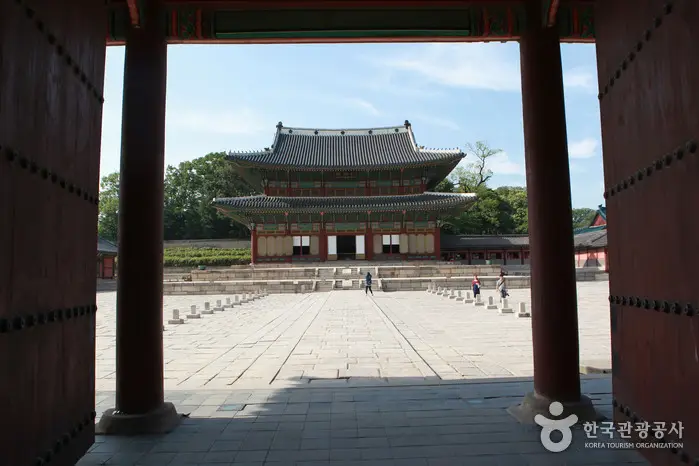
The Space Most Cherished by Joseon Kings
5 stops · 1 day
Gyeongbokgung Palace is often considered the palace that represents Korea, but Changdeokgung Palace is the one inscribed on the UNESCO World Heritage list. Starting from King Taejong, kings stayed at Changdeokgung more frequently and for longer periods than at Gyeongbokgung. Starting from here, this is an excellent course to explore key cultural heritage sites in Seoul, including the National Folk Museum of Korea.
- Duration
- 1 day
- Distance
- 10.12km
Along the way
- 1Changdeokgung Palace and Huwon [UNESCO World Heritage]
창덕궁과 후원 [유네스코 세계문화유산]
Changdeokgung Palace was inscribed on the UNESCO World Heritage list alongside Suwon Hwaseong Fortress at the World Heritage Committee session held in Naples, Italy, in December 1997. Changdeokgung Huwon (Rear Garden) was created during the reign of King Taejong and served as a place of relaxation for the king and royal family. Huwon was also called Bukwon (North Garden) or Geumwon (Forbidden Garden), and after King Gojong's reign, it was called Biwon (Secret Garden). It is Korea's foremost garden, preserving its natural scenery of low hills and valleys with human hands added only where strictly necessary. Numerous pavilions and ponds, including Buyongjeong and Buyongji, Juhamnu and Eosumun, Yeonghwadang, Bullomun, Aeryeonjeong, and Yeongyeongdang, are located throughout the garden. It is said to be especially beautiful in autumn when the leaves change color and fall. MoreLess
- 2National Folk Museum of Korea
국립민속박물관
Located inside Gyeongbokgung Palace, the National Folk Museum of Korea is the country's only national comprehensive museum dedicated to folk life history, displaying around 4,000 folk artifacts related to traditional Korean lifestyles. It serves as a cultural and educational venue that fosters national pride through proper understanding of traditional culture via research, collection, preservation of folk culture, and exhibitions of daily life culture, as well as a cultural hall harmonizing tradition and modernity. It features three permanent exhibition halls and two special exhibition halls, along with facilities such as an archive and museum shop, where visitors can also participate in various cultural education programs and events.MoreLess
- 3National Museum of Modern and Contemporary Art, Seoul
국립현대미술관(서울관)
MMCA Seoul (National Museum of Modern and Contemporary Art, Seoul) is an art museum focusing on contemporary art. Following the Gwacheon branch opened in 1986 and Deoksugung branch in 1998, the Seoul branch opened in 2013 on the historic site where Sogyeokseo, Jongchinbu, Gyujanggak, and Saganwon once stood during the Joseon Dynasty. As a comprehensive arts and cultural complex equipped with exhibition galleries, a digital information room, a multimedia hall, and a cinema, MMCA Seoul holds Korean contemporary art exhibitions and new-media convergence exhibitions. It is an open museum that shapes rich, productive contemporary art discourse and generates cultural development by embracing diverse artistic genres.MoreLess
- 4Jongmyo Shrine [UNESCO World Heritage]
종묘 [유네스코 세계문화유산]
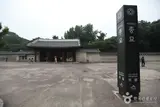
Jongmyo is a royal ancestral shrine housing the spirit tablets (Sinju) of successive kings and queens of the Joseon Dynasty, as well as those posthumously honored. Within the grounds of approximately 186,776 m² (56,500 pyeong), there are buildings including Jeongjeon (the main hall), Yeongnyeongjeon (an annex shrine), Jeonsacheong, Eosuksil, Hyangdaecheong, and Sindang. The Jongmyo Daeje (Royal Ancestral Ritual) held here was a national ceremony dating back to the Three Kingdoms period. The ritual of holding ancestral rites for past monarchs was an indispensable, paramount national event during the dynastic era and the foundation of the ruling order.MoreLess
- 5
Gwangjang Market
광장시장
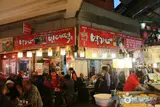
In the late Joseon period, as the domestic situation descended into chaos, the nation's fate hung by a thread amid rivalry among foreign powers such as Japan and China. After the signing of the Eulsa Treaty in 1904 (the 41st year of King Gojong's reign), Japan took de facto control of state sovereignty and pursued economic aggression, one example being its takeover of Namdaemun Market's management rights; Gwangjang Market in Jongno was newly opened as an economic breakthrough. This marked the birth of Korea's first permanent market in 1905. Originally, Gwangjang Market was planned to be built by covering the stream between Gwanggyo (wide bridge) and Janggyo (long bridge), taking the first syllables of each bridge's name to mean 'wide and long' (廣長). However, after moving the site to Baeogae, it kept the Korean pronunciation of its previous name while taking on a new meaning of 'broadly gathering and preserving' to become today's Gwangjang (廣藏) Market.MoreLess
Source: Korea Tourism Organization (TourAPI) · Machine-translated