A Journey to the King
7 stops · 1 day
Upon entering Gyeongju National Museum, you will see a massive bell. This is the Sacred Bell of King Seongdeok the Great, created by King Gyeongdeok to honor his father. It is a great travel course for exploring the golden cultural heritage of Silla, offering a meaningful experiential journey as you pay close attention to the stories behind each historic site.
- Duration
- 1 day
- Distance
- 10.33km
Along the way
- 1Tomb of King Muyeol and Stele for King Taejong Muyeol, Gyeongju
경주 무열왕릉, 태종무열왕릉비
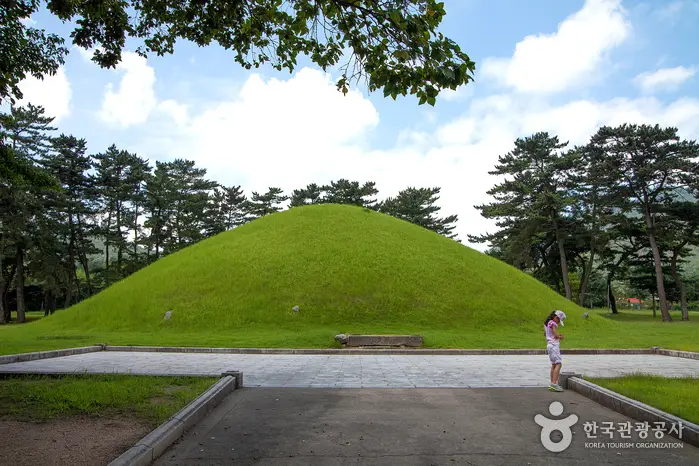
The Tomb of King Muyeol in Gyeongju is the royal tomb of King Taejong Muyeol (Kim Chun-chu, r. 654–661), the 29th king of Silla. It is situated at the southern foot of a hill extending from Mt. Seondosan to the northwest of Gyeongju. The tomb is relatively large, measuring 114 meters in circumference at the base and 8.7 meters in height. Natural stones were laid around the base and supported by large stones here and there, though they are now buried under the soil. To the east remain the turtle-shaped stone pedestal and capstone of a stele, inscribed in relief with the characters '태종무열대왕지비 (Stele of the Great King Taejong Muyeol)' written by Kim In-mun, the second son of King Muyeol, which confirms that this is the tomb of King Muyeol.MoreLess

- 2Gyeongju National Museum
국립경주박물관
As a treasure house preserving the millennium-old culture of Silla, Gyeongju National Museum has long received deep affection, interest, and support. Recently, the museum opened the Art Hall and newly renovated the Archaeology Hall, Wolji Hall, and Special Exhibition Hall, completely refreshing its exhibition environment. As a key cultural center dedicated to the preservation, exhibition, investigation, and research of Silla culture, it aims to leap forward as a pivotal cultural complex in East Asia by promoting various special exhibitions, international exchange projects, and social education programs.MoreLess
- 3
Wolseong Fortress (Banwolseong), Gyeongju
경주 월성(반월성)
This is where the royal castle of Silla was built in 101 AD during the 22nd year of King Pasa's reign, serving as the site of the royal palace until the fall of Silla in 935 AD. Because the terrain resembles a crescent moon, it was called 'Sinwolseong' (New Moon Fortress) or 'Wolseong' (Moon Fortress), and it was also referred to as 'Jaeseong' because it was the castle where the king resided. It has been called Banwolseong (Half Moon Fortress) since the Joseon Dynasty. Wolseong is an earthen and stone embankment fortress made of a mixture of stones and earth, with a total length of 1,841 meters and an internal area of 193,585 square meters. To the east, it is connected to Imhaejeon Hall of Donggung Palace and Anapji Pond, to the north stands Cheomseongdae Observatory, and to the south, the stream of Namcheon Stream also served as a defensive line. MoreLess
- 4
Gyerim Forest, Gyeongju
경주 계림
This forest is located between Cheomseongdae Observatory and Wolseong Fortress, and is a historic site steeped in the legend of the birth of Alji, the founding ancestor of the Gyeongju Kim clan (Historic Site No. 19). During the reign of King Talhae of Silla, Hogong heard a rooster crowing in this forest, and upon approaching, found a glowing golden chest hanging from a tree branch. When this was reported to the king, the king went to the forest himself and brought down the golden chest. Inside the chest, a boy was discovered upon opening the lid; thus, he was given the surname Kim (meaning gold) and named Alji, and this forest, formerly called Sirim or Gurim, came to be named Gyerim (Rooster Forest).MoreLess
- 5Cheomseongdae Observatory
경주 첨성대
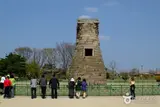
Built during the reign of Queen Seondeok of Silla, Cheomseongdae is an astronomical observatory and the oldest and only stone structure of its kind in the Orient. Made of granite, it stands 9.17 meters high with a top diameter of 3.1 meters, a bottom diameter of 5.17 meters, and a base stone side length of 5.35 meters. The double-layered base stones and foundation form a square shape consisting of 8 and 15 long stones, atop which a cylindrical body of 27 tiers was built—wide at the bottom, tapering upward, and becoming vertical at the very top. Although it currently tilts slightly to the northeast, it is an extremely rare historic relic preserving its original stone structure and is designated as National Treasure No. 31. It holds great value as the oldest astronomical observatory in the Orient and is a cultural heritage that demonstrates the high level of scientific advancement of that era.MoreLess
- 6
Daereungwon Ancient Tomb Complex (Cheonmachong Tomb)
대릉원(천마총)
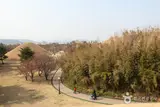
Excavated in 1973, Tomb No. 155, known as Cheonmachong Tomb, is a wooden chamber tomb with a stone mound characteristic of Silla. Measuring 12.7 meters in height and 50 meters in diameter, the earthen mound contains a stone layer made of stones from a stream, and inside the stone layer is a wooden chamber measuring 6.5 meters long, 4.2 meters wide, and 2.1 meters high, where a wooden coffin was placed in the center to lay the deceased. A total of 11,526 artifacts were unearthed, among which Cheonmado (Painting of Heavenly Horse) is a precious painting discovered for the first time in an ancient Korean tomb.MoreLess
- 7Donggung Palace and Wolji Pond
경주 동궁과 월지
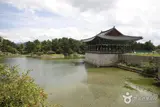
This is the site of a secondary palace of the Silla royal palace located west of Anapji Pond. Along with other auxiliary buildings, it served as the Eastern Palace (Donggung) where the Crown Prince resided, and it is said that banquets were held here during national celebrations or when welcoming honored guests. It is also the site where King Gyeongsun of Silla hosted a banquet in 931 for King Taejo Wang Geon of Goryeo to plead for help in an urgent situation following an invasion by Gyeon Hwon. After unifying the Three Kingdoms, Silla dug a large pond in the 14th year of King Munmu (674), created three islands in the center of the pond and 12 mountain peaks to the north and east, and is said to have planted beautiful flowers and trees and raised rare birds and animals here. In the Goryeo Dynasty's Samguk Sagi (History of the Three Kingdoms), only Imhaejeon Hall is mentioned without any reference to Anapji Pond, but the Joseon Dynasty's Dongguk Yeoji Seungnam records that "To the west of Anapji Pond is Imhaejeon," leading to the presumption that the current location is Anapji Pond.MoreLess
Source: Korea Tourism Organization (TourAPI) · Machine-translated