A Course Full of Skin-Benefiting Sulfur and High Water Temperatures of up to 78°C
6 stops · 2 Days, 1 Night
Bugok Hot Springs boasts a maximum water temperature of 78°C, which is the highest among hot spring waters in Korea. It also has the highest sulfur content among domestic hot springs, making it known to be effective for skin conditions, neuralgia, and gynecological disorders. Above all, it is equipped with various amusement facilities, making it a great course for families to enjoy together. Strolling through the beautiful nature of Yeongam surrounding the hot spring special tourist zone is another great way to enhance the benefits of the hot springs.
- Duration
- 2 Days, 1 Night
- Distance
- 64.62km
Along the way
- 1
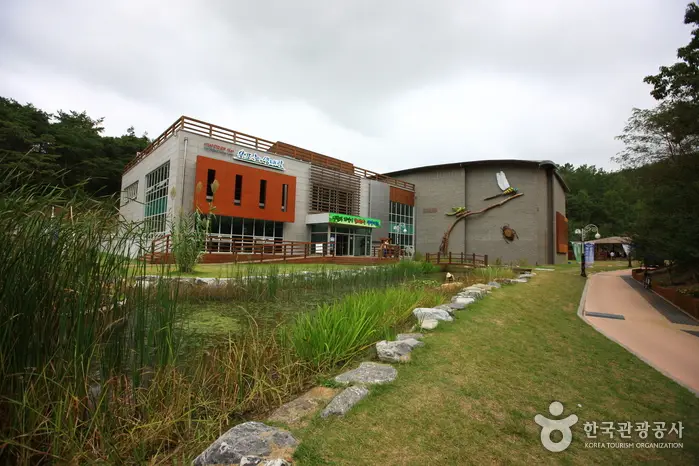
Upo Wetland Eco Museum
우포늪생태관
This is a natural learning and cultural space where visitors can understand the ecological environment of Upo Wetland, the largest natural wetland in Korea. The Upo Wetland Eco Museum preserves and studies records of various wetland wildlife such as birds, fish, mammals, amphibians, and reptiles, while exhibiting them to the public. It also conveys the message that humans are part of nature and teaches how to coexist with the natural environment. To help visitors better understand the ecological environment, the museum consists of exhibition halls such as Understanding Upo Wetland, Four Seasons of Upo Wetland, Living Upo Wetland, Families of Upo Wetland, and Understanding the Ecological Environment.MoreLess
- 2
Changnyeong Seokbinggo (Ice Storage)
창녕 석빙고
A seokbinggo is an ice storage facility that showcases the wisdom of ancestors who gathered ice in the cold winter and stored it for use during the hot summer. This ice storehouse is believed to have been repaired during the Joseon Dynasty, as deduced from its architectural style and the institutionalized popularity of ice storage customs at that time. The earthen mound of this ice storage remains nearly intact, and its exterior resembles a huge ancient tomb, built long from north to south perpendicular to the stream running behind it. The entrance to the ice chamber was installed on the south side, where long, large stone blocks were laid horizontally and stacked up to form the ceiling, which features two ventilation holes leading to the outside. The walls were made of rough stones, but their surfaces were trimmed smooth to create flat chamber walls.MoreLess
- 3
Changnyeong Museum
창녕박물관
This is a comprehensive museum located in Gyo-ri, Changnyeong-eup, Changnyeong-gun, Gyeongsangnam-do. It conducts research and promotion of local culture, mainly exhibiting archaeological artifacts unearthed in the Changnyeong area spanning from prehistoric times to the Gaya period. Changnyeong Museum opened in March 1996 and is adjacent to the Gyodong Ancient Tombs on the western foot of Hwawangsan Mountain, featuring two exhibition halls and an audiovisual room. The building consists of one ground floor and one basement floor; the first floor houses Exhibition Hall 1 and Exhibition Hall 2. The basement has an audiovisual room where audiovisual materials offering an overview of cultural heritage across Changnyeong-gun are screened.MoreLess

- 4Bugok Hot Springs Special Tourist Zone (Accommodation)
부곡온천 관광특구(숙박)
Bugok Hot Springs consistently maintains a water temperature of 78°C, by far the highest among Korea's leading hot springs. Discovered in 1973, it is an alkaline sulfur hot spring water with a daily discharge of 6,000 tons, the largest in the country. The hot spring bath commonly known as 'Bugok Hawaii' is famous, and as a first-class tourist hotel, it is equipped with various convenient facilities including indoor and outdoor swimming pools, performance venues, jjimjilbang (Korean dry sauna), and sauna rooms. In the 1970s and 1980s, it was famous as a honeymoon destination and a trip for parents. Bugok Hot Springs Special Tourist Zone features comprehensive resort facilities based on hot springs, such as hotels, condominiums, golf courses, and hot spring fountains, as well as 24 different hot spring facilities.MoreLess

- 5
Gwallyongsa Temple
관룡사
Gwallyongsa Temple houses Daeungjeon Hall (Treasure No. 212), Yaksajeon Hall (Treasure No. 146), the Stone Seated Tathagata Buddha (Treasure No. 519), the Three-Story Stone Pagoda of Yaksajeon Hall (Local Tangible Cultural Heritage No. 11), and the Stone Seated Sakyamuni Buddha at Yongseondae (Treasure No. 295). In addition, at the entrance of Gwallyongsa Temple lies Okcheonsaji Temple Site, where monk Sin Don (?–1371), who led reform politics during the reign of King Gongmin of Goryeo, entered the Buddhist priesthood, as well as Ilmisaji Temple Site, said to be his birthplace. The deep Okcheon Valley nearby attracts many summer vacationers. MoreLess
- 6
Hwawangsan County Park
화왕산군립공원
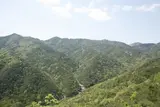
A park connecting Hwawangsan Mountain (756.6m) and Gwallyongsan Mountain (also known as Guryongsan Mountain, 739.7m), it boasts numerous cultural properties and beautiful natural scenery, attracting many tourists and hikers. Centered around Hwawangsan Mountain (757m) at the boundary between Changnyeong-eup and Goam-myeon in Changnyeong-gun, nearby attractions include the Changnyeong Monument of King Jinheung of Silla in Manokjeong Park (National Treasure No. 33), Changnyeong Gyodong Ancient Tombs (Historic Site No. 80), and Changnyeong Seokbinggo (Treasure No. 310).MoreLess
Source: Korea Tourism Organization (TourAPI) · Machine-translated