Mokpo's 5 Delicacies to Whet Your Winter Appetite
9 stops · 1 night, 2 days
Mokpo is undeniably a 'city of gastronomy.' Serving as a collection and distribution hub for seafood harvested from the seas of Sinan, the city is overflowing with delicious and wholesome food. Mokpo's 5 delicacies consist of small octopus (sebal-nakji), fermented skate and pork belly combo (hongtak samhap), seasoned and marinated blue crab (kkotge-muchim and kkotgejang), croaker sashimi (mineo-hoe), and braised cutlassfish (galchi-jorim). Savoring these Mokpo delicacies after exploring Yudalsan Mountain, Gatbawi Rock, or Mokpo's modern cultural heritage will make you forget all your fatigue.
- Duration
- 1 night, 2 days
- Distance
- 32km
Along the way
- 1
Historic Site of Admiral Yi Sun-sin on Gohado Island
고하도이충무공유적
The Historic Site of Admiral Yi Sun-sin on Gohado Island is where Admiral Yi stayed from October in the 30th year of King Seonjo's reign (1597) during the Jeongyu Jaeran (second Japanese invasion) until March of the following year to gather military provisions and supplies to prepare for war. The admiral built a stone fortress here stretching 1 km to the south and west, with a height of 2 m and a width of 1 m, to monitor enemy ships. To raise military funds, he required passing ships to provide 1 to 3 seok of grain in exchange for a transit pass, amassing 10,000 seok of military rice in just 10 days. It is also said that he rebuilt his forces here by manufacturing weapons and building ships.MoreLess
- 2Mokpo Modern History Museum No. 2
목포근대역사관 2관
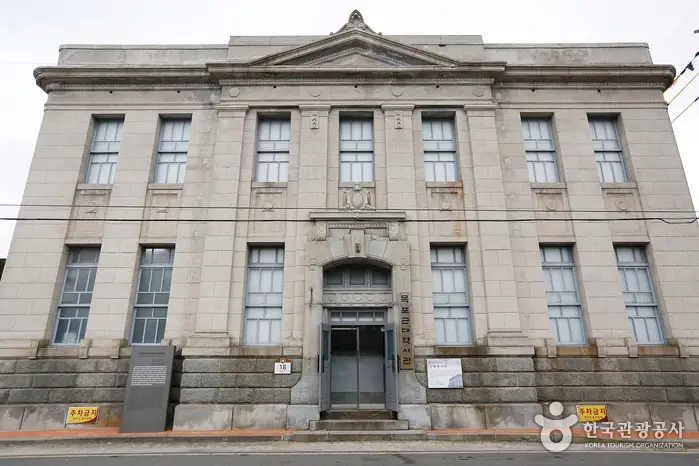
The former Mokpo branch of the Oriental Development Company (Modern History Museum) was constructed in June 1920. Built in a modern Western architectural style, this building stands as physical evidence of Japanese imperialist aggression, evoking historical awareness of Korea's past. Today, it is utilized as the Mokpo Modern History Museum.MoreLess
- 3
Mokpo Complex Fish Market
목포 종합수산시장
As part of Mokpo City's traditional market environmental improvement project, the former Dongmyeong-dong Fish Market was modernized with a budget of 3.3 billion KRW to revitalize commerce and invigorate the old downtown area. Newly renovated with arcades and parking facilities, this specialized seafood market comprises 125 shops offering a wide variety of fresh fish, fermented skate, salted seafood, and dried seafood caught in the clean waters of the southwest sea, along with a public parking lot.MoreLess
- 4Moa Eumsikjeom
초원음식점
Moa Eumsikjeom is a restaurant specializing in cutlassfish dishes. It uses only Mokpo black cutlassfish and domestic blue crab to serve a variety of dishes, including braised cutlassfish, grilled cutlassfish, and spicy seasoned crab over rice.MoreLess
- 5
Japanese Colonial Era Architecture
일제강점기 건축물들
During the Japanese colonial period, Mokpo was one of the key ports used to export military supplies and goods from the Korean Peninsula to Japan. Consequently, many buildings from the Japanese colonial era remain in the area today.MoreLess
- 6
Shinan Beach Hotel (Accommodation)
신안비치호텔(숙박)
Located in the beautiful and picturesque port city of Mokpo, Shinan Beach Hotel is a premier resort hotel in the Honam region. Overlooking the layered foothills of Yudalsan Mountain and the evening sunset that paints the hotel in crimson hues, it ensures a cozy and refined stay for its guests.MoreLess
- 7Yudalsan Mountain
유달산
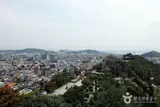
Also referred to as 'Gaegol of Honam,' Yudalsan Mountain is home to five pavilions, including Daehangnu, Dalseonggak, and Yuseongak, while a monument to the song 'Tears of Mokpo' sung by singer Lee Nan-young stands at the foot of the mountain. Following the citywide Yudalsan park project launched by a promotion committee in 1982, various attractions such as a sculpture park displaying 100 sculptures and an orchid park were created. Visitors can also drive along the 2.7 km Yudalsan ring road to enjoy panoramic views of downtown Mokpo and the Dadohae archipelago.MoreLess
- 8National Research Institute of Maritime Cultural Heritage
국립해양문화재연구소
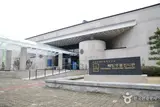
Located on Gatbawi Cultural Street in Mokpo, the 'National Research Institute of Maritime Cultural Heritage' is an affiliated organization of the Cultural Heritage Administration, and is the only national maritime museum in Korea dedicated to discovering and promoting our precious maritime cultural heritage. The exhibition building consists of one basement level and two above-ground floors, housing a total of 2,000 artifacts. The museum features Exhibition Halls 1 through 4, an outdoor exhibition area, and a special exhibition hall, themed around ancient ships that slept in the sea and various cultural relics, the lives and culture of seaside village communities, and the history of traditional Korean ships (Hanseon). Additionally, a floating exhibition hall is set up on the outdoor beach, allowing visitors to feel how ancestors utilized and explored the seas through relics that capture their maritime culture and historical footprints.MoreLess
- 9Mokpo Gatbawi Rock
목포 갓바위
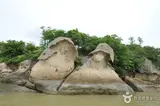
Gatbawi consists of Jungbawi (Monk Rock) and Satgatbawi (Conical Hat Rock), though Satgatbawi is often referred to as Jungbawi or Satgatbawi. It is called Gatbawi because the rocks facing the sea resemble two Buddhist monks wearing traditional conical bamboo hats (satgat), and Jungbawi is said to be named after a noble Taoist master monk who once resided there. MoreLess
Source: Korea Tourism Organization (TourAPI) · Machine-translated