Following Autumn Foliage along Craggy Cliffs and Deep Valleys
6 stops · 2 Days, 1 Night
Even though Juwangsan Mountain is located in the most secluded of remote areas, it is frequently talked about by travelers. Deep within this mountain lies a place reminiscent of the "Legends of the Fall." That place is Jeolgol Valley, named so because there used to be a Buddhist temple inside the valley. Devoid of artificial trekking trails, this course allows visitors to fully experience the autumn nature of a remote backcountry where legends seem to come to life.
- Duration
- 2 Days, 1 Night
- Distance
- 56.45km
Along the way
- 1Jusanji Pond
주산지
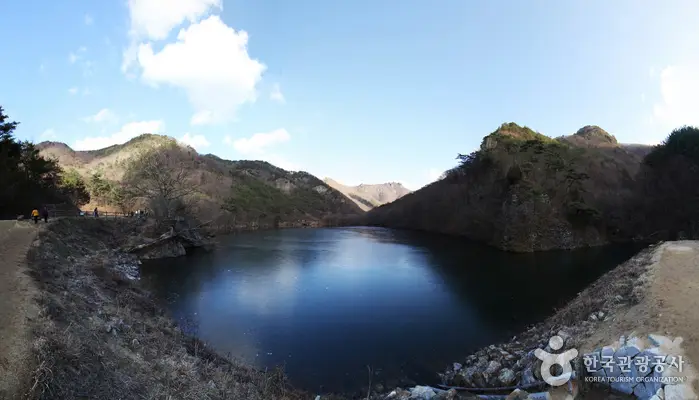
Located about 3 km from Ijeon-ri, the seat of Budong-myeon in Cheongsong-gun, this reservoir was completed about 270 years ago. Measuring 100 meters long, 50 meters wide, and 7.8 meters deep, it is not particularly large, but it is said that the water has never dried up to expose its bed, no matter how severe the drought. In particular, about 20 weeping willows and king willows of around 150 years of age growing naturally inside the reservoir create a cozy atmosphere alongside the dense forest. The hiking trail from here along the valley leading up to Byeolbawi Rock also boasts picturesque scenery. MoreLess
- 2Jeolgol Valley (Trekking)
절골계곡(트래킹)
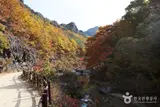
Located in the southeastern part of Juwangsan Mountain, this valley features crystal-clear water flowing all year round and is surrounded by bamboo-shoot-like craggy rocks and dense forests, creating an otherworldly atmosphere. Entering Jeolgol with the valley wind blowing between rock walls, the clear water and cool breeze make one's spine chill even in the height of summer. The beauty of this roughly 8 km valley is second only to Juwang Valley. About 1 km away is a reservoir called Jusanji, where old king willow trees uniquely grow in the water, adding a sense of mystique.MoreLess
- 3
Dalgi Mineral Spring
달기약수탕
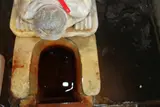
Also known as Dalgye Mineral Spring, Dalgi Mineral Spring first became known during the reign of King Cheoljong of the Joseon Dynasty. Gwon Seong-ha, who served as Geumbudosa, resigned from his post and moved from Andong to settle here in Bugok-ri. While working on waterway construction with villagers, he discovered mineral water gushing from between the rocks. A key characteristic of Dalgi Mineral Spring is that its yield remains constant through all four seasons regardless of drought, it does not freeze in winter, and it is colorless and odorless. The water tastes like sugar-free cider, and people queue up to visit because it is believed to be effective for stomach ailments, neuralgia, and anemia. MoreLess
- 4Juwangsan National Park
주왕산국립공원
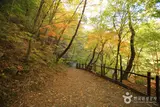
Juwangsan Mountain (720.6 m) is situated on a branch extending toward the southeastern part of the nation from the Taebaek Mountains, the backbone of the Baekdudaegan mountain range on the Korean Peninsula. It is one of Korea's three major rocky mountains, renowned for scenic wonders formed by numerous rocky peaks and deep, beautiful valleys. Designated as a tourist attraction on May 30, 1972, it was named the country's 12th national park on March 30, 1976. The total park area is 105.582 ㎢, spanning five myeon in two counties—Cheongsong-gun and Yeongdeok-gun. It is adjacent to Seoraksan and Odaesan National Parks to the north, Gyeongju to the south, and Songnisan and Deogyusan National Parks to the west. In addition to peaks like Taehaengsan, Dusuram, and Gamebong, it features Jubang Valley, Jeolgol Valley, and Wol-oe Valley.MoreLess
- 5
Cheongsong White Porcelain Transmission Center (Experience)
청송백자전수장(체험)
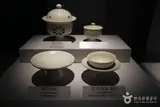
Cheongsong White Porcelain, alongside Mungyeong White Porcelain, represents the everyday pottery of the Joseon Dynasty in the Gyeongbuk region. Unlike other ceramics, it is made by crushing porcelain stone (doseok) instead of clay, making its walls very thin and lightweight, with a snow-white color. The transmission center preserves the production process and craftsmanship of Cheongsong White Porcelain (Cheongsong Sagi), which boasts over 500 years of history. The kiln caves, sagi-um (workshops), the mine where porcelain stone was excavated, and offices have been restored to their original forms, offering plenty of sights to see beyond simply passing down traditional skills.MoreLess
- 6Daejeonsa Temple
대전사
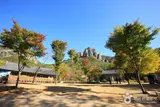
This building is said to have been first established by Master Uisang in the 12th year of King Munmu of Silla (672). Burned down during the Japanese Invasions of Korea (Imjin War), it was rebuilt in the 13th year of King Hyeonjong of Joseon (1672) and is currently used as the main hall of the temple. During repairs on Bogwangjeon Hall in 1976, a ridgepole record (Sangnyangmun) from 1662 was discovered. It is a small building measuring 3 kan in front and 3 kan on the sides, featuring a well-patterned (井-shaped) coffered ceiling, and houses Vairocana Buddha inside.MoreLess
Source: Korea Tourism Organization (TourAPI) · Machine-translated