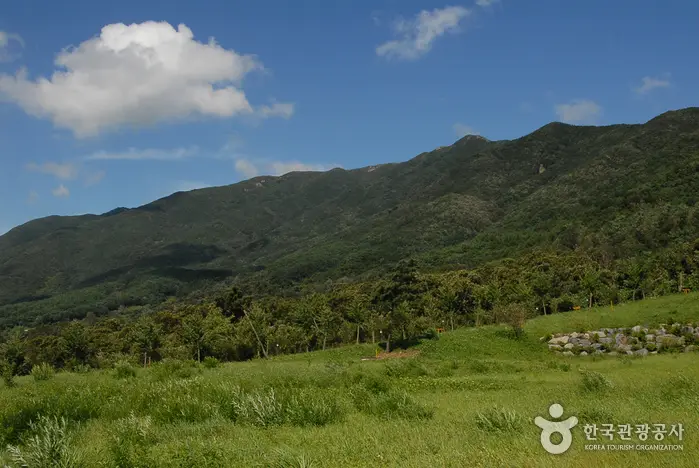
A Golden Feast in a Ginkgo Village Embracing an Old House
6 stops · 2 days, 1 night
Autumn in the Ginkgo Village of Cheongna-myeon, Boryeong, is charming and bountiful. In October, the entire village begins to turn yellow, staging a "golden feast." As one of the largest ginkgo tree colonies in Korea, ginkgo nuts also serve as the main source of income for Cheongna-myeon Ginkgo Village. Let's stop by the Shin Gyeong-seop Traditional House, the village's iconic landmark, and visit the fishing village experience where you can experience the mysterious sea route.
- Duration
- 2 days, 1 night
- Distance
- 55.27km
Along the way
- 1
Boryeong Ginkgo Village
보령 은행마을
Located on Oseosangil in Cheongna-myeon, Boryeong-si, Chungcheongnam-do, Ginkgo Village is a village surrounded by ginkgo trees. It is also called the Green Rural Experience Village or (Cheongna) Ginkgo Village. When entering the village entrance, various pictorial signs welcome visitors. However, true to its name, the village's pride is indeed its ginkgo trees. As one of the largest ginkgo tree colonies in Korea, it paints autumn days in yellow, matching any scenic spot nationwide. Janghyeon Elementary School, which closed in 1991, has been utilized as a rural experience center and direct market since 2011. Along with year-round experiences and four-season rural experience programs, it also runs distinctive village programs such as making ginkgo nut mosaics, shaking ginkgo trees, and picking ginkgo nuts.MoreLess
- 2
Shin Gyeong-seop Traditional House
신경섭 전통가옥
This Korean-style house dates back to the late Joseon period and is known to have been the sarangchae (men's quarters) of a wealthy household of the time, built using large wooden materials. A wooden floor was placed in the middle of the valley section of the sarangchae to serve as the daecheong (main hall), and a hwabangbyeok (fire-resistant wall) was installed on the front wall. Judging by the unchanged grain of the wood and the antique dancheong coloring that remain to this day, it has been well preserved. The daemunchae (gatehouse) features a hip roof and is distinctive for housing the Hyojamun (commemorative gate for a filial son) dedicated to Shin Seok-bung. In 1998, with state subsidies, repair work including re-tiling above the sanja (under-roof laths) of the sarangchae was carried out.MoreLess
- 3Oseosan Mountain
오서산
As the third highest peak in Chungcheongnam-do, Oseosan Mountain (790.7m) has long been called the "Lighthouse Mountain of the West Sea" because it served as a compass or lighthouse for ships sailing the Cheonsuman Bay area. The main ridge of about 2km centered around the summit is entirely covered with silver grass fields, making it a famous spot for silver grass hiking. Furthermore, Oseosan Mountain is located only 4km away from Gwangcheon Station on the Janghang Line, making it highly popular as a hiking destination reachable by train. The mountain's name has long been known to mean "Crow's Nest" because many crows and magpies inhabited it, and it stands as the highest peak of the Geumbukjeongmaek ridge where the Charyeong Mountain Range stretches west. Inside sits the famous temple Jeongamsa, drawing an endless stream of worshippers.MoreLess
- 4Oseosan National Recreational Forest (Accommodation)
국립 오서산자연휴양림(숙소)
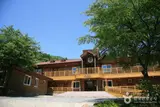
Opened on September 22, 2001, Oseosan National Recreational Forest is located near Myeongdae Valley in Cheongna-myeon, Boryeong-si, Chungcheongnam-do. Traveling to Oseosan Mountain requires passing through Boryeong, where you can feel a leisureliness distinct from ordinary cities, and the route toward Cheongna, where the recreational forest is situated, is a tranquil country road sufficient to give a sense of liberation from urban life. The name "Oseosan (烏捿山)" originated from the meaning of "Crow's Nest," and it is said that many crows and magpies lived here in the past, though unfortunately crows are hard to find today.MoreLess
- 5
Seongjusa Temple Site, Boryeong
보령 성주사지
This was once a very prosperous temple renowned as one of the Nine Mountain Schools of Seon during the late Silla period. According to the Samguk Sagi (History of the Three Kingdoms), Seongjusa Temple was founded by King Beop of Baekje under the name Ohapsa Temple. It was renamed Seongjusa Temple in the late Unified Silla period. It means a temple where a saint resides, and "saint" refers to the Master Muyeom of the late Silla period. Designated as Historic Site No. 307, the Seongjusa Temple Site currently preserves National Treasure No. 8 Stele for Master Nanghye, Treasure No. 19 Five-story Stone Pagoda, Treasure No. 20 Central Three-story Stone Pagoda, Treasure No. 47 West Three-story Stone Pagoda, along with local cultural assets such as the East Three-story Stone Pagoda, stone steps, and a stone lantern. Excavation surveys have uncovered building sites including the main hall site, the Three Thousand Buddhas hall site, the corridor site, and the middle gate site. To the northwest of the temple site stands a stylishly built pavilion, inside of which is a stupa stele.MoreLess
- 6
Muchangpo Fishing Village Experience (Mysterious Sea Route)
무창포어촌체험마을(신비의 바닷길)
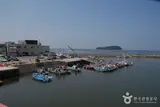
Muchang-ri, a collective name referring to the port village and beach in Gwandang-ri, is where the 1.5km "Mysterious Sea Route" opens twice a month. The sunset at Muchangpo is one of the Eight Scenic Views of Boryeong, drawing endless visits from photographers across the country as the sunset view appears to set the West Sea ablaze in dark red. In particular, Muchangpo's king prawns account for over 90% of the surrounding production and are famous enough to have been historically presented as royal tribute.MoreLess
Source: Korea Tourism Organization (TourAPI) · Machine-translated