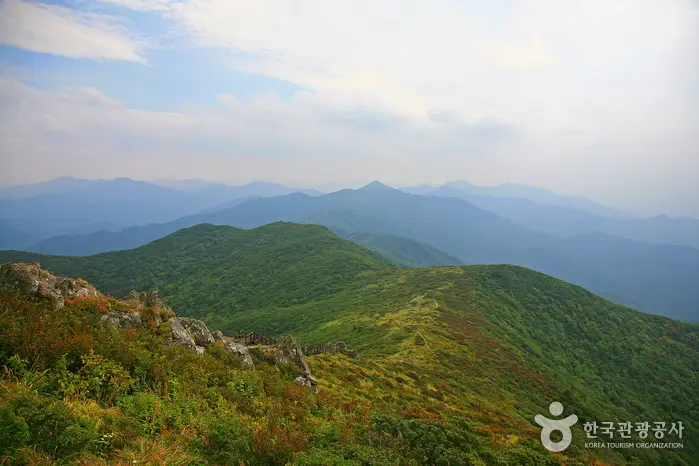
A Night in the Generous Embrace of Deogyusan Mountain
6 stops · 2 Days, 1 Night
Boasting the stunning Gucheondong Valley throughout all four seasons and excellent accessibility via the Tongyeong–Daejeon Expressway, Deogyudae Campsite is one of the largest national park campgrounds. Divided into seven zones and nestled within the forest, it offers abundant natural beauty and spacious, convenient camping areas. Nearby experience facilities, such as the wine cave and the Deogyusan Gondola, will make your camping trip even more enjoyable.
- Duration
- 2 Days, 1 Night
- Distance
- 26.32km
Along the way
- 1
Deogyusan National Park (Main Office, Jeoksang Branch Office)
덕유산국립공원(본소,적상분소)
Stretching south from the Sobaeksan Mountain Range, Deogyusan National Park spans two provinces and four counties across Jeonbuk and Gyeongnam, and was designated as Korea's 10th national park in 1975. Named Deogyusan because it was considered a generous mother mountain of deep virtue, it is the fourth highest mountain in South Korea (1,614m), possessing high conservation value for its subalpine ecosystem and attracting over 1.5 million visitors annually. Along the 36km valley stretching from Najetongmun Gate in Seolcheon-myeon, Muju-gun to Hyangjeokbong Peak, visitors can marvel at the 33 scenic spots of Muju Gucheondong—composed of 13 terrace rocks, around 10 ponds, and multiple waterfalls—along with numerous other breathtaking landscapes from Yongchu Falls to Chiryeon Falls.MoreLess
- 2
Muju Gucheondong Special Tourist Zone
무주 구천동 관광특구
The Muju Gucheondong Special Tourist Zone encompasses the foothills of Deogyusan National Park and natural recreation forests centered around Muju Gucheondong Valley in Seolcheon-myeon, Muju-gun, Jeollabuk-do. Muju Gucheondong Valley is an approximately 30km-long valley flowing along the northern base of Deogyusan National Park. The crystal-clear waters, cozily embraced by lush greenery, help visitors forget the sweltering summer heat, earning it a widespread reputation as a premier summer retreat. Thirty-three scenic spots boasting exceptional beauty, including Eunguam Rock, Haksodae Cliff, Waryongdam Pond, Gucheon Falls, and Yeonhwa Falls, line the valley. In the summer, you can also spot fireflies—a rare sight in modern times—in the pristine nature of Muju Gucheondong, and a firefly festival is held here. The autumn foliage and winter snowscapes are also celebrated as top scenic highlights.MoreLess
- 3
Jeoksangsan Historical Archives Site
적상산사고지
After national archives across the country, including the Chunchugwan in Seoul, were burned down during the Imjin War in the 25th year of King Seonjo's reign (1592), new archives were established at Jeongjoksan, Taebaeksan, Myohyangsan, and Odaesan. However, due to threats in the northern border area at the time, King Gwanghaegun built the Sillokjeon (Annals Hall) in the 6th year of his reign (1614) on Jeoksangsan Mountain in Muju, a well-known natural fortress, and transferred the Annals of the Joseon Dynasty from Myohyangsan. Later, in the 19th year of King Injo (1641), Seonwongak was built to house the royal genealogy, Seonwonnok. For approximately 300 years until it was abolished under Japanese rule, it served as one of the country's five major historical archives, preserving vital national records. It is currently designated as Jeollabuk-do Monument No. 88.MoreLess
- 4
Muju Meoru Wine Cave
무주머루와인동굴
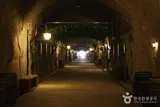
Located around Jeoksangsan Mountain in Bukchang-ri, Jeoksang-myeon, the Meoru Wine Cave harmonizes with beautiful natural scenery and cultural heritage, allowing visitors to savor the true taste and charm of wild grape (meoru) wine, a signature specialty of Muju-gun. Designed as a space for aging, storing, and selling Muju wild grape wine, the Meoru Wine Tunnel consists of the Wine House and the Secret Gate of Meoru Wine. The two-story Wine House (163.73㎡) features a local agricultural specialty shop, a wine cafe, and a traditional teahouse, while the 270m Secret Gate of Meoru Wine offers a wine cafe, tasting area, and wine storage. Notably, the Secret Gate maintains an optimal natural temperature of 13–17℃ year-round and offers special memories to visitors, including a wine-keeping facility for couples and a custom engraving/delivery service where celebratory messages for weddings, encounters, or promotions can be engraved onto wine bottles.MoreLess
- 5
Jeoksangsan Historical Archives Site
적상산사고지
After national archives across the country, including the Chunchugwan in Seoul, were burned down during the Imjin War in the 25th year of King Seonjo's reign (1592), new archives were established at Jeongjoksan, Taebaeksan, Myohyangsan, and Odaesan. However, due to threats in the northern border area at the time, King Gwanghaegun built the Sillokjeon (Annals Hall) in the 6th year of his reign (1614) on Jeoksangsan Mountain in Muju, a well-known natural fortress, and transferred the Annals of the Joseon Dynasty from Myohyangsan. Later, in the 19th year of King Injo (1641), Seonwongak was built to house the royal genealogy, Seonwonnok. For approximately 300 years until it was abolished under Japanese rule, it served as one of the country's five major historical archives, preserving vital national records. It is currently designated as Jeollabuk-do Monument No. 88.MoreLess
- 6
Muju Meoru Wine Cave
무주머루와인동굴
Located around Jeoksangsan Mountain in Bukchang-ri, Jeoksang-myeon, the Meoru Wine Cave harmonizes with beautiful natural scenery and cultural heritage, allowing visitors to savor the true taste and charm of wild grape (meoru) wine, a signature specialty of Muju-gun. \nDesigned as a space for aging, storing, and selling Muju wild grape wine, the Meoru Wine Tunnel consists of the Wine House and the Secret Gate of Meoru Wine. The two-story Wine House (163.73㎡) features a local agricultural specialty shop, a wine cafe, and a traditional teahouse, while the 270m Secret Gate of Meoru Wine offers a wine cafe, tasting area, and wine storage. Notably, the Secret Gate maintains an optimal natural temperature of 13–17℃ year-round and offers special memories to visitors, including a wine-keeping facility for couples and a custom engraving/delivery service where celebratory messages for weddings, encounters, or promotions can be engraved onto wine bottles.MoreLess
Source: Korea Tourism Organization (TourAPI) · Machine-translated