A Relaxing Camping Getaway in Nature
7 stops · 1 Night 2 Days
Godaesan Camping Resort is well-equipped with various facilities and located at the foot of Godaesan Mountain, bordering Cheorwon and Yeoncheon. With 56 camping sites spread across a spacious property, visitors can enjoy camping in a comfortable setting. Glamping facilities are also available, making it a welcoming destination even for those without camping gear.
- Duration
- 1 Night 2 Days
- Distance
- 125.67km
Along the way
- 1
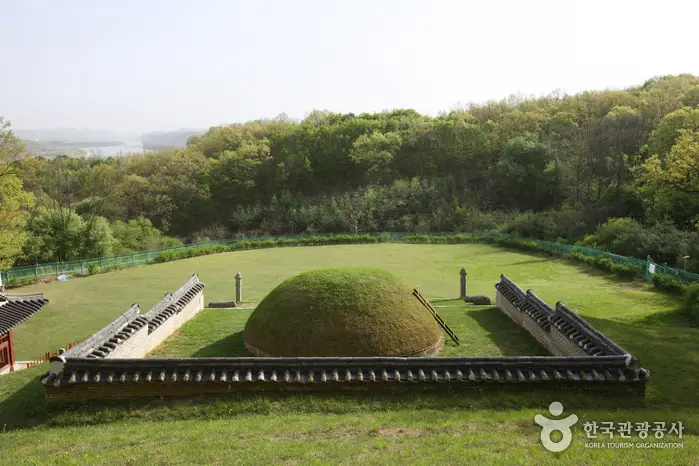
Royal Tomb of King Gyeongsun, Yeoncheon
연천 경순왕릉
King Gyeongsun was the 56th and last king of Silla. His surname was Kim and his given name was Bu. A sixth-generation descendant of King Munseong of Silla, he ascended the throne in 927 after King Gyeongae died in an attack by Gyeon Hwon of Later Baekje. \n When King Gyeongsun took the throne, the nation was divided into Later Baekje, Goryeo, and Unified Silla, and national governance was paralyzed by frequent invasions from Later Baekje and the rise of local noble families. To prevent innocent citizens from suffering further hardship, King Gyeongsun surrendered to Goryeo despite opposition from his subjects and his eldest son, Crown Prince Mae. At that time, Crown Prince Mae entered Geumgangsan Mountain, while the youngest son, Beomgong, entered Hwaeomsa Temple to become a monk. After submitting to Goryeo, King Gyeongsun was appointed as Jeongseunggong, a title equivalent to crown prince, and was granted Yuhwagung Palace as well as Gyeongju as a fief, becoming the first Sasimgwan (Inspector-General). He married Princess Nangnang, the daughter of King Taejo Wang Geon, and had several children before passing away in 978 (the 3rd year of King Gyeongjong's reign of Goryeo), 43 years later.MoreLess
- 2
Sunguijeon Shrine Site, Yeoncheon
연천 숭의전지
Sunguijeon Shrine Site is the place where Sunguijeon once stood during the Joseon dynasty to house the spirit tablets of the kings and meritorious subjects of the preceding Goryeo dynasty and offer ancestral rituals. This location was originally home to Angamsa Temple, the personal prayer temple of King Taejo Wang Geon of Goryeo. In 1397 (the 6th year of King Taejo's reign of Joseon), a shrine housing the spirit tablet of King Taejo of Goryeo was established here, marking the beginning of today's Sunguijeon. Following the construction of the shrine, by royal order in 1399 (the 1st year of King Jeongjong's reign), the spirit tablets of eight Goryeo kings were enshrined, including King Taejo, King Hyejong, King Seongjong, King Hyeonjong, King Munjong, King Wonjong (King Chunggyeong), King Chungnyeol, and King Gongmin. Later in 1425 (the 7th year of King Sejong's reign), considering that only five kings were honored at the Joseon Jongmyo Shrine, it was deemed inappropriate to venerate eight kings at a shrine for the Goryeo dynasty; thus, the enshrinement was reduced to four kings: Taejo, Hyeonjong, Munjong, and Wonjong.MoreLess
- 3
Dangposeong Fortress, Yeoncheon
연천 당포성
Dangposeong Fortress is a stone fortress built by blocking the eastern entrance of a triangular cliffside plateau formed between the Imjin River main stream and Danggyesatgang Stream flowing into Dangponaru Ferry. Along with Horogoru and Eundae-ri Fortress, it is a riverside flatland fortress found exclusively along the northern banks of the Imjin and Hantan rivers in Yeoncheon-gun. Considering the artifacts recovered from the site and the construction techniques used, it is believed to have been originally built by Goguryeo to defend against Baekje and Silla south of the Imjin River, and was later remodeled by Silla after its capture to serve as an outpost against northern forces.MoreLess
- 4
Jaeinpokpo Falls
재인폭포
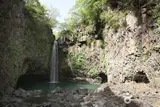
Originating from Jijangbong Peak (877m), this waterfall is situated deep in the western part of the Hantan River. The clear and refreshing stream created by the approximately 18-meter-high waterfall, combined with the surrounding lush forest, offers picturesque scenery. It is especially popular with visitors in summer and autumn. According to legend, a local magistrate wanted to claim the exceptionally beautiful wife of a tightrope performer (jaein) for himself, so he ordered the performer to walk a tightrope over this waterfall, causing his death. The performer's wife then took her own life. Since then, the waterfall, steeped in the sorrow of the jaein, has been called Jaeinpokpo Falls.MoreLess
- 5
Godaesan Camping Resort
고대산캠핑리조트
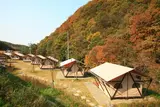
Located at the foot of Godaesan Mountain, Godaesan Camping Resort offers beautiful scenery and a peaceful retreat in pristine nature. Visitors can enjoy camping, baseball, hiking, and leisure activities all in one place, with facilities including caravans, glamping, auto camping, a convention center, and a baseball park.MoreLess
- 6Typhoon Observatory
태풍전망대
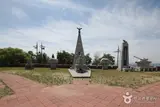
Established on December 3, 1991, by the Invincible Typhoon Division, Typhoon Observatory is located on Suribong Peak, the highest point of Bikkisan Mountain in Jung-myeon, about 65 km from Seoul and about 140 km from Pyongyang. Initially, the Southern Limit Line and Northern Limit Line were set 2 km from the Military Demarcation Line, but after North Korea installed wire fences near the Armistice Line in 1968, South Korea also partially installed fences in 1978. Typhoon Observatory is situated 800 meters from the Armistice Line and 1,600 meters from a North Korean guard post, making it famous as the observatory closest to North Korea along the 155-mile Armistice Line.MoreLess
- 7Jeongok Prehistory Musuem
전곡선사박물관
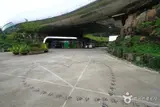
Jeongok Prehistory Musuem is a site museum established at the Jeongok-ri Paleolithic Site, a historic location that rewrote the history of global Paleolithic research with the first discovery of Acheulean-type hand axes in East Asia. The exhibition space features various themed artifacts centered on Paleolithic relics such as Acheulean hand axes excavated from the Jeongok-ri Paleolithic Site, providing a systematic understanding of human evolution and Paleolithic culture.MoreLess
Source: Korea Tourism Organization (TourAPI) · Machine-translated