Remembering Sages by the Hangang River
4 stops · 5 hours
Sujongsa Temple overlooks Dumulmeori, where the Namhangang and Bukhangang rivers converge, offering a magnificent panoramic view that rivals any other temple. The dawn water mist rising from Cheongpyeongho Lake often blankets Ungilsan Mountain thickly. Taking a peaceful walk through the tranquil Dasan Heritage Site is also a great way to fully embrace the autumn season.
- Duration
- 5 hours
- Distance
- 15.51km
Along the way
- 1Sujongsa Temple
수종사
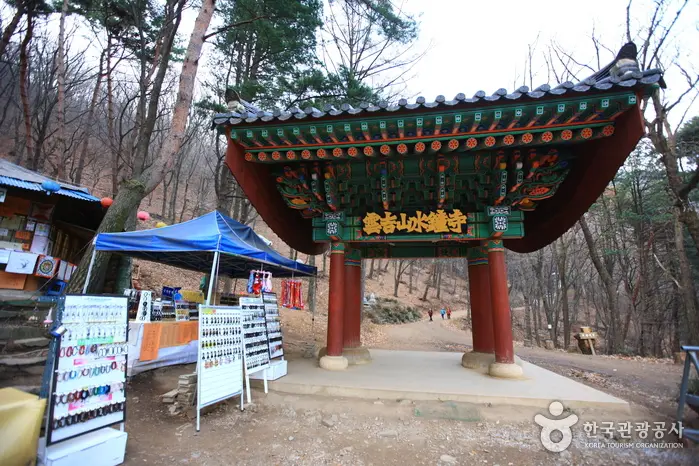
Sujongsa Temple is a branch temple of Bongseonsa Temple located near the summit of Ungilsan Mountain in Songchon-ri, Joan-myeon. As the Gwangju Mountain Range descends to the southwest, Ungilsan Mountain carries an auspicious energy; while not overwhelmingly grand, it is a renowned mountain filled with a profound and tranquil atmosphere. The view from Sujongsa Temple is particularly exceptional, featuring undulating mountain peaks and the magnificent watercourse of the Bukhangang River just before it joins the Hangang River. While its exact founding date is uncertain, according to the Beomu-go (Records of Buddhist Temples), King Sejo visited the temple in person and discovered a spring or a bell while digging the ground, leading to the name Sujongsa (Water Bell Temple). When the stone stupa was repaired in 1939, it was confirmed to have been built in 1439 (the 21st year of King Sejong's reign), suggesting that the temple was likely founded during the early Joseon period.MoreLess
- 2
Dasan Heritage Site (Namyangju)
다산유적지(남양주)
Located about 3 km from Yangsu-ri toward Paldang Dam, Majae (Mahyeon Village) is home to the gravesite of Jeong Yak-yong (pen name Dasan), designated as Gyeonggi-do Monument No. 7, as well as the birthplace site of Dasan Jeong Yak-yong and his three brothers. Majae protrudes like a bump, resembling a sentinel guarding the waters of the Hangang River. At the Dasan Heritage Site, located 200 meters from Majae, a shrine, memorial hall, and birthplace site are preserved, with Dasan's tomb situated on the hill above. Looking down from this gravesite, the village and the Hangang River unfold toward the valley of Aengjabong Peak, where Cheonjinam is located.MoreLess
- 3Yangpyeong Dumulmeori
양평 두물머리
Dumulmeori (Yangsu-ri) means the place where two waters meet: the Bukhangang River flowing down from Geumgangsan Mountain and the Namhangang River originating from Geomnyongso Spring at the foot of Geumdaebong Peak in Gangwon-do. In Chinese characters, it is written as 'Yangsu-ri' (兩水里), which refers specifically to the area centered around the ferry landing in Yangsu-ri. It is widely known through TV dramas and movies and is also very popular as a wedding photography location.MoreLess
- 4
Dumulmeori Caterpillar Ecology School
두물머리 애벌레 생태학교
This is an ecological learning center located in Dumulmeori, Yangsu-ri, Yangseo-myeon, Yangpyeong-gun, Gyeonggi-do. Located in Dumulmeori, the ecology school spans a spacious site of 49,587 square meters, featuring herbaceous plants including various wildflowers, aquatic plants such as lotus fields, and groves of zelkova trees. In the Butterfly Eco House, where over 1,000 butterflies flutter year-round, and the exhibition halls featuring around 1,000 live specimens across 50 species of insects, amphibians, and reptiles, visitors can observe living creatures in all four seasons. Additionally, the specimen exhibition hall displays around 1,000 species of domestic and international butterflies and insects across some 200 specimen frames. Throughout the year, visitors can participate in educational programs guided by specialists in various fields, covering insects, animals, wildflower and forest commentaries, and stargazing.MoreLess
Source: Korea Tourism Organization (TourAPI) · Machine-translated