Where the Legend of the Bear Maiden Flows with the River
6 stops · 1 day
Gomanaru served as the gateway to Gongju, a ferry dock where ships coming up the Geumgang River from the West Sea docked during the Baekje period. It is also a place steeped in the legend of a bear maiden who longed for the human world. Today, a shrine dedicated to the bear remains at Gomanaru. If you have plenty of time, explore Gongju's key tourist attractions starting from Gomanaru.
- Duration
- 1 day
- Distance
- 54.45km
Along the way
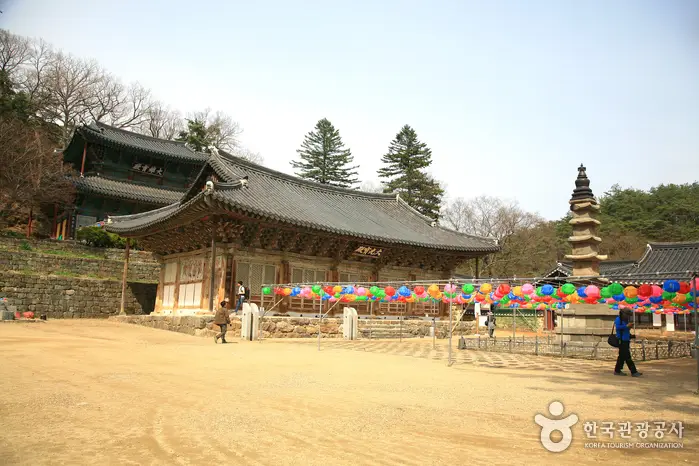
- 1Magoksa Temple
마곡사
According to the historical record "Magoksa Sajeok-ipan," the temple was founded in 640 (the 9th year of Queen Seondeok of Silla) by Master Jajang. During the reign of King Myeongjong of Goryeo in 1172, State Preceptor Bojo repaired it, Beomil rebuilt it, State Preceptor Doseon repaired it again, and Sungak restored it. In the Joseon Dynasty, King Sejo visited the temple and personally bestowed the plaque reading 'Yeongsanjeon'. At the time of its founding, it was a massive temple consisting of over 30 bays, but today only Daeungbojeon Hall (Treasure No. 801), Daegwangbojeon Hall (Treasure No. 802), Yeongsanjeon Hall (Treasure No. 800), Sacheonwangmun Gate, and Haetalmun Gate remain. Other temple treasures include a Five-story Stone Pagoda (Treasure No. 799), a Brahma Bell (Regional Tangible Cultural Heritage No. 62), a hanging painting (gwaebul), a wooden plaque, a palanquin used by King Sejo, a bronze incense burner (Regional Tangible Cultural Heritage No. 20), as well as Lotus Sutra in Gold on Indigo Paper, Vol. 6 (Treasure No. 270) and Lotus Sutra in Silver on Indigo Paper, Vol. 1 (Treasure No. 269).MoreLess
- 2Gongju Gongsanseong Fortress
공주 공산성
Located in Sanseong-dong in downtown Gongju, Gongsanseong Fortress was built to defend Gongju, which served as the royal capital for 64 years across five kings, from the 1st year of King Munju's reign (475) when the capital was moved from Hansanseong to Ungjin, until the 16th year of King Seong's reign (538) when it was moved to Buyeo. Designated as Historic Site No. 12, Gongsanseong is an ancient fortress with a total length of 2,660 meters, occupying a natural strategic vantage point situated along a ridge 110 meters above sea level.MoreLess
- 3Songsan-ri Tombs and the Royal Tomb of King Muryeong
송산리 고분군과 무령왕릉
Located on the southern slope of Songsan, an old place name spanning Geumseong-dong and Ungjin-dong in Gongju-si, these are the tombs of kings and royal family members of Baekje from the Ungjin period (475–538). Originally, there were 17 tombs, but currently only 7, including the Royal Tomb of King Muryeong and Tombs No. 1 through 6, have been restored. These tombs are categorized into two types based on their construction style: stone chamber tombs with horizontal entrances and brick chamber tombs.MoreLess
- 4
Gongju National Museum
국립공주박물관
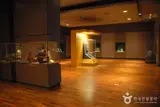
A national museum located in Ungjin-dong, Gongju-si, Chungcheongnam-do, it was established to preserve and exhibit important relics excavated from Gongju and the surrounding Chungcheongnam-do region. It conducts academic research through archaeological excavations and overseas cultural asset surveys, and functions as a lifelong learning institution by offering various cultural education programs for local residents.MoreLess
- 5
Gomanaru
고마나루
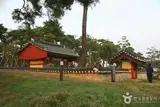
Gongju Gomanaru encompasses the low hilly terrain stretching west of the Royal Tomb of King Muryeong, including the Geumgang River and Yeonmisan Mountain in Gongju, along with the riverside ferry area. It is the birthplace of Gongju and a historic scenic site tied to the legend of a bear and a human. Gomanaru was at the heart of Baekje history, holding great historical significance. Moreover, its expansive white sand beach along the Geumgang River and a village pine forest of around 450 trees harmonize with the river and Yeonmisan Mountain, creating beautiful scenery. It is highly valued as a scenic attraction of remarkable historical, cultural, and landscape value.MoreLess
- 6Gyeryongsan Ceramic Village
계룡산도예촌
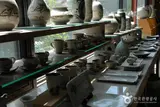
Located on Doyechon-gil (Sangsin-ri), Banpo-myeon, Gongju-si, Chungnam, this ceramic village was formed by potters who carry on the lineage of Joseon-era iron-painted buncheong ware. Iron-painted buncheong ware is a type of porcelain produced between 1480 and 1540, during the transitional period between celadon and white porcelain. Befitting the name of a ceramic village, potters have built earthen-walled houses rich in traditional charm and are dedicated to continuing the tradition of Korean ceramics. The potters' workshops are open to the public, allowing anyone to try pottery making upon making a reservation. Visitors can make their own ceramics after learning the coil-building and potter's wheel techniques. The pottery crafted by visitors is fired over the course of about a month and then delivered to their home or picked up during a return visit. With the production process open for viewing at any time, it is an exceptional living educational experience for family travelers with children.MoreLess
Source: Korea Tourism Organization (TourAPI) · Machine-translated