An Ecological Paradise That Transforms Throughout the Four Seasons
4 stops · 6 hours
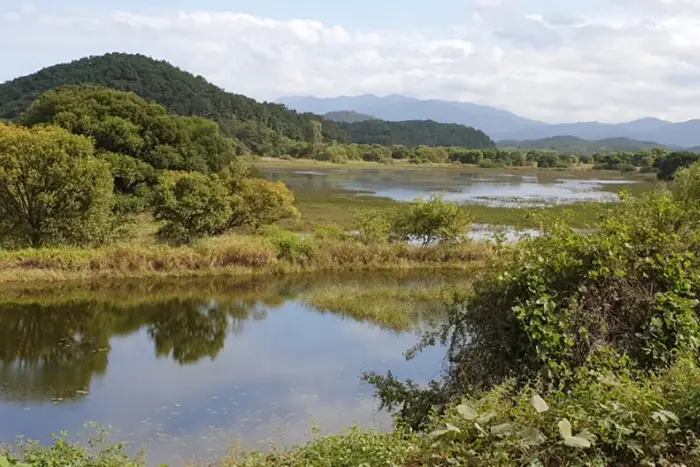
Upo Wetland in Changnyeong is Korea's largest natural inland wetland. The scenery created by the wetland changes from dawn to dusk and transforms endlessly across the four seasons. Hidden scenic spots and historic attractions throughout the area will enrich your Upo Wetland tour.
- Duration
- 6 hours
- Distance
- 13.64km
Along the way
- 1Changnyeong Upo Wetland
창녕 우포늪
Upo Wetland is Korea's largest natural wetland. The term 'wetland' here encompasses not only the largest, Upo Wetland, but also Mokpo, Sajipo, and Jjokjibeol wetlands. This wetland area spans across three townships (Yueo-myeon, Ibang-myeon, and Daehap-myeon) in Changnyeong-gun, Gyeongsangnam-do, covering a circumference of 7.5 km and a total area of 2,314,060 m². No matter how deep it gets, there are almost no spots where a person's entire body would be submerged.MoreLess
- 2
Upo Eco Museum
우포늪생태관
This is a natural learning and cultural space where visitors can understand the ecological environment of Upo Wetland, Korea's largest natural wetland. The Upo Eco Museum preserves and researches records of various wetland wildlife, including birds, fish, mammals, amphibians, and reptiles, while displaying them to the public. It also reminds visitors that humans are part of nature and shares ways to coexist with the natural environment. To help visitors better understand the ecological environment, the museum features exhibition halls such as Understanding Upo Wetland, Four Seasons of Upo Wetland, Living Upo Wetland, Families of Upo Wetland, and Understanding the Ecological Environment.MoreLess

- 3Ancient Tombs in Gyo-dong and Songhyeon-dong, Changnyeong
창녕 교동과 송현동 고분군
This is a large tumuli group located southwest across the road to Hyeonpung from the Songhyeon-dong Ancient Tombs beneath Mokmasanseong Fortress on the western foot of Hwawangsan Mountain. In Gyo-dong, dozens of large and small tombs once surrounded a large tomb referred to as a royal tomb; however, only eight tombs remain today, and their burial mounds are severely damaged. Part of this tomb complex was excavated by the Japanese between 1918 and 1919, leading to most relics being taken to Japan, with only a few remaining in Korea today. According to the investigation records of that time, the large tombs were corridor-style stone chamber tombs.MoreLess
- 4
West Three-story Stone Pagoda in Suljeong-ri, Changnyeong
창녕 술정리 서 삼층석탑
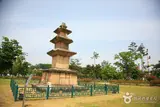
This is a Unified Silla three-story stone pagoda built on a double-tiered base. Standing 5.1 meters tall and made of granite, it was designated as Treasure No. 520 on June 24, 1970. The center of the face stone on the upper base is carved with a separate stone door, flanked by corner pillars, and the roof stone supports are composed of five tiers. The upturn at the corners of the roof stone is subtle.MoreLess
Source: Korea Tourism Organization (TourAPI) · Machine-translated