Gunsan Time Travel to the 1930s
9 stops · 1 day
Take a time travel journey to 1930s Gunsan. Starting from the Gunsan Modern History Museum located at Gunsan Inner Port, this tour offers an engaging journey into 1930s daily life through exhibition spaces such as the Marine Logistics History Hall, which highlights the city's past as a logistics hub, and the Modern Life Hall.
- Duration
- 1 day
- Distance
- 16.41km
Along the way
- 1
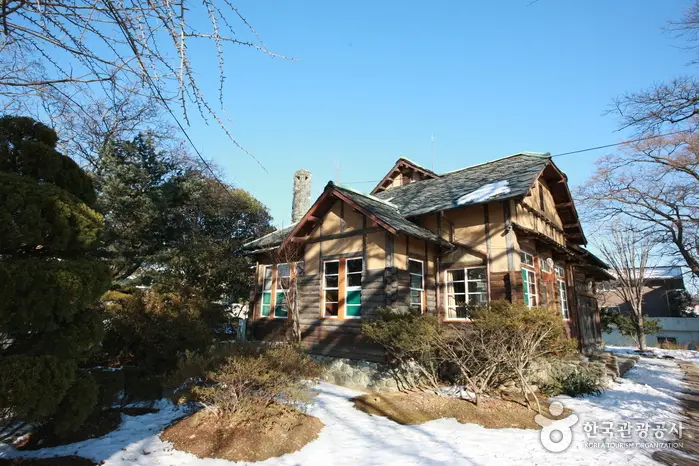
Lee Yeong-chun House
이영춘가옥
This villa was built during the Japanese colonial period by Kumamoto Ryohei, a wealthy Japanese landlord who operated large-scale farms in Gunsan. Used as a temporary residence during his visits to the farm in spring and harvest seasons, the building displays eclectic architectural features blending Western, Korean, and Japanese styles. After liberation, it came to be called the Lee Yeong-chun House as Dr. Lee Yeong-chun (pen name Ssangcheon), a pioneer of rural healthcare and hygiene in Korea, resided here. Due to its beautiful exterior, it has served as a filming location for numerous movies and dramas, including Freezing Point, Sandglass, and The Age of Wild Men.MoreLess
- 2Gunsan Modern History Museum
군산근대역사박물관
Under the motto "History Becomes the Future," the Gunsan Modern History Museum showcases the past appearance of Gunsan as a trading port and hub of maritime logistics, alongside the nation's largest modern cultural resources, depicting a thousand years of West Sea logistics and the emergence of Gunsan as an international trading port reaching out to the world.MoreLess
- 3
Former Gunsan Customs Main Building (Honam Customs Exhibition Hall)
구,군산세관본관(호남관세전시관)
Built during the Korean Empire (June 1908 / the 2nd year of Emperor Sunjong's reign), it is said to have been designed by a Frenchman or a German and constructed using red bricks and materials imported from Belgium. While Gunsan Customs once had many annexes, all have been demolished and only the main building remains. It is one of the three surviving Western classical-style buildings in Korea and is currently used as the Honam Customs Exhibition Hall. MoreLess
- 4
Chae Man-sik Literature Museum
채만식 문학관
To commemorate the literary achievements of Chae Man-sik and widely promote the development of local literature and arts, the Chae Man-sik Literature Museum was built and opened at the Geumgang River Estuary Bank following the completion of its internal facilities and complex. An opera adaptation of his novel Muddy Stream (Takryu) was also produced and successfully staged six times at the Gunsan Citizen's Cultural Center.MoreLess
- 5Jinpo Maritime Theme Park
진포해양테마공원
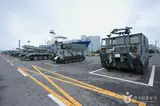
Jinpo Maritime Theme Park opened in 2008 to commemorate the Battle of Jinpo in the late Goryeo period, where General Choe Mu-seon produced naval cannons and defeated about 500 Japanese pirate ships. Set against the vast sea along the port, visitors can see 16 retired military equipment items across 13 types. Decommissioned Army, Navy, and Air Force equipment that once served on the front lines to defend the nation—including armored vehicles, self-propelled artillery, fighter aircraft, and naval vessels such as the LST Weibongham, which was deployed during the Vietnam War—are on display.MoreLess
- 6
Chae Man-sik Literature Museum
채만식 문학관
To commemorate the literary achievements of Chae Man-sik and widely promote the development of local literature and arts, the Chae Man-sik Literature Museum was built and opened at the Geumgang River Estuary Bank following the completion of its internal facilities and complex. An opera adaptation of his novel Muddy Stream (Takryu) was also produced and successfully staged six times at the Gunsan Citizen's Cultural Center.MoreLess
- 7Jinpo Maritime Theme Park
진포해양테마공원
Jinpo Maritime Theme Park opened in 2008 to commemorate the Battle of Jinpo in the late Goryeo period, where General Choe Mu-seon produced naval cannons and defeated about 500 Japanese pirate ships. Set against the vast sea along the port, visitors can see 16 retired military equipment items across 13 types. Decommissioned Army, Navy, and Air Force equipment that once served on the front lines to defend the nation—including armored vehicles, self-propelled artillery, fighter aircraft, and naval vessels such as the LST Weibongham, which was deployed during the Vietnam War—are on display.MoreLess
- 8
Lee Yeong-chun House
이영춘가옥
This villa was built during the Japanese colonial period by Kumamoto Ryohei, a wealthy Japanese landlord who operated large-scale farms in Gunsan. Used as a temporary residence during his visits to the farm in spring and harvest seasons, the building displays eclectic architectural features blending Western, Korean, and Japanese styles. After liberation, it came to be called the Lee Yeong-chun House as Dr. Lee Yeong-chun (pen name Ssangcheon), a pioneer of rural healthcare and hygiene in Korea, resided here. Due to its beautiful exterior, it has served as a filming location for numerous movies and dramas, including Freezing Point, Sandglass, and The Age of Wild Men.MoreLess
- 9Gunsan Modern History Museum
군산근대역사박물관
Under the motto "History Becomes the Future," the Gunsan Modern History Museum showcases the past appearance of Gunsan as a trading port and hub of maritime logistics, alongside the nation's largest modern cultural resources, depicting a thousand years of West Sea logistics and the emergence of Gunsan as an international trading port reaching out to the world.MoreLess
Source: Korea Tourism Organization (TourAPI) · Machine-translated