Day or Night? Seoul Day and Night Tour Course
4 stops
From Gwanghwamun Gate, which is beautiful even at night, to N Seoul Tower, where you can see downtown Seoul at a glance, this is a Seoul day and night course that is great both day and night. If you want a convenient trip, taking the Seoul City Tour Bus is also a good option. - Referenced from the 2015 City Tour Booklet
- Distance
- 7.39km
Along the way
- 1Gwanghwamun Gate
광화문
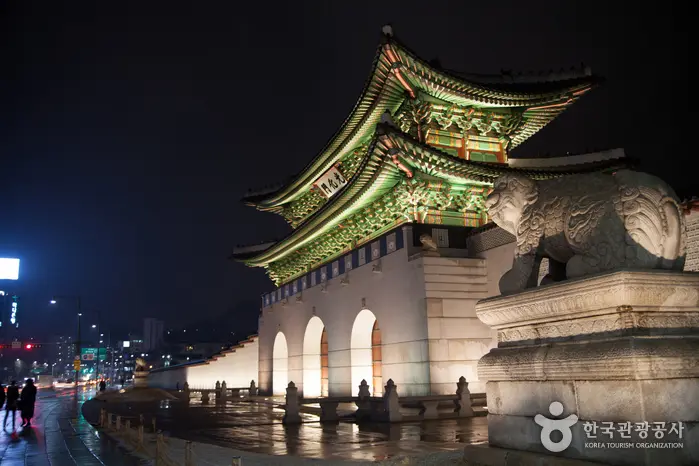
Gwanghwamun Gate is the south gate and main gate of Gyeongbokgung Palace. While it served as the main gate through which the king entered and exited, because it was the main gate of Gyeongbokgung Palace, the main palace of Joseon, its scale and formality were far grander and more magnificent compared to the main gates of other palaces. In addition, Gwanghwamun Gate had Dongsipjagak and Seosipjagak watchtowers at the eastern and western ends of its walls, making it the only palace gate among the five major palaces of Joseon to feature a palace gate watchtower format. Gwanghwamun Gate consists of three arched gateways (hongye) set in a stone foundation supporting a two-story gate pavilion. The king used the central arch, while the crown prince and officials passed through the left and right arches. A bell was hung in the gate pavilion to announce the time.MoreLess
- 2Cheonggyecheon Stream
청계천
Spanning 160 meters in length and 50 meters in width with a total area of 2,106 pyeong between the front of the Dong-A Ilbo building—the starting point of the Cheonggyecheon restoration—and Sindap Railroad Bridge. It is decorated with fountains, waterfalls, a Cheonggyecheon miniature model, walking trails, and exploration paths, and serves as a place wishing for meeting, harmony, peace, and unification alongside the meaning of the Cheonggyecheon restoration. Among these, the plaza was created on a scale of 741 pyeong at the center of the Cheonggyecheon restoration starting point, bringing out elegant traditional beauty with colorful stone paving inspired by traditional Korean bojagi (wrapping cloth) designs. Here, the Cheonggye miniature, a scale model of Cheonggyecheon, is installed so that visitors can see the restored Cheonggyecheon at a glance. Interpretation boards explaining the 22 bridges spanning Cheonggyecheon Stream are also installed, and various shaped fountains create beautiful scenery. Meanwhile, access facilities from the plaza to Cheonggyecheon Stream include a stepped entrance on the left and the Cheonggye exploration path on the right. An 18-meter tunnel is installed along the Cheonggye exploration path, offering a unique experience for citizens entering Cheonggyecheon from the plaza.MoreLess
- 3
Namdaemun Market
남대문시장
Seoul Namdaemun Market is Korea's best and largest comprehensive market handling all products necessary for daily life, including children's clothing, women's clothing, men's clothing, textile products, kitchenware, gifts, folk crafts, local specialties, food, imported goods, daily sundries, and accessories. The greatest advantage of Seoul Namdaemun Market, which handles the most diverse items in Korea, is high quality and very affordable prices. The reason is that although each shop is small in scale, each shop is an independent business that directly produces and sells goods, forming a distribution structure where producers and consumers are directly connected. It opens at 11 p.m., and by 4 a.m., retailers from all over the country gather in bustling crowds. This spectacle showing the diligence of Koreans is a unique sight hard to find in any other country in the global village, and Seoul Namdaemun Market has now become a global shopping and tourist attraction that every foreign visitor to Korea must visit.MoreLess
- 4
N Seoul Tower
남산서울타워
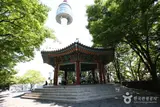
N Seoul Tower is Korea's first tower-type tourist attraction. Standing at 236.7 meters high, when calculating its height along with Namsan Mountain's elevation of 243 meters above sea level, its actual height reaches 480 meters, boasting stature as one of the best towers in the Orient. Construction began in December 1969 and was completed in July 1975, and on October 15, 1980, the observatory opened to the general public, establishing itself as a landmark of Seoul. Having received love from tourists for 30 years, Seoul Tower was remodeled on December 9, 2005, transforming deteriorated facilities into a fresh and splendid appearance. In addition, there is a dedicated road for vehicles carrying people with disabilities, making access to the observatory convenient. N Seoul Tower has established a lighting system where the colors and patterns of the tower's exterior change according to the season and events. Every night from 7:00 p.m. to 12:00 a.m., six searchlights project light into the sky at various angles under the theme of 'Flower of Seoul,' creating the appearance of a blossoming flower.MoreLess
Source: Korea Tourism Organization (TourAPI) · Machine-translated