Yeongwol Noodle-Loving Three Meals a Day Course
6 stops · 1 day
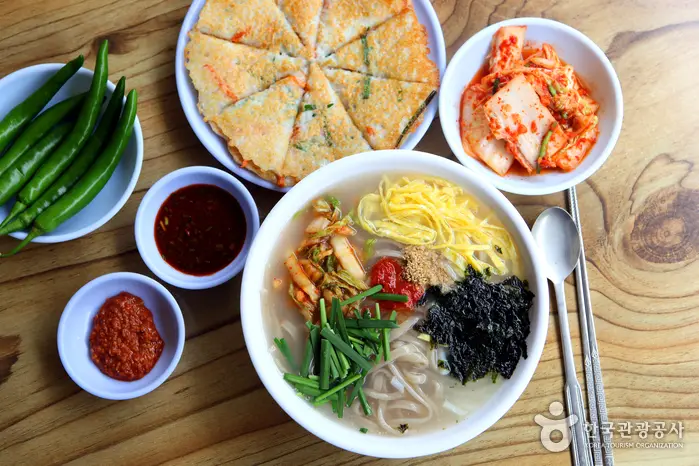
This course allows you to enjoy noodles in Yeongwol for all three meals a day. In Yeongwol, a town with an extraordinary love for noodles, you can taste a wide variety of noodle dishes. From spicy chik-guksu (arrowroot noodles) to dongchimi-guksu (radish water kimchi noodles) and kkoldu-guksu (buckwheat noodles), these dishes were a true blessing during times of hardship. Enjoy three noodle meals a day while visiting Yeongwol's famous attractions, such as Gossigul Cave, where the Go family sought refuge during the Imjin War, and the scenic Korean Peninsula Landform.
- Duration
- 1 day
- Distance
- 31.98km
Along the way
- 1
Gangwon Tosok Sikdang
강원토속식당
Located in front of Gossigul Cave in Yeongwol, Gangwon Tosok Sikdang serves chik-guksu (arrowroot noodles), a dish that is gentle on the stomach, easy to digest, and great for relieving hangovers. The noodles are handmade from arrowroot, giving them a distinctively savory and clean flavor.MoreLess
- 2
Gossigul Cave
고씨굴
The name of this cave originates from the Go family, who hid here to escape Japanese troops during the Imjin War. Traces of soot from cooking and the marks where pots were hung while they lived in hiding still remain. As one of Korea's representative limestone caves, it is estimated to have formed about 400 to 500 million years ago and offers a clear view of the stalactite formation process. Out of a total length of approximately 3,388 meters across main and branch caves, a 620-meter section has been developed and opened to the public.MoreLess
- 3
Cheongnyeongpo Cape
청령포
This exile site of King Danjong is like an island, surrounded by the river on three sides with rugged rock cliffs rising to the west. The dazzling scenery, where the Seogang River (the upper reach of the Namhangang River) meanders to form a peninsula-like landform, starkly contrasts with the sad tragedy of King Danjong. The Gwaneumsong Pine Tree inside Cheongnyeongpo Cape (Natural Monument No. 349) is where King Danjong used to sit and spend time. Named for having 'seen and heard' the life of the exiled king, it is the oldest pine tree in Korea at over 600 years of age.MoreLess
- 4
Yeondang Dongchimi Guksu
연당동치미국수
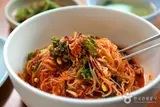
Yeondang Dongchimi Guksu has long been serving North Korean-style dongchimi-guksu (noodles in radish water kimchi). The signature dish is made by rolling boiled somyeon noodles in dongchimi that has been well-fermented for 4 to 6 months. Except for the dongchimi fermented with cabbage, chili peppers, scallions, carrots, and radishes, nothing else is added to the noodles, yet the dongchimi broth itself is wonderfully refreshing and flavorful. Located in the town center near King Danjong-related heritage sites such as Cheongnyeongpo Cape and Jangneung Royal Tomb, it is ideal for a Yeongwol sightseeing outing. It is also just 10 minutes away from Seondol Rock, which overlooks the Seogang River.MoreLess
- 5
Korean Peninsula Landform
한반도 지형
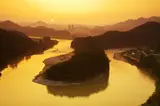
Situated along the Seogang River, this landscape looks as if it were a direct replica of the Korean Peninsula, which is surrounded by the sea on three sides. Here, the river flows in place of the sea; the eastern side features high cliffs covered with dense trees, while the western side is a gentle, almost flat slope. Furthermore, it resembles the geography of Korea almost perfectly, with features subtly mimicking Mount Baekdusan in the north and Homigot Cape of Pohang in the south.MoreLess
- 6
Jecheon Sikdang
제천식당
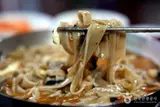
The signature dish of Jecheon Sikdang is the uniquely named kkoldu-guksu. The restaurant's menu explains the origin of the name: in the past, when food was scarce in the mountainous regions of Gangwon-do, buckwheat noodles were the most common meal available. People ate them so frequently that they came to refer to them as 'kkoldu-guksu'—meaning noodles you grew sick and tired of seeing ('kkol-do bogi silta'). Although many years have passed since it first opened in 1973, the restaurant still dries, grinds, and kneads the buckwheat by hand to make its noodles.MoreLess
Source: Korea Tourism Organization (TourAPI) · Machine-translated