Gwangmyeong History Tour: In Search of Traces of History
3 stops · 1 day
This historical tour course in Gwangmyeong traces the footsteps of history, ranging from the Gahak-dong Dolmen, a Bronze Age burial monument, to Chunghyeon Museum, which commemorates Ori Yi Won-ik, one of the prominent statesmen representing the mid-Joseon period.
- Duration
- 1 day
- Distance
- 13.81km
Along the way
- 1
Yeonghoewon
영회원
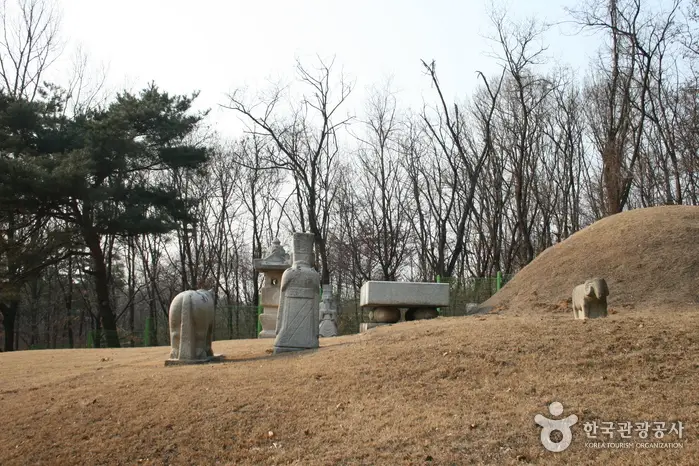
This tomb is the burial site of Crown Princess Minhoe of the Gang clan (Minhoebin), the wife of Crown Prince Sohyeon, who was the firstborn son of King Injo, the 16th monarch of the Joseon Dynasty. Crown Princess Gang was the daughter of Gang Seok-gi (posthumous title Munjeonggong), who served as the Right State Councillor. She became the crown princess in 1627 (the 5th year of King Injo's reign), but in the aftermath of the Manchu invasion of Joseon, she was taken hostage to Shenyang in Qing China along with Crown Prince Sohyeon, enduring great hardships before returning home. During her hostage life in Shenyang, she assisted Crown Prince Sohyeon, representing the royal court with an enterprising attitude to rescue Joseon captives and adjust relations between the two countries. Currently, in front of the tomb mound are a honyuseok (stone table for spirits) and a jangmyeongdeung (stone lantern), while stone civil officials (muninseok), stone pillars (mangjuseok), stone sheep, stone horses, and stone tigers remain on the left and right sides of the mound.MoreLess
- 2
Gahak-dong Dolmen
가학동지석묘
Showing traces of megalithic worship, this site is a Bronze Age burial monument or sacrificial altar located at the top of the mountain in Beolmal Village. There are six dolmens in total, with a table-style dolmen on the western end and five dolmens arranged roughly in an east-west direction to the east.MoreLess

- 3
Chunghyeon Museum
충현박물관
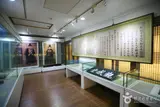
The logo of Chunghyeon Museum is a symbolization of the "signature left in the will" written by Ori Yi Won-ik in 1630 (the 8th year of King Injo's reign). It was used in a document he left to his son Yi Ui-jeon, his grandson Yi Su-yak, and other descendants four years before his passing.MoreLess
Source: Korea Tourism Organization (TourAPI) · Machine-translated