Exploring Yeoju in Search of Historical Traces
5 stops · 2 days, 1 night
Yeoju is located roughly in the central part of the Korean Peninsula, bordering Wonju in Gangwon-do and Chungju in Chungcheongbuk-do to the east, Icheon to the southwest, Gwangju to the west, and Yangpyeong-gun to the north. Embark on a historical tour of Yeoju in search of historical traces, spanning from the temple site of Godalsa to Silleuksa Temple, Yeoju Museum, the Royal Tombs of King Sejong (Yeongneung), and the Birthplace of Empress Myeongseong. Let's set off to find the traces of history!
- Duration
- 2 days, 1 night
- Distance
- 31.42km
Along the way
- 1Yeoju Godalsa Temple Site
여주 고달사지
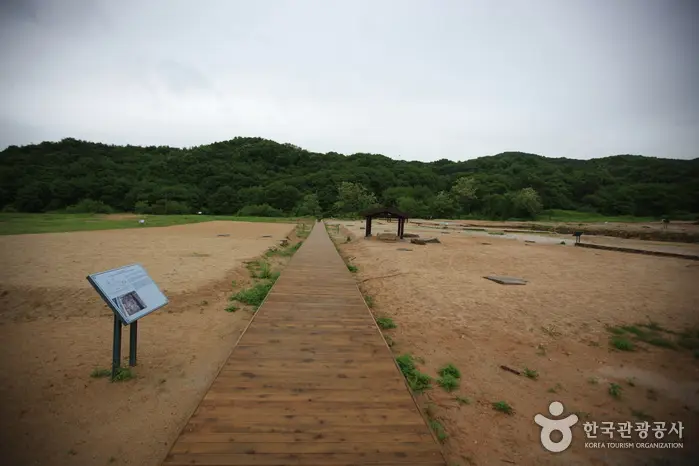
This is the temple site of Godalsa, which is now closed. Founded in 764 (the 23rd year of King Gyeongdeok's reign), Godalsa was also known as Godalwon. It was a temple favored and patronized by successive monarchs following King Gwangjong during the Goryeo Dynasty, but exactly when it fell into ruin is unclear. The temple site is located at the foot of Hyemoksan Mountain in Yeoju-si. The temple at the time of its founding was truly vast; the entire area of present-day Sanggyo-ri is presumed to have been the temple grounds, suggesting that a large village was formed near the temple. Today, only relics remain in the vast temple grounds. Currently, systematic excavation surveys are underway at the temple site for its restoration. MoreLess
- 2
Silleuksa Temple (Yeoju)
신륵사(여주)
Silleuksa is an ancient traditional temple located at the foot of Bongmisan Mountain on the upper reaches of the Namhangang River, about 2.5 km northeast of Yeoju-eup. It is said to have been founded by Wonhyo during the reign of King Jinpyeong of Silla, though there is no clear historical evidence. It is famous as a place where Monk Naong Hyegeun stayed in 1376 (the 2nd year of King U's reign) near the end of Goryeo, and records say it was a grand temple spanning over 200 kan. In 1472 (the 3rd year of King Seongjong of Joseon), it was designated as the prayer temple for Yeongneung and was named Boeunsa. In 1858, Queen Sunwon, grandmother of King Heonjong, ordered Kim Byeong-gi, Minister of Taxation, to extensively renovate the temple; from this time, its significance as the prayer temple for Yeongneung diminished and it was called Silleuksa again. While Silleuksa's activities in modern and contemporary history are not widely known, a 14-kan Yeolbandang Hall was newly built in 1925, and in 1929, when Monk Kang Seong-in served as the head monk, Myeongbujeon Hall was rebuilt with Kim In-ju serving as the donor (hwaju). MoreLess
- 3Yeoju Museum
여주박물관
Opened in May 1997 by Yeoju-si, it was built within the Silleuksa Tourist Area. Yeoju Museum aims to acquire precious cultural properties for exhibition, research, and education, contributing to their preservation and transmission. The museum consists of two exhibition rooms, an audiovisual room, offices, storage, and an outdoor performance stage. Major exhibits include old books such as Yeojumok Eupji (Town Chronicle of Yeojumok) and records on the renovation of Yeoju Hyanggyo, ancient documents including letters, royal edicts, decrees, and congratulatory addresses of figures related to Yeoju, as well as earthenware, ceramics, and folk artifacts. In addition, it displays various dioramas and models, including a diorama of the prehistoric settlement site in Heunam-ri, a model of the stone chamber tomb in the Maeryong-ri Tumuli, a diorama of the Ssangnyong Tug-of-War, a model of Silleuksa Temple, and a model of the Birthplace of Empress Myeongseong. In addition, Yeoju Museum publishes booklets on Yeoju's history and cultural sites, works on digital imaging of its collection and local cultural assets, and conducts cultural heritage exploration tours for public officials. MoreLess
- 4
Yeongneung and Yeongneung Royal Tombs, Yeoju
여주 영릉(英陵)과 영릉(寧陵)
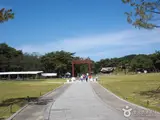
Examining the structure of Yeongneung, one of the royal tombs that best represents the tomb system of the Joseon Dynasty, it backs onto the main mountain, Chengseongsan, according to geomantic principles (feng shui), with the burial mound formed halfway up the slope, flanked by the Blue Dragon on the left and White Tiger on the right, and facing Bukseongsan Mountain in the distance to the south as the facing mountain (ansan). At the entrance of the tomb grounds stands a Hongsalmun (red-arrow gate), and a divine path leads to the Jeongjagak (T-shaped shrine). To the east of Jeongjagak are the Subokbang (guards' quarters) and Bigak (monument pavilion), while the Suragan (royal kitchen) is to the west. The burial mound is surrounded by a 12-sided stone railing, and the 12 earthly branches are engraved in Chinese characters on the small stone pillars (dongjaseokju) supporting the railing to indicate directions. In front of the mound, two Honyuseok (spirit stones) signifying that it is a joint burial tomb and a stone lantern (jangmyeongdeung) are placed, flanked by Mangjuseok (stone pillars) on the left and right. Around the royal burial chamber of the mound, four pairs (eight in total) of stone sheep and stone tigers are placed alternating on the left and right facing outward to guard the tomb, and a curved wall (gokdam) encloses the mound on three sides—east, west, and north. On a lower tier in front of the mound, two pairs of civil official statues and two pairs of military official statues are erected, each accompanied by a stone horse behind them.MoreLess
- 5Birthplace of Empress Myeongseong (Queen Min)
명성황후 생가
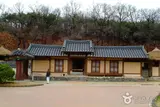
The eternal Mother of Joseon, Empress Myeongseong. As the consort of Emperor Gojong, the 26th monarch of Joseon, she pursued open-door and reform policies while defending independence through outstanding diplomatic skills. A tragic Mother of the nation whose turbulent life ended when she was assassinated by the Japanese at dawn on October 8, 1895 (solar calendar) during the Eulmi Incident. This is the house where Empress Myeongseong was born and lived until the age of 8. It was built in 1687 (the 13th year of King Sukjong's reign) as a tomb-keeper's house for Min Yu-jung, father of Queen Inhyeon; although only the anchae (inner quarters) remained from the original structure, its overall appearance was completely restored in 1995 with the reconstruction of the haengnangchae (servants' quarters), sarangchae (men's quarters), and byeoldangchae (detached quarters).MoreLess
Source: Korea Tourism Organization (TourAPI) · Machine-translated