From the Youth Streets of Jung-gu, Daejeon to Yetteo Folk Museum
5 stops · 6 hours
This course explores the vibrant downtown area where the culture of Daejeon is concentrated. Centering on the historic Daejeon Station and the youthful Skyroad, don't miss out on trying the famous Daejeon Station garak-guksu (thick noodles). Tour Daeheung-dong Culture and Arts Street, which began when struggling artists settled in the area, and then enjoy Yetteo Folk Museum in Dong-gu, which offers a completely different atmosphere. You will be able to experience contrasting charms of the city.
- Duration
- 6 hours
- Distance
- 23.06km
Along the way
- 1
Daejeon Station
대전역
Daejeon Station opened in 1905 under the Japanese colonial plan for resource exploitation and continental invasion. In 1917, only 12 trains passed through Daejeon Station during the year, but transport volume increased rapidly. Today, all Gyeongbu Line KTX and Saemaeul-ho trains—except for one daily round-trip non-stop KTX between Seoul and Busan—as well as Mugunghwa-ho trains on the Gyeongbu and Chungbuk Lines originate, terminate, or stop here. Daejeon Station is full of memories and romance, famous for the popular song "Daejeon Blues," garak-guksu (thick noodles), and a branch of Sung Sim Dang, a bakery renowned nationwide. MoreLess
- 2
Skyroad
스카이로드
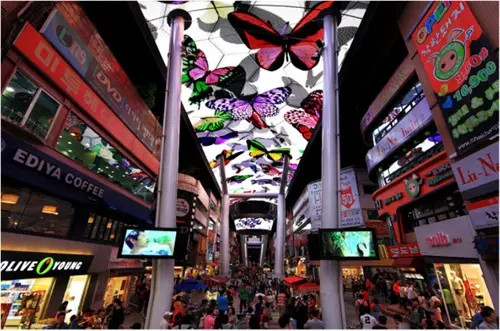
Daejeon Skyroad is an ultra-large LED video arcade structure measuring 214 meters in length, 13.3 meters in width, and 20 meters in height. Euneungjeongi Street, where Daejeon Skyroad was built, takes its name from a village that once had a ginkgo tree pavilion. Formed around Jungang-ro in front of Daejeon Station, it is known as the Myeong-dong of Daejeon. Densely packed with department stores, underground shopping malls, and art galleries, it is a bustling hub of shopping and culture popular among young people. MoreLess
- 3
Lunch (Daejeon Station Garak-guksu)
점심식사(대전역 가락국수)
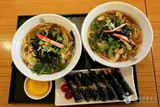
Daejeon Station Garak-guksu is a noodle specialty restaurant located near the 2nd-floor waiting area of Daejeon Station. It serves ssam-dak guksu (chicken noodle soup), duru guksu (tossed noodles), jeonggeo-jang garak-guksu (station noodles), and kkoma gimbap (mini gimbap). Guests can enjoy a combo set of noodles and mini gimbap, and mini gimbap can also be packaged as a lunch box for takeaway. MoreLess
- 4Daeheung-dong Culture and Arts Street
대흥동 문화예술의거리
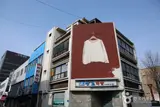
Daeheung-dong was once the center of Daejeon, but as the downtown shifted to Yuseong and Dunsan, the neighborhood gradually declined. As rent dropped naturally, struggling artists began to settle here. Visitors can spot vintage sights, such as murals depicting clothes on hangers, a painted white sweater, and artwork on fuse boxes and drainpipes. It is a place where charming, trendy cafes blend harmoniously with weathered, well-worn sceneries. MoreLess
- 5Yetteo Folk Museum
옛터민속박물관
This private museum in Daejeon was established to help the public understand folklore by providing an overview of Korean culture and history. It aims to be a comprehensive and systematic specialized museum through the survey, research, collection, exhibition, and preservation of folklore. In addition, it faithfully plays its role as a cultural space by offering various hands-on classes in response to the growing importance of lifelong education. Yetteo Folk Museum displays around 10,000 folk-related relics on a rotating basis, featuring precious artifacts such as royal edicts (gyoji), old letters (ganchal), ancient paintings, old books, folk crafts, earthenware, porcelain, and stonework. MoreLess
Source: Korea Tourism Organization (TourAPI) · Machine-translated