Confucian Culture of Daejeon and Filial Piety Through Family Names
4 stops · 5 hours
Daejeon is a region rich in Confucian and ancestral heritage. This tour offers a taste of Daejeon's distinct local culture through hands-on experiences in Musucheon Village, where history and tradition are preserved, as well as the head house of a prominent clan and the Yuhoedang Ancestral Shrine. You can also explore the origins of Korean family names at Ppuri Park and the museum.
- Duration
- 5 hours
- Distance
- 11.47km
Along the way
- 1
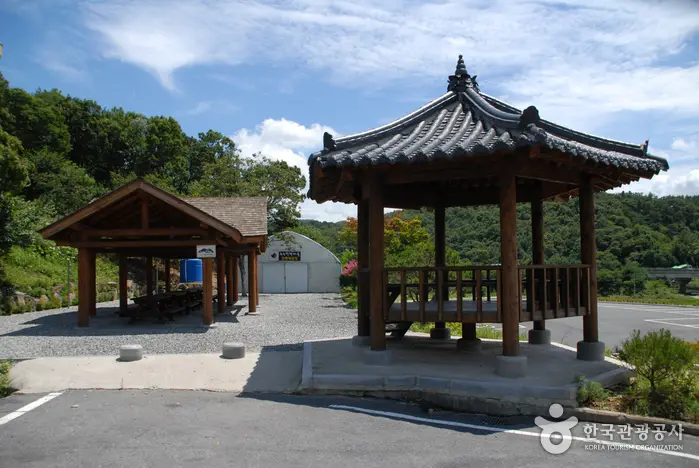
Daejeon Musucheonha Village [Rural Traditional Theme]
대전 무수천하마을 [농촌전통테마]
Musucheon, as the name 'musu' (meaning "free of sorrow") suggests, carries the meaning "no worries under the sky." Designated as a Rural Traditional Theme Village in 2006, Musucheonha Village is a rare place near a major metropolitan area that preserves history, traditional culture, and rural charm. Historical cultural heritage sites embodying filial devotion, such as the Yuhoedang Head House of the Andong Gwon Clan, Yeogyeongam Hermitage, and Geoeopje, are well preserved here. In addition, various eco-friendly agricultural products, including organic chives and Chinese milk vetch rice, are grown in the village, allowing visitors to enjoy seasonal farming experiences, diverse traditional food programs, and hands-on learning activities. MoreLess
- 2
Yuhoedang Head House Area of Andong Gwon Clan
안동권씨유회당종가일원
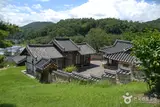
The Yuhoedang Head House was originally established by Gwon I-jin (pen name Yuhoedang, 1668–1734), who served as Minister of Taxation during the reign of King Yeongjo. After being destroyed by fire, it was rebuilt by his descendants at its current site in 1788. Nestled against the southern side of Bomunsan Mountain and surrounded by mountains on all sides, the house sits in a cozy location. This reflects a life philosophy of living in harmony with nature's mountains and streams to achieve the pure and authentic mindset of a Confucian scholar. Featuring relatively modest building sizes and generous spaces between structures, the head house displays a diverse spatial composition, including an L-shaped layout built on a low rubble stone base, a modest main house (anchae), a cozy ancestral shrine, a pavilion thought to have served as the focal point of the village community, and a garden that blends seamlessly with the natural surroundings. MoreLess
- 3
Ppuri Park
뿌리공원
Located between Bomunsan Mountain and Banghwasan Mountain in Jung-gu, Ppuri Park boasts beautiful natural scenery. Grounded in the spirit of filial piety, it was built to help people trace their roots, cultivate respect for elders and filial devotion, and awaken a sense of identity as descendants of the Korean nation. Opened on November 1, 1997, on a site of approximately 109,000 square meters in Chimsan-dong, Jung-gu, Daejeon, this theme park is dedicated to filial piety and is the first in the world to feature sculptures symbolizing various Korean family names alongside a range of visitor amenities. MoreLess
- 4
Yuhoedang Shrine
유회당사당
Built in 1714 (the 40th year of King Sukjong's reign) by Gwon I-jin (pen name Yuhoedang, 1668–1734), who served as Minister of Taxation during King Yeongjo's reign, this shrine was established for reading, education, and performing memorial rites for his parents buried on the mountain behind the building. "Yuhoe" means "always harboring a filial heart that deeply misses one's parents." Samgeunjeongsa was named for being close to three things—the grave, the stream, and the royal azalea blossoms—and is the only simyoso (a building erected to guard and care for a parent's grave) in this region. Gigungjae is a ritual preparation building used to manage Yuhoedang and Samgeunjeongsa, and is used for ancestral rites and clan meetings. MoreLess
Source: Korea Tourism Organization (TourAPI) · Machine-translated