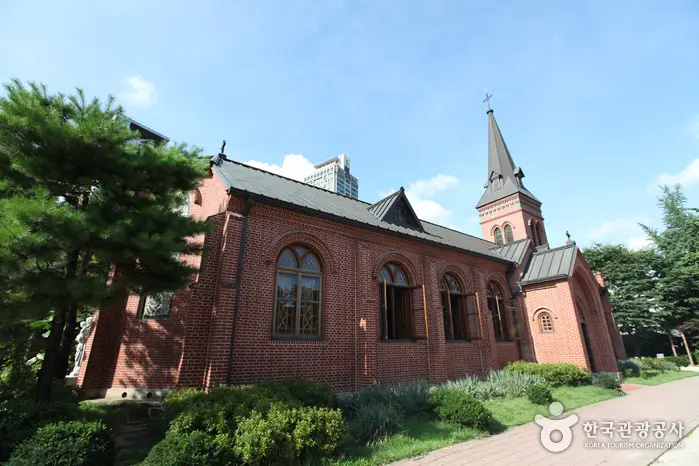
Tour Course of Yakhyeon Catholic Church, a Catholic Martyrdom Site in Seoul
5 stops · 4 hours
Pope Francis left a deep impression on the Korean people during his visit to Korea in 2014. Yakhyeon Catholic Church, one of the pilgrimage sites visited by the Pope, is a historic and beautiful church situated on a hill leading to Malli-dong. Centering around this church, enjoy the pleasure of strolling through a neighborhood park in Jung-gu, Seoul, Seoul Gyeonggyojang House, and Deoksugung Stone Wall Path.
- Duration
- 4 hours
- Distance
- 5.71km
Along the way
- 1
Seoul Yakhyeon Catholic Church
서울 약현성당
Yakhyeon Catholic Church is a small church building measuring approximately 32 meters in length, 12 meters in width, and covering an area of 396 m² (around 120 pyeong). Following the granting of religious freedom in 1886 (the 23rd year of King Gojong's reign), the number of Catholic believers increased, leading to the establishment of this church as a mission station under Myeongdong Cathedral. In 1891, Father Doucet, who was the head priest of Myeongdong Cathedral at the time, secured a plot of land in Hap-dong, and Father Coste, the vicar general, took charge of the design and construction supervision. The following year, in 1892, Yakhyeon Catholic Church was born. The area where this church is located was formerly a region where medicinal herbs were cultivated and was called Yakjeonhyeon, meaning 'a hill with medicinal herb fields.' Later, it was shortened to 'Yakhyeon' and used as a place name for the hill area passing from Malli-dong to Seoul Station, which gave Yakhyeon Catholic Church its name. MoreLess
- 2Seosomun Neighborhood Park
서소문근린공원
Originally, this place was a Catholic holy ground known as the Martyrdom Site Outside Seomun (West Gate). Whenever Catholics were persecuted after the introduction of Catholicism to Korea, many people were executed here; it is said that about 100 Catholics were martyred from the Shinyu Persecution in 1801 to the Byeongin Persecution in 1866. Among them, 44 were canonized as saints, establishing this site as the largest Catholic pilgrimage site in Korea. Hwang Sa-yeong, known for the Hwang Sa-yeong Silk Letter, was also executed here. The hallmark of the park is the Catholic Memorial Monument. Originally erected in December 1984 as the Martyrs' Memorial Monument, it was rebuilt on May 15, 1999. Made of granite, it consists of three towers: a 15-meter-high main tower and two 13-meter-high symmetrical towers on both sides. Water flows over the glass base of the monument, contrasting water, a symbol of life, with the sword, a symbol of persecution and death. MoreLess
- 3
Lunch (Cheongsongok)
점심식사(청송옥)
Exiting from Exit 4 of City Hall Station and heading toward the commercial branch office, you will come across a cozy restaurant called Cheongsongok. Although it is not large, this restaurant is famous for its delicious jangteo gukbap (market-style beef and rice soup), making it a great place to satisfy a hungry stomach on an empty day. You can enjoy delicious jangteo gukbap, served generously with the owner's warm hospitality, stirred and scooped straight from a boiling cauldron just like in historical dramas. MoreLess
- 4Seoul Gyeonggyojang House
서울 경교장
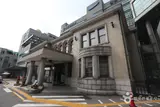
Located in Pyeong-dong, Jongno-gu, Seoul, this is a historic site used as an office and residence by Baekbeom Kim Gu, president of the Provisional Government of the Republic of Korea, from his return from China in November 1945 until his assassination on June 26, 1949. Along with Rhee Syngman's Ihwajang and Kim Kyu-sik's Samcheongjang, it is one of the three cradles that formed the center of nation-building activities before the establishment of the Republic of Korea government. Kim Gu renamed it Gyeonggyojang after a nearby bridge instead of its Japanese-style name, Jukcheomjang. In 1968, Korea Hospital (now Kangbuk Samsung Hospital) acquired it, which continues to this day. MoreLess
- 5Deoksugung Stone Wall Path
덕수궁 돌담길
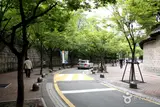
This is Korea's first case of redesigning an existing road into a pedestrian-centered road by combining a pedestrian-vehicle shared street with the concept of a green road full of lush greenery, spanning a total length of 900 meters. Eco-friendly clay blocks and paving stones were installed on the roadway to secure safe walking rights for pedestrians. To provide a resting space for citizens, 130 trees including zelkova and two other species were planted, 20 benches were installed, and the streetscape was improved by connecting with Deoksugung Palace, a nearby historical facility. The romantic Deoksugung Stone Wall Path is a wonderful place for couples to take a walk, and with the Seoul Museum of Art and Seoul Museum of History located nearby, it is also ideal as a cultural walking course. MoreLess
Source: Korea Tourism Organization (TourAPI) · Machine-translated