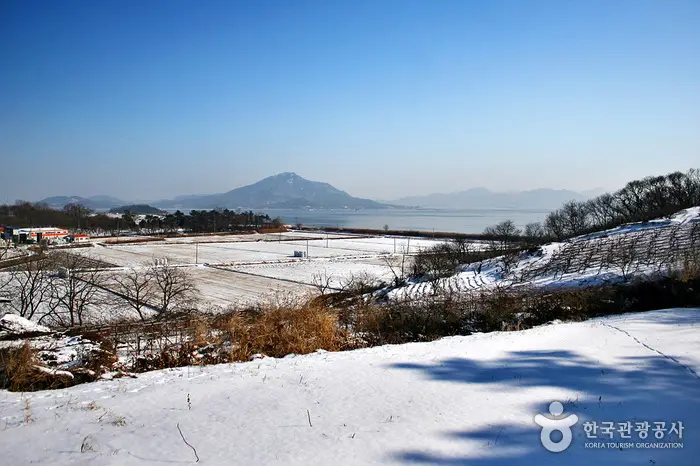
Stepping onto Gyodongdo Island, Steeped in the Sorrows of Ganghwa
4 stops · 5 hours
The history of Gyodongdo Island is quite long. Spanning from the Goguryeo period through Silla, it has become the Gyodongdo Island of today, shaped by reclaimed coastlines alongside neighboring Ganghwado and Seokmodo Islands. Although not very large in scale, it is home to Korea's first hyanggyo (Confucian school) dedicated to Confucius, where Confucian scholars still gather every year to hold memorial rites. Visiting Daeryong Market in Gyodong-eupseong Walled Town is also recommended. Above all, touring the dondae (coastal watchposts) built to guard the coastline will make for a meaningful day.
- Duration
- 5 hours
- Distance
- 35.44km
Along the way
- 1
Gyodongdo Island (Ganghwa)
교동도(강화)
The original name of Gyodong was Daeundo Island. It was also called Gorim or Dareulsin, but it was first established as a hyeon (prefecture) called Gomokgeun-hyeon during the Goguryeo period, and later named Gyodong-hyeon during the reign of King Gyeongdeok of Silla, which has continued to this day. The island is located on the west coast of Incheon Metropolitan City, facing Yangsa-myeon, Samsan-myeon, and Seodo-myeon to the southeast, and lying just 5 km across the sea from North Korea along the Military Demarcation Line to the northwest, bringing Yeonbaek-gun in Hwanghae-do into plain view. Although it is an island, it has relatively abundant flat plains, a fairly gentle coastline, shallow waters, and a large tidal range. MoreLess
- 2
Gyodonghyanggyo Local Confucian School
교동향교
Built in 1127, it was founded to enshrine and honor the spirit tablets of wise Confucian sages, as well as to provide local secondary education and foster the moral education of local residents. Originally located to the north of Hwagaesan Mountain at the time of its founding, it was moved to its current location in the mid-Joseon period by Magistrate Jo Ho-sin and repaired in 1966. The extant structures consist of Daeseongjeon Shrine, Dongmu (East Cloister), Seomu (West Cloister), Myeongnyundang Hall, and Jaegigo (Ritual Vessel Storage). Enshrined within Daeseongjeon are the spirit tablets of the Five Sages, Two Sages of the Song Dynasty, and the Eighteen Sages of Korea. MoreLess
- 3
Mutae Dondae Fort
무태돈대
This dondae was built in 1679, the 5th year of King Sukjong of Joseon, during the tenure of Governor Yun I-je. This dondae was built in 1679, the 5th year of King Sukjong of Joseon, during the tenure of Governor Yun I-je. It was said to have strengthened coastal defense and served as a surveillance post. Serving as an outer defensive post for the Naval Command of the Three Provinces, this dondae measured 210 m in circumference and 2 m in wall width, with 4 artillery gun emplacements installed facing the coast. Along with Inhwa Dondae, Gwangam Dondae, Gwideung Dondae, and Jakseong Dondae, it fell under the jurisdiction of Inhwabo Fort. It was surrounded by stone walls measuring 210 m in circumference and 2 m in width, and 4 artillery gun emplacements were installed facing the coast. It is a rectangular dondae built lengthwise facing the coast. MoreLess

- 4
Mangyang Dondae Fort
망양돈대
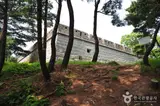
This Joseon Dynasty dondae is located in Oepo-ri, Naega-myeon, Ganghwa-gun, Incheon Metropolitan City. Mangyang Dondae is a circular structure with a height of 3 m, a width of 2.5 m, and a circumference of 120 m. It has 4 gun emplacements for mounting cannons and 40 battlements, and traces of brick-built parapets (seonggakwi, low walls built atop the fortress wall to conceal oneself and attack the enemy, also called yeojang or seongcheop) remain at the top. Other dondae built at the same time as Mangyang Dondae include Taekji and Buno-ri Dondae (both Incheon Metropolitan City Tangible Cultural Heritage), Janggot, Gyerong, Geonpyeong, Geonpyeong, Gulam, Miruji, and Bugilgot Dondae (all Incheon Metropolitan City Monuments), and Mangwol, Seonsu, Hwado, and Mutae Lighthouses (all Incheon Metropolitan City Cultural Heritage Materials). MoreLess
Source: Korea Tourism Organization (TourAPI) · Machine-translated