In Search of the Essence of Buddhist Culture and the Mystery of Wetlands...
4 stops · 8 hours
Upo Wetland in Changnyeong is a treasure trove of wetland ecosystems, showcasing unique natural landscapes throughout all four seasons with diverse aquatic plants and migratory birds. Haeinsa Temple in Hapcheon is one of Korea's Three Jewel Temples, and the Tripitaka Koreana preserved here is designated as a UNESCO World Heritage. The Hapcheon Movie Theme Park is a popular travel destination that has recently been in the spotlight.
- Duration
- 8 hours
- Distance
- 38.43km
Along the way
- 1
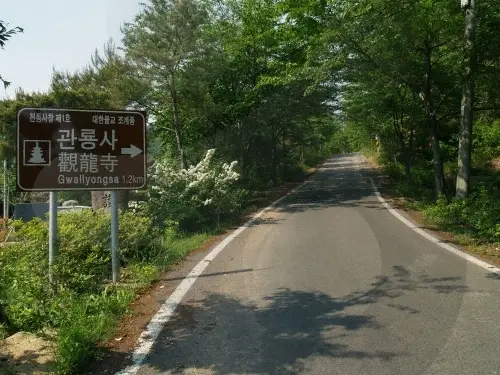
Gwallyongsa Temple
관룡사
Gwallyongsa Temple is an ancient temple situated beneath Byeongpungbawi Rock on Guryongsan Mountain in Hwawangsan County Park. It is a branch temple of Tongdosa Temple, the head temple of the 15th District of the Jogye Order of Korean Buddhism. One of the eight great temples of Silla, it is said to have been founded in 394 (the 39th year of King Naemul), although this is not certain. In 583 (the 5th year of King Jinpyeong), Jeungbeop rebuilt it, and after the unification of the Three Kingdoms, Wonhyo achieved a great training center (daedoryang) by preaching to 1,000 Chinese monks. In 748 (the 7th year of King Gyeongdeok), Chudam reconstructed it. During the Joseon Dynasty, the Daeungjeon Hall was rebuilt in 1401 (the 1st year of King Taejong), but most temple halls were destroyed by fire during the Japanese invasions of Korea (Imjin War). It was rebuilt by Yeongun in 1617 (the 9th year of Gwanghaegun) and repaired in 1749 (the 25th year of King Yeongjo). MoreLess
- 2
Monument in Changnyeong Commemorating the Border Inspection by King Jinheung of Silla
창녕 신라 진흥왕 척경비
Erected during the reign of King Jinheung of Silla, this stele was designated as National Treasure No. 33 on December 20, 1962. Originally located at the foot of Hwawangsan Mountain, it became known after being discovered by a student on a picnic. It was reported to academia on February 7, 1914, by Hashimoto Yoshiyo, a Japanese principal of Changnyeong Elementary School. In 1924, it was relocated to its current site in Manokjeong Pavilion for preservation. MoreLess
- 3Ancient Tombs in Gyo-dong and Songhyeon-dong, Changnyeong
창녕 교동과 송현동 고분군
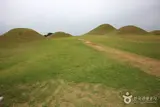
This is a large cluster of ancient tombs located to the southwest of the Songhyeon-dong Ancient Tombs beneath Mokmasanseong Fortress on the western foot of Hwawangsan Mountain, separated by the road leading to Hyeonpung. In Gyo-dong, dozens of large and small ancient tombs were gathered around a large mound known as a royal tomb; however, only eight tombs remain today, and even their earthen mounds are heavily damaged. MoreLess
- 4
Changnyeong Museum
창녕박물관
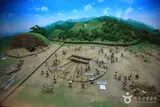
This comprehensive museum is located in Gyo-ri, Changnyeong-eup, Changnyeong-gun, Gyeongsangnam-do. It conducts research on and promotes regional culture, focusing on archaeological relics unearthed in the Changnyeong area from prehistoric times to the Gaya period. Opened in March 1996, Changnyeong Museum is adjacent to the Gyo-dong Ancient Tombs on the western foot of Hwawangsan Mountain and features two exhibition halls and an audiovisual room. MoreLess
Source: Korea Tourism Organization (TourAPI) · Machine-translated