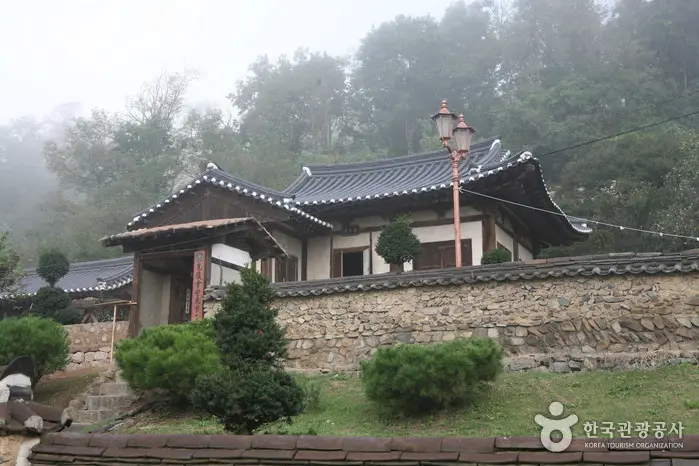
Sacred Ground of the Korean Independence Movement! Andong: Walking through 51 Years of Andong Independence Movement History
4 stops · 7 hours
Love for the country and love for the people! This is a great educational tour course to encounter historic sites imbued with the patriotic spirit of key figures: the monument to Gwon O-seol, chief organizer of the June 10th Independence Movement of 1926; Kim Jae-bong, the first Chief Secretary of the Communist Party of Korea; Seokju Yi Sang-ryong, pioneer of the Independence Army base in West Jiandao and the first Prime Minister (Gungmuryeong) of the Provisional Government of the Republic of Korea; the noble patriotic martyr Hyangsan Yi Man-do; and the anti-Japanese national resistance poet Yi Yuk-sa.
- Duration
- 7 hours
- Distance
- 41.31km
Along the way
- 1
Hakbong Head House of the Uiseong Kim Clan
의성김씨학봉종택
The Hakbong Head House of the Uiseong Kim Clan is the house where Hakbong Kim Seong-il lived. It was originally located on the current site, but because the ground was low and frequently flooded, Hakbong's 8th-generation descendant Gwang-chan moved in 1762 (38th year of King Yeongjo) to live about 100 meters away at the current site of Sogye Seodang Village School, and Sogye Seodang was built on the site of the former head house. However, in 1964, the head house was relocated back to its original location, where it stands today. MoreLess
- 2Imcheonggak House
안동 임청각
Imcheonggak is the grand head house of the Goseong Yi Clan in Andong with a 500-year-long history, and it is the largest surviving traditional residential house in Korea. Yi Jeung, the Magistrate of Yeongsan and the sixth son of Yi Won who served as Chief State Councillor during King Sejong's reign, was captivated by the beauty of this place and settled here, becoming the founder of this branch. Afterwards, it was built as a detached pavilion-style house by Yi Myeong, the third son of Yi Jeung, who served as Jwarang of the Ministry of Punishments during King Jungjong's reign. MoreLess
- 3
Takcheongjeong Head House
탁청정종가
This house was built and lived in by Takcheongjeong Kim Su. Kim Su was the second son of Nongsu Kim Hyo-ro, the founder of the Yean branch of the Gwangsan Kim Clan; he was accomplished in both literary and martial arts and authored the cookbook Suunjapbang. It was built by Kim Su in 1541 (36th year of King Jungjong), but was rebuilt in the late Joseon period after a fire. Originally located adjacent to the Nakdonggang River, it was relocated to its current site in 1974 due to flooding caused by the construction of Andong Dam. MoreLess
- 4
Toegye Head House
퇴계종택
This building was built south of Hanseoam by Dongam, the grandson of Master Toegye. Descendants lived here for generations, and in 1715 (41st year of King Sukjong), Chuwolhansujeong Pavilion was built to give it a fresh look, but during the generation of the 10th-generation descendant Gogye, a new house was built across to the southeast of the old house, and they moved there. However, in 1907, both head houses were burned down by Japanese troops. The current house was relocated between 1926 and 1929 when Ha-jeong, the 13th-generation descendant, purchased the head house of the Im clan who had lived here for generations, and Chuwolhansujeong Pavilion was rebuilt in its original style. The original house was lost, and the current house was newly built between 1926 and 1929 by Yi Chung-ho (Ha-jeong), the 13th-generation descendant of Toegye. MoreLess
Source: Korea Tourism Organization (TourAPI) · Machine-translated