Experiential Trip from Goseong to Inje
4 stops · 1 day
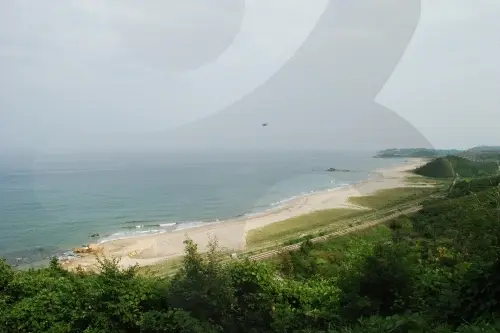
At the eastern edge where the land meets the sea lies National Road No. 7. Goseong, the eastern starting point of the DMZ and the only county on the Korean Peninsula divided into North and South, serves as the starting point of this journey. Goseong used to see very few visitors. This was especially true because it was a "restored territory," having belonged entirely to the North before the Korean War, with half remaining in the North after the armistice. Because of the sparse human traffic, nature from half a century ago and the scars of war coexist untouched. That is why the 100-kilometer path from Goseong to Inje is so beautiful. Even when crossing the mountain passes of Inje, famously known through the saying "Once you go to Inje, when will you return?", lifting one's head offers a view of Mount Geumgangsan. Untouched green nature and the unreachable northern lands sit side by side.
- Duration
- 1 day
- Distance
- 63.68km
Along the way
- 1
Unification Observatory (Goseong)
통일전망대(고성)
Standing at the Unification Observatory, situated at an altitude of 70 meters where the Military Demarcation Line meets the Southern Limit Line, Mount Geumgangsan's Guseonbong Peak and Haegeumgang are visible close at hand, and on clear days, Ongnyeobong, Chaehabong, and Ilchulbong peaks can also be seen. The frontline guard posts facing each other across the barbed-wire armistice fence below evoke the tension between North and South Korea. As Goseong's representative tourist attraction visited by over 1.5 million people annually, it features religious facilities such as the Statue of the Virgin Mary, the Maitreya Buddha Statue, and the Jeonjin Steel Tower for displaced people longing for their families and homeland left behind in the North, as well as those praying for unification. It also displays security education exhibits, including armored vehicles, tanks, and airplanes. Below, visitors can observe the overland tours to Mount Geumgangsan taking place via the Donghae Line inter-Korean connecting road opened in December 2004. MoreLess
- 2
Hwajinpo (Hwajinpoho Lake)
화진포(화진포호)
Adjacent to the East Sea, Hwajinpo is the nation's premier lagoon, featuring exquisite natural scenery and dense pine forests stretching like a folding screen around a vast lake spanning about 2.38 square kilometers. The sand of Hwajinpo, formed over tens of thousands of years by crushed seashells and rocks, contains monazite components and was recorded as 'myeongsa' (singing sand) in Lee Jung-hwan's Taengniji using the Chinese character for 'chirp/resonate' (鳴, myeong) and 'sand' (沙, sa). The beach is widely known as a popular swimming beach with shallow waters, clear sea, and the scenic beauty of Geumgudo Island. In winter, it presents a spectacular sight as numerous migratory birds, including the swan (Natural Monument No. 201), visit the area. The sight of flocks of snow-white swans frolicking brings to mind 'Swan Lake.' With unpolluted, clean water and an abundance of food within the reed beds, Hwajinpo provides an ideal resting place for migratory birds. MoreLess
- 3Jinburyeong Heulli Village
진부령 흘리마을
To travel from Inje-gun to Goseong-gun, one must cross either Misiryeong (767m) or Jinburyeong (529m). Taking National Road No. 46 from the Yongdae Three-way Intersection in Inje-gun, passing the entrance to Yongdae Natural Recreation Forest and heading north leads to the entrance of Alps Resort and Jinburyeong Pass. The Jinburyeong Village-managed Vacation Spot is located along National Road No. 46. It captivates visitors with its valley of unpolluted, crystal-clear water originating from Chiljeolbong and Dunggeulbong peaks of the Hyangrobong Mountain Range. Travelers can purchase locally produced wild greens, corn, potatoes, medicinal herbs, and native honey directly from the village, and local specialty dishes, including native chicken, are warmly received by tourists. MoreLess
- 4
Baekdamsa Manhae Maeul
백담사 만해마을
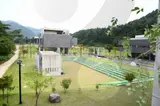
This center was established as a place of practice to honor and promote the literary spirit, philosophy of freedom, progressive thought, and nationalist ideals of Master Manhae Han Yong-un, who was a prominent poet in Korean literary history, a great Buddhist master, and a nationalist activist who infused an unquenchable national spirit into the hearts of the Korean people during the dark times of the Japanese colonial period. MoreLess
Source: Korea Tourism Organization (TourAPI) · Machine-translated