Cultural Exploration Trail Centered Around Chiaksan Mountain in Wonju
5 stops · 5 hours
Wonju is a historic city blessed with Chiaksan National Park, the grandeur of the stately Seomgang River, and splendid cultural heritage sites that wisely overcame national crises. Touring these historic sites in a single day is a wonderful experience. This day trip exploring Wonju's culture visits Bomunsa Temple on Chiaksan Mountain, followed by historical sites such as Seokgyeongsa Temple, the Tomb of Ungok Won Cheon-seok, the Memorial Monument of Yi Eun-chan, and the Chungnyeolbi Monument.
- Duration
- 5 hours
- Distance
- 17.37km
Along the way
- 1
Bomunsa Temple (Wonju)
보문사(원주)
Founded by Monk Muchak during the reign of King Gyeongsun of Silla (r. 927–935), the detailed history of the temple remains unknown due to a lack of subsequent records. According to the Bomunamchanggi (Record of the Founding of Bomunam Hermitage), it appears to have burned down during the Japanese invasions of Korea in 1592 (the 25th year of King Seonjo's reign) and was later rebuilt. During the reconstruction, it enshrined Avalokitesvara Bodhisattva and served as a Buddhist fellowship practice center named Bomunryeonsa Temple. Situated above Gukhyeongsa Temple (Araetgomunjeol), it is also called 'Utgomunjeol.' MoreLess
- 2
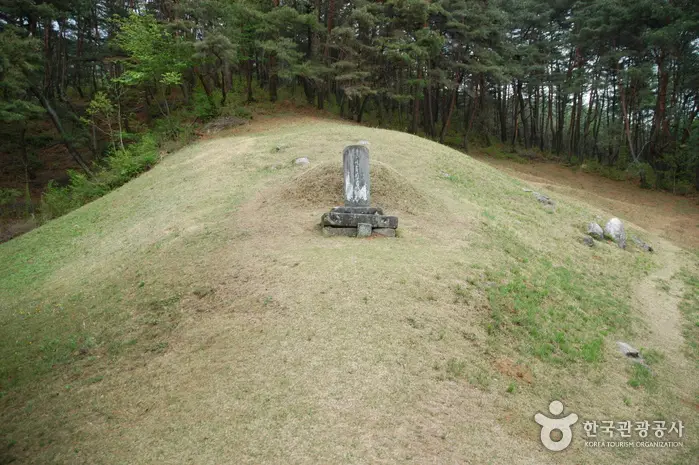
Tomb of Ungok Won Cheon-seok
운곡원천석묘역
In front of the tomb of Won Cheon-seok, located at the foot of Chiaksan Mountain in Haenggu-dong, Wonju-si, Gangwon-do, stand a gravestone inscribed with 'Tomb of Won Cheon-seok, Gukja Jinsa of Goryeo' and a stone offering table. A short distance from the tomb stands a tombstone (myogal) erected in 1670 (the 11th year of King Hyeonjong's reign). In accordance with Won Cheon-seok's will, no tombstone was originally erected, but one was set up four generations later. The epitaph and seal script (jeonseo) were composed and calligraphed by Misu Heo Mok (1595–1682), a scholar of the mid-Joseon period, while the main text was written by Yi Myeong-eun. MoreLess
- 3
Lunch (Unchae)
점심식사(운채)
Unchae specializes in local dishes, serving main items such as gondrebap (seasoned thistle rice), gamja ongsimi (potato dough soup), cheonggukjang (fermented soybean paste stew), and dak manduguk (chicken dumpling soup). It offers a relaxing space where guests can comfortably enjoy a meal inside a log cabin. MoreLess
- 4Chiaksan National Park
치악산국립공원
A peak of the Charyeongsanmaek Mountain Range, Chiaksan Mountain features peaks over 1,000 meters—including Birobong (1,288 m, its highest peak), Sambong, Hyangrobong, Namdaebong, and Cheonjibong—stretching north to south like a folding screen. The Chiak Ridge, extending 14 km from the main peak of Birobong to Namdaebong, covers a total area of 182.09 ㎢ and was designated a national park in 1984. MoreLess
- 5
Ipseoksa Temple (Wonju)
입석사(원주)
Traveling about 7 km northeast from Wonju leads to Hwanggol Village, renowned since ancient times for Gangwon-do yeot (traditional taffy). Climbing about 3 km eastward up Chiaksan Mountain from here leads to Ipseokdae, a rectangular rock standing 10 meters tall atop a 50-meter-high cliff. Following the path between this rock and Sinseondae, located 50 meters to the south, Ipseoksa Temple comes into view on the left. MoreLess
Source: Korea Tourism Organization (TourAPI) · Machine-translated