Wonju Downtown Tour Course
5 stops · 5 hours
Wonju is a historic city blessed with Chiaksan National Park, the majestic Seomgang River, and brilliant cultural heritage, having wisely overcome national crises throughout history. Experiencing these historic sites in a single day is a great journey. Starting from Pak Kyongni House (Toji Literature Park), where you can encounter Pak Kyongni's epic novel Toji (The Land), the tour visits the Tomb of General Min Geung-ho, Gangwongamyeong Provincial Office, and Wonjuhyanggyo Local Confucian School. In addition, you can explore Wonju's folk history at Wonju City Museum and visit the historic Gukhyeongsa Temple.
- Duration
- 5 hours
- Distance
- 12.08km
Along the way
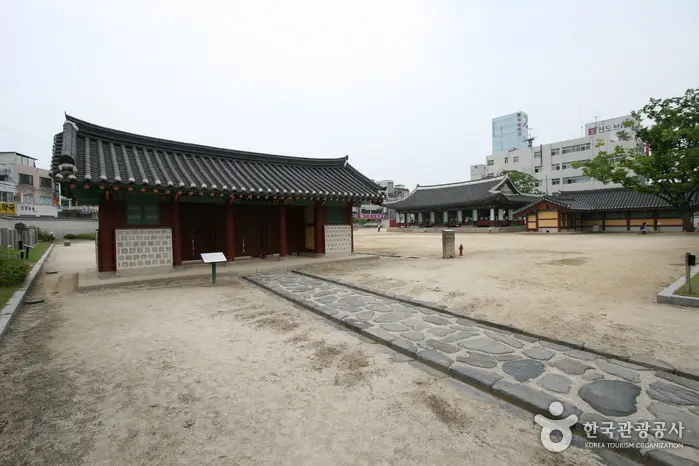
- 1Gangwongamyeong Provincial Office, Wonju
원주 강원감영
This is a historic site from the Joseon dynasty located in Wonju-si, Gangwon-do, designated as Historic Site No. 439 on March 9, 2002. Gangwongamyeong was established in Wonju in 1395 (the 4th year of King Taejo) during the Joseon dynasty. A gamyeong was the government office where the provincial governor (gwanchalsa or gamsa) handled state affairs. Except for the gamyeongs in Wonju, Jeonju, and Pyeongyang, most did not remain in one location, making it difficult to find their original forms due to relocations and urbanization. However, at the Gangwongamyeong site, the original buildings from that era—Seonhwadang, Pojeongnu (Gangwon-do Tangible Cultural Heritage No. 3), and Cheongundang (Naea)—remain in their original positions. Furthermore, an excavation survey conducted by Gangneung National University Museum in 2000 revealed that related remains (Jungsammun Gate site, Naesammun Gate site, Gongbanggosite, Chaekbanggosite, walkways, wall sites, corridor sites, etc.) are relatively well preserved. In addition, the lower layers well preserve the building sites of Wonjumok government offices predating Gangwongamyeong, making it an invaluable site for researching government office buildings in Korea. MoreLess
- 2Pak Kyongni House
박경리문학공원
Pak Kyongni House is a literary park created around the former residence of author Pak Kyongni, the birthplace of her epic novel Toji (The Land)—praised as a monumental masterpiece in Korean literature—allowing visitors to explore her literary world. Spread over an area of about 3,200 pyeong, Pak Kyongni House preserves the original state of the old house and garden where Pak Kyongni wrote Toji. The surrounding area is designed as three theme parks that recreate the settings from the novel Toji: "Hong-i Dongsan," "Pyeongsa-ri Madang," and "Yongdurebeol." MoreLess
- 3
Lunch (Hoban Dak-galbi)
점심식사(호반 닭갈비)
Hoban Dak-galbi is a restaurant specializing in dak-galbi (spicy stir-fried chicken) and dak-naejang (chicken entrails). You can add toppings such as cheese, udon noodles, sweet potato, and rice cakes to your dak-galbi or dak-naejang, and order flying fish roe fried rice, cheese fried rice, or regular fried rice to stir-fry in the pan afterward. MoreLess
- 4
Wonju City Museum
원주역사박물관
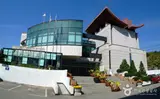
Wonju City Museum opened in November 2000 to collect, exhibit, and preserve the historical and folk cultural materials of the Wonju region—which has had a significant impact on Korean national history through the eras of Pyeongwon, Bukwongyeong, and Gangwongamyeong—and pass them down intact to future generations, while also serving as an expanding socio-cultural educational institution and a center for local history research. MoreLess
- 5
Gukhyeongsa Temple
국형사
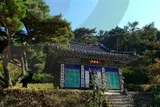
Founded during the reign of King Gyeongsun of Silla by Master Muchak, it was originally called Gomunam Hermitage, where Master Muchak is said to have practiced Buddhism by making it a grand center for protecting the Dharma. Although its founding dates back to the Silla period, no artifacts or remains from that time currently survive to prove this. It is said that King Taejo of the Joseon dynasty built Dongakdan Altar at this temple to enshrine the Dongak deity, where magistrates from Wonju, Hoengseong, Yeongwon, Pyeongchang, and Jeongseon gathered every year to perform memorial rites. Meanwhile, legend has it that when Princess Huihui, the second princess of King Jeongjo of Joseon, fell ill, 100-day prayers were offered at this temple, and King Jeongjong greatly renovated the temple. MoreLess
Source: Korea Tourism Organization (TourAPI) · Machine-translated