Have You Seen the Beauty of Gwacheon...
3 stops · 5 hours
Gwacheon is a fragrant, clean city surrounded by the verdant greenery of Gwanaksan and Cheonggyesan Mountains. It is a cultural tourism city rich in recreational facilities such as Seoul Grand Park and Gwacheon Racecourse. However, this tour course takes you through the hidden cultural heritage sites of Gwacheon rather than the well-known sights everyone recognizes.
- Duration
- 5 hours
- Distance
- 25.03km
Along the way
- 1Ononsa Guesthouse
온온사
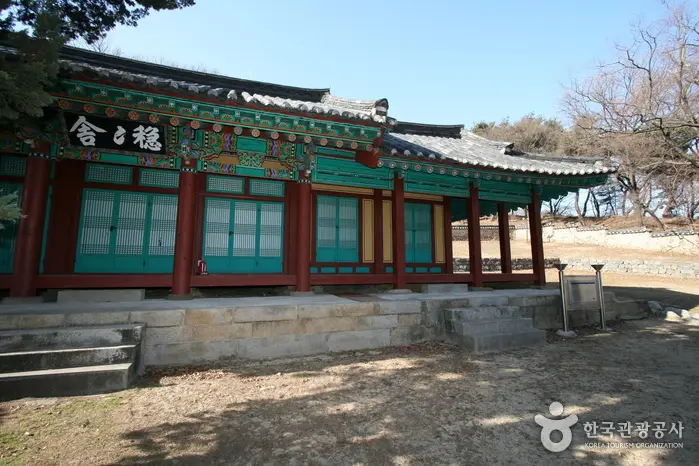
Ononsa, which served as the official guesthouse (gaeksa) of Gwacheon, was built in 1649 (the 27th year of King Injo of Joseo), but it received its current name, 'Ononsa,' during the reign of King Jeongjo. On February 11, 1790, King Jeongjo the Great stayed overnight at the Gwacheon Guesthouse during a royal procession to his father Crown Prince Sado's tomb. Saying, "The scenery is fine and it is comfortable to rest," he personally bestowed calligraphic name boards reading 'Ononsa' for the west hall and 'Burimheon' (an old alias for Gwacheon) for the east hall, after which it came to be called Ononsa. Designated as Gyeonggi-do Tangible Cultural Heritage No. 100 on June 2, 1980, Ononsa was dismantled and restored on December 2, 1986. However, because the original building form of Ononsa was unknown, it was restored based on the model of Nagan Guesthouse in Seungju-gun, Jeollanam-do, measuring 9 kan across the front and 2 kan on the sides, featuring a gabled roof set in the center of a hip-and-gable roof. MoreLess
- 2
Gwacheonhyanggyo Local Confucian School
과천향교
Founded in 1398 (the 7th year of King Taejo), this school was established to enshrine and honor the spirit tablets of ancient Confucian sages, as well as to educate and edify the local people. During the Joseon Dynasty, it received land, books, and slaves from the state, and instructors taught the students. However, following the Gabo Reform and the introduction of a new educational system, its educational function ceased. Today, the Seokjeon rite is performed every spring and autumn, and incense is burned on the first and fifteenth days of each lunar month. This hyanggyo is designated as Gyeonggi-do Cultural Heritage Material No. 9 and is managed by one head instructor (jeongyo) and several executive officers (jangui). MoreLess
- 3
Yeonjuam Hermitage
연주암
Gwanaksan Mountain, where Yeonjuam Hermitage is located, has long been known as one of the Five Sacred Mountains of Gyeonggi (Gyeonggi O-ak), along with Songaksan in Gaeseong, Gamaksan in Paju, Unaksan in Pocheon, and Hwaaksan in Gapyeong. Forming the southern boundary of Seoul, its ridge extends through Cheonggyesan Mountain in Gwacheon to Gwanggyosan Mountain in Suwon. Rocky peaks exposed across the mountain blend with deep valleys to create rugged terrain, but because the mountain is not very large and is close to the city center, many people visit it as a day-hike destination with family. The mountain is home to various temples and hermitages including Yeonjuam; perched on a precipitous cliff, Yeonjuam is the central hub where all hiking trails on Gwanaksan Mountain converge. MoreLess
Source: Korea Tourism Organization (TourAPI) · Machine-translated