A Fun Experiential Tour Overlooking the Sea of Namhae
5 stops · 7 hours
A colorful variety of 70 large and small islands spread out before the coast of Namhae, making travel in Namhae enjoyable in every direction. This hands-on coastal course will offer a wealth of experiences, especially when traveling with children. Do not miss visiting Changseondaegyo Bridge overlooking the sea, a village with yuzu trees over 100 years old, the traditional Jukbangnyeom bamboo fishing weirs, the charming German Village that authentically captures German ambiance, and Haeoreum Art Village where you can enjoy various cultural activities.
- Duration
- 7 hours
- Distance
- 30.64km
Along the way
- 1
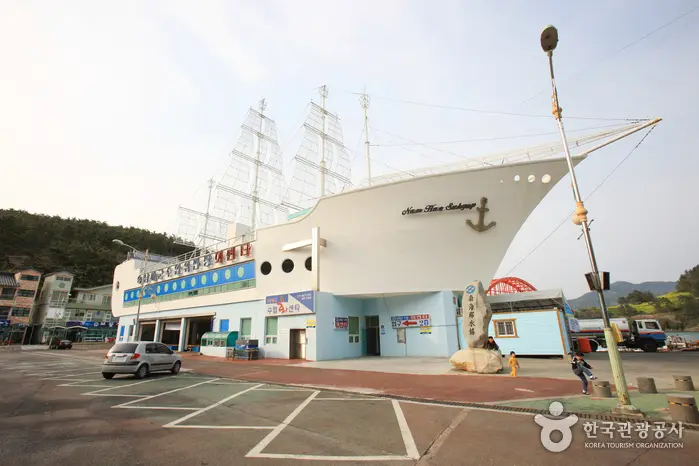
Changseondaegyo Bridge Town
창선대교타운
Located in Daebyeok-ri, Changseon-myeon, in the heart of the Hallyeosudo Waterway along the southern coast, Changseondaegyo Town was established at the entrance of the bridge alongside the opening of the 3.4 km-long Changseon-Samcheonpo Bridge on April 28, 2003. An area of 204,100㎡ was designated as a development promotion zone, and public facilities such as public parking lots, public restrooms, and sewage treatment facilities were built to provide convenience for tourists as well as spaces to eat and relax. MoreLess
- 2
Namhae Haebari Village
남해 해바리마을
This is a yuzu village where the entire village is surrounded by yuzu trees. In the front yard of one house, there is an old tree over 100 years old. In spring, visitors can enjoy the delicate fragrance of yuzu blossoms, and from late autumn to early winter, they can see the magnificent sight of bright yellow yuzu hanging in clusters. Following the scenic red clay path leads to the seashore in front of the village, where Geumgul Cave and Nunsseopbawi Rock (Eyebrow Rock) are located. Here, visitors can also enjoy digging for Manila clams themselves. The name 'Haebari Village' is said to originate from 'haebari', a traditional fishing method in which fishermen catch fish at night using torches. MoreLess
- 3
Primitive Jukbangnyeom Fishing
원시어업죽방렴
The Jijok Strait flowing between Samdong-myeon and Jijok Village in Changseon-myeon intactly preserves 26 sets of primitive Jukbangnyeom bamboo weirs. In the Jijok Strait, called 'Sondo' meaning a narrow sea path, the V-shaped Jukbangnyeom bamboo trap is a primitive fishing weir created by driving about 300 oak posts roughly 10 meters long into shallow tidal flats with swift currents, weaving them like a bamboo blind, and opening the net in the direction opposite to the current. Because the water in the Jijok Strait is clear and rapid, the seafood caught here is exceptionally clean-tasting and chewy. Watching fish being scooped up with a dip net twice a day according to the tidal flow naturally makes your mouth water for fresh wild raw fish. In particular, anchovies, fat innkeeper worms, and sea mustard are the top specialties of the Jijok Strait. MoreLess
- 4
German Village
독일마을
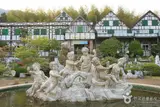
In order to help Korean expatriates who dedicated themselves to their homeland's modernization and economic development during the difficult times of the 960s settle down, provide them with a living space filled with the warm affection of their homeland, and develop a distinctive tourist attraction combining exotic German culture with a traditional culture and arts village, Namhae-gun invested about 3 billion won starting in 2001 to develop infrastructure across a 99,174㎡ site in Mulgeon-ri, Samdong-myeon, Namhae-gun, home to Natural Monument No. 150, and sold lots for building around 70 houses. MoreLess
- 5
Haeoreum Art Village
해오름예술촌
Haeoreum Art Village was created by remodeling a closed school to serve as a space for local cultural and artistic creation and support activities. In particular, for traditional craft experiences, it is well-known enough that visitors come from far away thanks to its blessed natural surroundings, beautiful buildings, and landscape. It has established itself as a must-visit destination, drawing attention from various mass media including 6 national TV broadcasts, 12 regional broadcasts, as well as newspapers and magazines. MoreLess
Source: Korea Tourism Organization (TourAPI) · Machine-translated