Sancheong-gun Cultural and Historic Sites Tour 1
5 stops · 1 day
Located at the foot of Jirisan Mountain, Sancheong is a pristine and cozy region blessed with clean, fresh air. Based on traditional culture, it is an active hub for eco-friendly agriculture and the Korean herbal medicine industry, making this course ideal for strolling through both nature and culture. In particular, do not miss the atmospheric charm of the Birthplace of Venerable Seongcheol, a traditional Hanok nestled deep in the mountains, as you reflect on the path of ascetic practice.
- Duration
- 1 day
- Distance
- 67.87km
Along the way
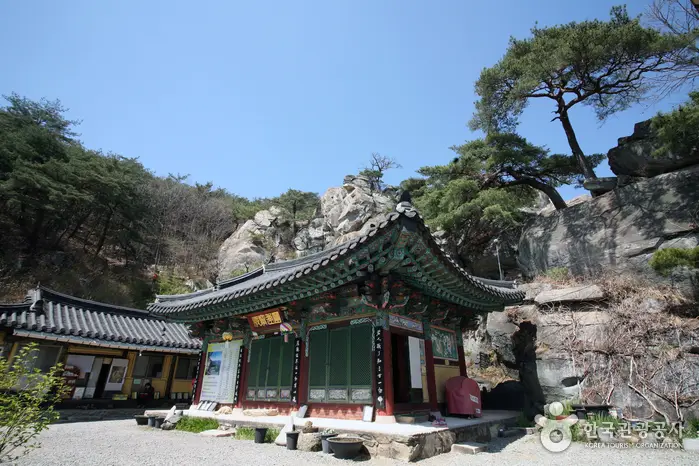
- 1Jeongchwiam Hermitage
정취암
Perched on a cliff at the peak of Daeseongsan Mountain, Jeongchwiam Hermitage is said to have been founded by Great Monk Uisang and is famous for its Jeongchwiam Buddhist painting (Taenghwa). Nestled among the bizarre rock cliffs of Daeseongsan Mountain, located 40 ri north of the ancient Danseong-hyeon, it has long been called Sogeumgang (Little Geumgang) because its auspicious energy is said to rival that of Geumgangsan Mountain. In the 6th year of King Sinmun of Silla, Amitabha Buddha emerged from the East Sea and cast two rays of auspicious light; one illuminated Geumgangsan Mountain and the other illuminated Daeseongsan Mountain. Great Monk Uisang followed these two rays of light, establishing Wontongam Hermitage on Geumgangsan Mountain and founding Jeongchwisa Temple on Daeseongsan Mountain. MoreLess
- 2
Lunch (Yedamwon)
점심식사(예담원)
Located in Namsa Yedamchon Village in clean Sancheong at Jirisan Mountain, this is a local specialty restaurant housed in an elegant single-story traditional Hanok building. The Namsa Yedamchon Village public parking lot is nearby for convenient parking, and the interior features floor seating. The restaurant uses only natural seasonings made from homegrown organic ingredients and achieves its distinct flavors using persimmon vinegar, fermented plum extract, and concentrated onion extract aged for 2–3 years. The boiled pork slices (suyuk) are prepared using Sancheong black pork cooked with local Sancheong herbs such as cudrania and Siberian ginseng. Located inside Namsa Yedamchon Village, visitors can explore the village's stone-walled alleys of historic homes, the Confucian Independence Memorial Hall, Gisanjae, and Yedam-gil before or after their meal. Tofu-making experiences are available with prior reservation, and strawberry jam, the village's signature produce, is also available for purchase. MoreLess
- 3
First Cotton Cultivation Site
목면시배유지
This is the site where Mun Ik-jeom first cultivated cotton in Korea during the reign of King Gongmin at the end of the Goryeo Dynasty. In the 12th year of King Gongmin's reign (1363), Mun Ik-jeom went to Yuan China as part of an envoy mission and brought cotton seeds back hidden inside a brush case on his return. Together with his father-in-law Jeong Cheon-ik, he attempted experimental cultivation; at first, lacking cultivation techniques, they managed to keep only a single plant alive. After three years of dedicated effort, they succeeded, leading to the widespread distribution of cotton cultivation throughout the country. MoreLess
- 4
Birthplace of Venerable Seongcheol
성철대종사생가
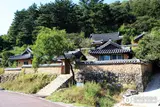
Venerable Seongcheol, who left behind a collection of Buddhist teachings entitled "Mountains are mountains, water is water" and translations of Buddhist scriptures into Korean, was a leading contemporary Zen master who lived in complete seclusion in hermitages dedicated solely to spiritual practice, believing that a monk's ascetic practice is the only true way to serve sentient beings. Through the restoration of his birthplace and Buddhist sanctuary development projects, the main house (anchae), guest quarters (sarangchae), and outer three-door gate (oesammun) were built. Geobeoesa Temple, where visitors can feel the spirit of Venerable Seongcheol, serves as a sacred Buddhist site and a place for Buddhists and tourists from across the country to reflect on the meaning of Buddhism. MoreLess
- 5Namsa Yedamchon Village
남사예담촌
Namsa Yedamchon Village literally conveys the meaning of an "old wall village," where one can glimpse the beauty of traditional Korean Hanok beyond tranquil earthen walls; internally, it carries the spirit of aspiring to embody the noble energy and etiquette of ancient scholars (seonbi) beyond those walls. Situated at the entrance to Jirisan Mountain, Namsa Yedamchon Village is a representative traditional Hanok village in the Gyeongsang-do region, along with Andong Hahoe Village. Renowned since ancient times to the point where Sancheong Namsa Village is often the first place that comes to mind regarding Gyeongnam, it is widely celebrated as both a noble (yangban) village and a traditional Hanok village. MoreLess
Source: Korea Tourism Organization (TourAPI) · Machine-translated