Experiential Course in Paju with Children
3 stops · 1 day
Paju is home to many recreational and hands-on experiential destinations for families with children. While not among the most widely known tourist routes in Paju, this course is ideal for experiencing both the region's natural beauty and leisurely charm.
- Duration
- 1 day
- Distance
- 67.87km
Along the way
- 1
Gamaksan Mountain (Paju)
감악산(파주)
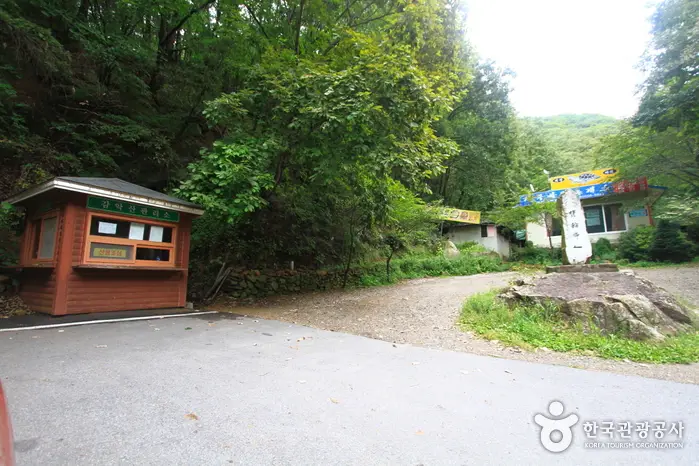
Since ancient times, Gamaksan Mountain was called "Gam-ak (紺岳)," meaning a dark blue rocky mountain, because it was said that black and blue light simultaneously poured out from between its rocks. It is visible from anywhere in Jeokseong-myeon, Paju-si; while it looks gentle from a distance, reaching the summit (675m) reveals rocky peaks and cliffs everywhere. For this reason, it has been counted as one of the "Five Rugged Mountains of Gyeonggi (Gyeonggi 5-Ak)" along with Hwaaksan in Gapyeong, Songaksan in Gaeseong, Gwanaksan in Gwacheon, and Unaksan in Pocheon. Gamaksan rises midway between Seoul and Gaeseong, and on clear days, you can see Songaksan Mountain in Gaeseong, Bukhansan Mountain in Seoul, and Soyosan Mountain in Dongducheon. MoreLess

- 2
Soeggol Village
쇠꼴마을
Soeggol Village is a multifunctional farm adjacent to the Demilitarized Zone in Geumgok-ri, Paju-si. Since ancient times, it was known as a deep mountain village with abundant fodder grass for cattle, which earned the village and subsequently the farm the name "Soeggol" (cattle fodder valley). Although not currently registered as a tourist farm, it operates a weekend farm, pear-picking experience events, a botanical garden, and both indoor and outdoor exhibition spaces. It also serves as a nature experiential learning center, attracting an increasing number of family visitors on weekends, and offers accommodation and dining options. MoreLess
- 3Byeokchoji Cultural Arboretum
벽초지 문화수목원
Byeokchoji Cultural Arboretum began securing land in 1965 and formed the foundation of the current arboretum by planting various rare and endangered plants, native plants, over 100 species of aquatic plants, and exotic species suited to the topography. Based on the belief that the original beauty of ecosystems provided by nature and the beauty brought by cultural beginnings originating from human creativity share the same foundational roots, the management believes that combining nature and culture offers visitors both the pleasure of seeing and feeling as well as the joy of learning. Through ongoing nature conservation, research, improvement efforts, and active cultural programs, Byeokchoji Cultural Arboretum strives to deliver a joy that is hard to find in urban life. MoreLess

Source: Korea Tourism Organization (TourAPI) · Machine-translated