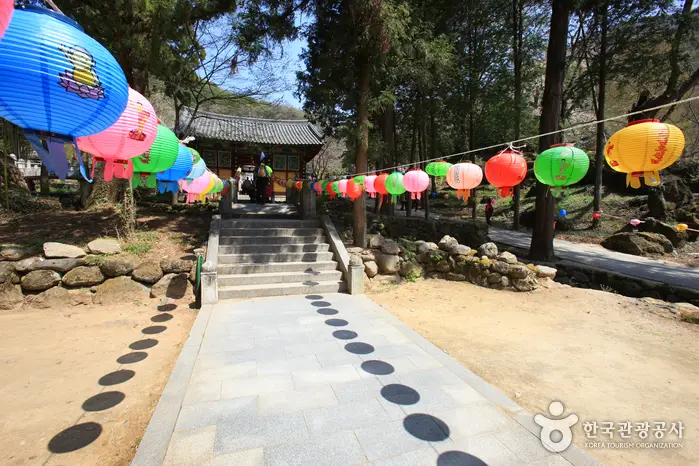
Exploring Hadong's Tea Culture and Beautiful Green Mountains...
5 stops · 5 hours
Hadong is an area renowned for its tea culture. This travel route invites you to stroll through Ssanggyesa Temple in beautiful Gurye-eup and experience a traditional tea ceremony at the Tea Culture Center. In particular, it is a great healing course where you can visit the wild tea fields still remaining at the original tea cultivation site and tour the nearby Burilpokpo Falls.
- Duration
- 5 hours
- Distance
- 2.47km
Along the way
- 1
Ssanggyesa Temple (Hadong)
쌍계사(하동)
Located 21 km from Gurye-eup, Jeollanam-do, along a 6 km stretch lined with cherry blossom trees from Hwagae-ri to Unsu-ri in Hwagae-myeon, Hadong-gun, Gyeongsangnam-do, Ssanggyesa Temple sits on the southern foot of Jirisan Mountain. It was founded in 722 (the 21st year of King Seongdeok of Silla) by Monk Sambeop, a disciple of Great Master Uisang. It was originally named Okcheonsa Temple, but after Zen Master Jingam rebuilt and expanded it into a grand temple in 840 (the 2nd year of King Munseong), King Jeonggang renamed it 'Ssanggyesa' in 887 in reverence of the master's teachings. MoreLess
- 2
Hadong Tea Culture Center
하동 차문화센터
The Hadong Tea Culture Center features the 'Tea Culture Exhibition Hall,' where visitors can learn about the history and culture of Hadong tea and experience the wonders of tea; the 'Tea Experience Hall,' where one can try roasting tea using traditional handmade methods and participate in a Hadong green tea ceremony; the 'Ceramics Experience Hall,' offering experiences in Hadong's traditional pottery; and the 'Tea Sales Shop,' where a variety of premium Hadong teas can be purchased. Its annex facility, the Tea Culture Plaza, houses the 'Eochadongsan Monument,' which illustrates the history of Hadong tea by era, and the 'Poetry Monument of Dachon Jeong Sang-gu.' In addition to serving as a year-round resting area for tourists, it hosts the Hadong Wild Tea Cultural Festival designated by the Ministry of Culture, Sports and Tourism every year. MoreLess
- 3
Lunch (Channipmasul)
점심식사(찻잎마술)
Located in an area surrounded by attractions popular with tourists throughout the four seasons—including the Korea Wild Tea Special Zone, the 10-ri Cherry Blossom Road, Hwagaejangteo Market, the House of Choe Champan, Hwaeomsa Temple, Ssanggyesa Temple, Chilbulsa Temple, and the Jirisan Dulle-gil Trail—Channipmasul is the only Korean full-course restaurant in Hadong specializing in green tea, preparing flavorful local dishes made with green tea ingredients. It offers wholesome food and a comfortable space fitting for a resort destination. MoreLess
- 4
First Tea Tree Cultivation Site of Ssanggyesa Temple
쌍계사차나무시배지
The Ssanggyesa Tea Cultivation Site provides a glimpse into the history of tea in Korea, and its remaining wild tea fields are protected as designated monuments. In the 3rd year of King Heungdeok of Silla, Daeryeom brought green tea seeds from Tang China and first planted them around Jirisan Mountain by royal command, after which Zen Master Jingam propagated the tea plants in the 5th year of the same reign. The tea produced here is called Jungnocha (bamboo dew tea) or Jakseolcha (sparrow tongue tea) because it is made by plucking leaves grown nourished by the morning dew on bamboo trees. MoreLess
- 5Burilpokpo Falls
불일폭포
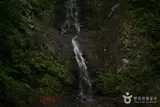
Burilpokpo Falls is one of the 10 Scenic Views of Jirisan Mountain. Located about 3 km from Ssanggyesa Temple, hiking to Burilpokpo Falls after visiting Ssanggyesa Temple makes for a wonderful trip. Ascending about 400 meters along the hiking trail from Ssanggyesa Temple brings you to a small hermitage called Guksaam. Founded in 722 (the 21st year of King Seongdeok of Silla) by Master Sambeop as a place of practice, it was reconstructed by Zen Master Jingam 110 years after Master Sambeop passed away, which led to it being named Guksaam. MoreLess
Source: Korea Tourism Organization (TourAPI) · Machine-translated