Into the Nature of Gwangju, Gyeonggi-do
5 stops · 1 day
This course covers the Gyeonggi-do area close to the city center. Walk along the fortress walls at Namhansanseong Provincial Park in Gwangju and visit unique museums featuring face-shaped wooden dolls and ceramics. It is a fantastic place to spend time with children. Driving along the long stretch of road following Paldangho Lake is another pleasure to enjoy in Gyeonggi-do.
- Duration
- 1 day
- Distance
- 83.37km
Along the way
- 1Namhansanseong Provincial Park
남한산성도립공원
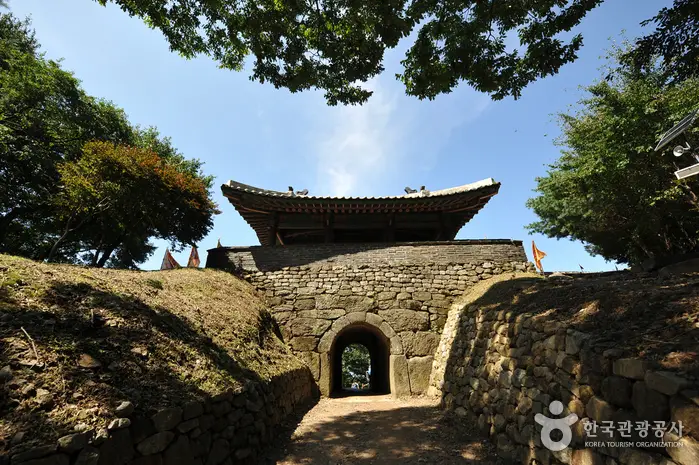
There were four major fortresses on the outskirts guarding Seoul: Gaeseong to the north, Suwon to the south, Ganghwa to the west, and Gwangju to the east. Namhansanseong Fortress was located in Gwangju to the east. It is situated on Namhansan Mountain, 24 km southeast of Seoul and 6 km northeast of Seongnam-si. The total length is 11.76 km (main fortress 9.05 km, outer fortress 2.71 km), and its height is 7.3 m. Records indicate that it was originally the royal fortress of King Onjo, the founder of Baekje and son of King Dongmyeong of Goguryeo, about 2,000 years ago. Other records state that it was Jujangseong Fortress, built in Hansanju in 673 (the 13th year of King Munmu of Silla) during the Silla-Tang War. Making use of the old site, it was repaired and rebuilt several times in later generations, and full-scale construction took place in 1621 during the reign of Prince Gwanghae in the Joseon Dynasty. MoreLess
- 2
Face Museum
박물관 얼굴
Located in Bunwon-ri, Namjong-myeon, Gwangju-si, Gyeonggi-do, the Face Museum is a space created by theater director Kim Jeong-ok, who conceived a space of 'People and Faces' by gathering stone statues, wooden dolls, and ceramics crafted by our ancestors over the past 40 years, as well as roof tiles and masks modeled after human faces from Korea and various countries around the world. MoreLess
- 3
Lunch (Gangmaeul Daramjwi)
점심식사(강마을다람쥐)
Gangmaeul Daramjwi is an acorn-cuisine specialty restaurant located in Samseong-ri, Namjong-myeon, Gwangju-si, Gyeonggi-do. The menu offers a variety of dishes such as acorn noodles, dotorimuk sabal (cold acorn jelly bowl), and dotorimuk bap (acorn jelly with rice). Set menus are only available on weekdays and must be ordered according to the number of people. MoreLess
- 4
Paldangho Lake
팔당호
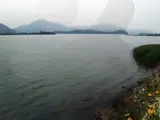
Paldangho Lake is an artificial lake spanning Toechon-myeon and Namjong-myeon in Gwangju-si, Gyeonggi-do. Since the completion of Paldang Dam in 1973, it has stored approximately 250 million tons of water. Paldangho Lake houses a water intake facility that supplies tap water to the Seoul and Gyeonggi regions, and the surrounding scenery viewed from the lakeside is outstanding, making it a major tourist attraction in Gwangju centered around Paldang Dam. In particular, the road running along Paldangho Lake is great for a scenic drive. Following the road leads to the Paldang Observatory, which offers a panoramic view of the magnificent scenery of Paldangho Lake. MoreLess
- 5
Chon Jin Am Holy Ground
천진암 성지
While Catholic churches across most nations around the world began through the evangelism of foreign missionaries, the Catholic Church in Korea was initiated in 1779 by prominent scholars of the time, including Yi Byeok, Gwon Il-sin, Jeong Yak-jong, Gwon Cheol-sin, and Yi Seung-hun. Through 6 to 7 years of study gatherings (Ganghakhoe) for the voluntary pursuit of truth at Cheonjinam, they elevated and developed 'Cheonhak' (Western Learning), which was previously at the level of academic knowledge, into the Catholic Church as a religious faith, and Chon Jin Am Holy Ground is that very historic site. MoreLess
Source: Korea Tourism Organization (TourAPI) · Machine-translated