Yeongdeok Cultural Heritage Tour Course 2
4 stops · 5 hours
This is the second cultural heritage tour course in Yeongdeok. Centered around historic houses such as the birthplace of the commoner righteous army commander General Shin Dol-seok and the Head House of the Muan Park Clan, this tranquil historic site tour embraces the rich history held within Yeongdeok, including the Daesosan Beacon Fire Station. Explore the traditional residential architecture of Gyeongsangbuk-do and the history resting within it. In addition, an experience at the fishing village of Yeongdeok Snow Crab, the first thing that comes to mind when thinking of Yeongdeok, should not be missed.
- Duration
- 5 hours
- Distance
- 13.69km
Along the way
- 1
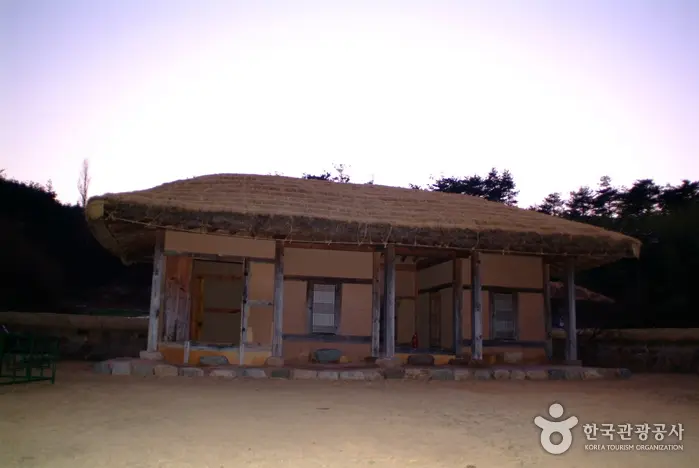
Birthplace and Historic Site of General Shin Dol-seok
신돌석장군생가 및 유적지
Although many righteous army commanders rose up to save the declining nation during the late Joseon period, it is rare to find someone like General Shin Dol-seok (1878–1908), who became a righteous army commander and was active as a commoner in his youth. In 1906, the year after the Eulsa Treaty, General Shin Dol-seok raised a righteous army and resisted the Japanese forces with elusive tactics across northeastern Gyeongsangbuk-do and Gangwon-do, including Yeonghae, Yeongdeok, Pyeonghae, Samcheok, Yangyang, Gangneung, Wonju, Andong, and Yeongyang. This thatched-roof house was restored in 1995 to honor the patriotic spirit of the general, whose great exploits earned him the nickname 'Tiger of Taebaeksan Mountain.' It is beloved as a cultural heritage exploration course for students. MoreLess
- 2
Head House of the Mueuigong Branch of Muan Park Clan
무안박씨 무의공파종택
This old house was built backed against a low hill north of Gamagol and overlooking the fields. It is said to have been built by Park Seon, the fourth son of Mueuigong Park Ui-jang (1555–1615), who performed meritorious deeds in the Battle of Gyeongjuseong Fortress during the Imjin War, for his eldest brother Park Yu. It consists of a gate quarters (daemunche), main quarters (jeongchim), inner three-door gate (naesammun), and ancestral shrine. The main quarters is shaped like a square (ㅁ) and measures 10 kan across the front and 7 kan along the sides. The inner quarters (anchae) is a simple gabled roof building resembling the Chinese character '人' (in) from the side, while the men's quarters (sarangchae) is a hip-and-gable roof building resembling the Chinese character '八' (pal) from the side. To the right rear of the main quarters is the shrine where the ancestral tablet of Park Ui-jang is enshrined. MoreLess
- 3
Daesosan Beacon Fire Station
대소산 봉수대
A beacon fire station refers to an ancient means of communication that conveyed urgent news using torches and smoke; people climbed high mountains to build fires and sent signals with smoke by day and light by night. Daesosan Beacon Fire Station in Yeongdeok was one of the sites that relayed conditions from the direction of Yeongdeok Chuksanpo Port to Namsan Mountain in Seoul. It was designed to send messages south to Byeolban Beacon Fire Station, north to Hurisan Beacon Fire Station in Pyeonghae, and west through Gwangsan Beacon Fire Station to Namgaksan Beacon Fire Station in Jinbo. Defensive walls were built at the top of the mountain, and a beacon mound (bongdon) 11 meters in diameter and 3.5 meters high was erected inside the fortress. Because the shape of the beacon station remains relatively distinct, it is evaluated as excellent material for understanding the communication methods of the Joseon Dynasty. MoreLess
- 4
Chayu Fishing Village Experience Village (Birthplace of Yeongdeok Snow Crab)
대게원조 차유어촌체험마을
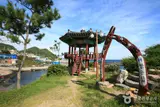
In this fishing village, crabs caught in the waters overlooking Jukdosan Mountain were called daege (snow crab) because their legs resembled bamboo (dae). Based on the village's history, it was designated as the Yeongdeok Snow Crab Origin Village and a commemorative marker was erected. MoreLess
Source: Korea Tourism Organization (TourAPI) · Machine-translated