Jeju Island World Natural Heritage Tour Course 3
4 stops · 1 day
This tour offers a chance to experience Jeju Island's exquisite natural scenery and distinct flavors. Visit Manjanggul Cave, a designated UNESCO World Natural Heritage site, explore Jeju Stone Park, where the stone-centric lifestyle of Jeju's people is vividly preserved, and discover the unique folklore and nature of Jeju at the Jeju Folklore and Natural History Museum.
- Duration
- 1 day
- Distance
- 56.92km
Along the way
- 1Jeju Stone Park
제주돌문화공원
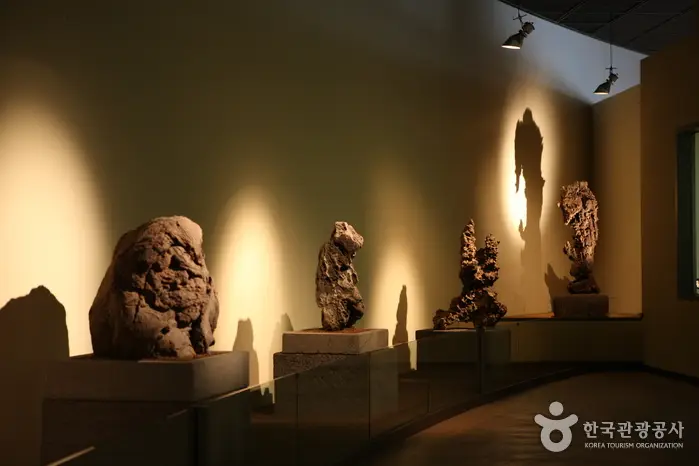
Jeju Stone Park is a museum and ecological park that comprehensively and systematically displays the stone culture of Jeju, the home of stones. The entire park is scheduled to be completed by 2020. In its first phase, exhibition halls such as the Jeju Stone Museum, Jeju Stone Culture Exhibition Hall, and Jeju Traditional Thatched Cottages were completed, opening on June 3, 2006, seven years after construction began. As a place to see Jeju's stone culture all at once, the park is quite large, making a leisurely itinerary recommended. Jeju Stone Park is situated in front of an oreum (volcanic cone), a unique natural heritage of Jeju. Following the stone-stacked rampart-style paths up a gentle slope leads to the park entrance, which offers an expansive surrounding view. MoreLess
- 2Manjanggul Cave
만장굴
Manjanggul Cave is one of the world's finest lava tubes, with a total length of about 7.416m and a partial two-story structure. In particular, the main passage is massive on a global scale, reaching up to 18m in width and 23m in height. The cave was formed about 2.5 million years ago during volcanic eruptions on Jeju Island, when lava overflowing from the Hallasan crater flowed toward the sea, creating such large cavities. The interior resembles an underground palace, giving an imposing and mysterious impression. A stone turtle structure looking like an intricate sculpture is especially popular among tourists as its shape closely resembles Jeju Island. MoreLess
- 3
Lunch (Jeju-eseo Cheotbeonjjae)
점심식사(제주에서 첫번째)
Walking down from the main gate of Samseonghyeol toward Dongmun Market leads to the historical attraction of Ohyeondan. This street is designated as the Jeju Street of Culture, and preparations are underway to welcome visitors, aiming for completion by mid-2011 through the undergrounding of utility poles and road paving works. MoreLess

- 4Jeju Folklore and Natural History Museum
제주도민속자연사박물관
The Jeju Special Self-Governing Province Folklore and Natural History Museum collects, researches, and exhibits Jeju Island's unique archaeological, folkloric, animal, mineral, botanical, and marine life materials. Since its opening on May 24, 1984, it has utilized actual specimens, models, and mannequins to create three-dimensional exhibits, making the exotic Jeju culture easier to understand. Starting with a diorama of large fish and marine life in the lobby, visitors can view the formation history of Jeju Island, various rocks, the vertical plant distribution of Hallasan Mountain, insects, mammals, and other aspects of Jeju's formation and natural ecology at a glance. Visitors can also learn about the past lives of Jeju residents through displays depicting their life cycle, livelihood, food, clothing, and housing. MoreLess
Source: Korea Tourism Organization (TourAPI) · Machine-translated