Immerse in the Superb Vistas of Geoje and Tongyeong
7 stops · 2 days, 1 night
Geoje POW Camp Historic Park is situated on the site where about 170,000 prisoners of war were held during the Korean War. You can experience the tranquil relaxation of the South Sea at Gujora Beach, and feel its invigorating openness at Sinseondae Observatory.
- Duration
- 2 days, 1 night
- Distance
- 91.82km
Along the way
- 1Geoje POW Camp Historic Park
거제포로수용소 유적공원
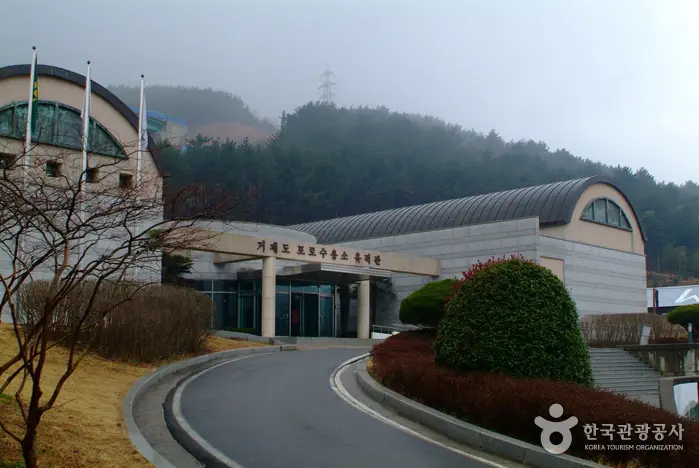
Located in Gohyeon-ri, Sinhyeon-eup, where Geoje City Hall is situated, this is the historic site of the largest prisoner of war camp during the Korean War. Following the eastern foot of Gyeryongsan Mountain (554 m) in Geoje, past the restored old Gohyeonseong Fortress and the adjacent City Hall building, you can see the remains of the POW camp guardhouse on the hill to the left of the Gohyeon Middle School wall. The Memorial Hall features exhibition halls, a theater room, and a souvenir shop. The exhibition halls display the emergence and background of POWs, their daily life, personal relics, uprisings, and releases. The theater room screens a 10-minute video about the prisoners through archival footage filmed at the time and interviews with former POWs. The symbolic sculpture titled "War, Division, and Harmony," along with bullet holes piercing dented steel helmets, reflects the fierce intensity of the battles during the Korean War. MoreLess
- 2
Gujora Beach
구조라해수욕장
Gujora Beach boasts beautiful natural scenery and crystal-clear waters, making it an easily accessible seaside destination. After the POW camp was established in Geoje during the Korean War, it was used as a beach area by US troops and began to become widely known nationwide after 1970. MoreLess
- 3
Lunch (Cheonnyeonsong Raw Fish Restaurant)
점심식사(천년송횟집)
This raw fish restaurant offers views of the sunrise and moonrise between Haegeumgang Island and Sajabawi Rock, serving distinctively fresh, wild-caught raw fish from clean waters according to the season. You can taste fresh seafood freshly harvested by haenyeo (female divers). MoreLess
- 4Sinseondae Observatory
신선대 전망대
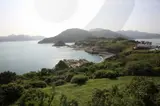
Going down a footpath next to a closed elementary school branch on the right side of Dojangpo Village leads you to Sinseondae. Sinseondae features a large rock settled by the seashore, surrounded by picturesque coastal scenery. To the lower right, you can see Dolteumi and Hammok Beach, along with dotted islands across the blue sea. Sinseondae Observatory is situated on the right on the way to Haegeumgang; it is easily accessible by car, and signs indicating the names of the islands and highlighting great photo spots catch the eye. Around it, you can view the five-colored rocks and the distant landscape of Dadohae (the archipelago). MoreLess
- 5
Accommodation (Caribbean Condotel)
숙박(카리브콘도텔)
A condo-style motel located within the Donam-dong Tourist Complex, it is adjacent to the sea and the tourist complex, serving as an ideal place to sightsee and unwind. The interior design makes effective use of accent halogen lighting and mirrors, creating a cozy and comfortable retreat. MoreLess

- 6
Hallyeosudo Viewing Ropeway
한려수도 조망케이블카
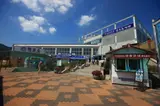
Installed on Mireuksan Mountain, one of Korea's 100 famous mountains, the Hallyeosudo Viewing Ropeway is the nation's first automatic circulating bi-cable system and Korea's longest tourist cable car (1,975 m). Moving at an average speed of 4 meters per second, it takes about 9 minutes to reach the upper station, operating with 48 gondolas in circulation (47 passenger gondolas and 1 cargo gondola). Reaching the summit of Mireuksan Mountain offers panoramic views of the historic site of the Great Battle of Hansan, the 300-ri Hallyeohaesang National Park stretching from Hansando Island to Yeosu, Japan's Tsushima Island, Jirisan Cheonwangbong Peak, and Dolsando Island in Yeosu. MoreLess
- 7Undersea Tunnel (Tongyeong, Gyeongnam)
해저터널 (경남 통영)
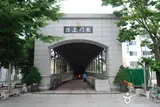
Tongyeong Undersea Tunnel is a subsea tunnel built to connect Tongyeong with Mireukdo Island. Constructed over 1 year and 4 months between 1931 and 1932, it was the first undersea tunnel in the Orient, measuring 483 m in length, 5 m in width, and 3.5 m in height. Before its construction, Mireukdo became an island during high tide and could be crossed on foot only during low tide. The undersea tunnel was constructed to facilitate easier movement as the immigration of Japanese fishermen increased during the Japanese colonial period. It was built by damming both ends of the water and excavating the seabed to place a concrete tunnel. The Chinese inscription "Yongmun Daryang (龍門達陽)" written at the tunnel entrance means "the gate at the entrance of an undersea road connecting an island and the mainland." MoreLess
Source: Korea Tourism Organization (TourAPI) · Machine-translated