Walking Under the Silla Moon: The Best of Gyeongju
4 stops
Gyeongju at night is even more beautiful than during the day. Step away from the bustling streets and take a walk under the Silla moonlight to encounter various cultural heritage sites.
- Distance
- Approx. 17.31 km
Along the way
- 1
Daereungwon Ancient Tomb Complex (Cheonmachong Tomb)
대릉원(천마총)
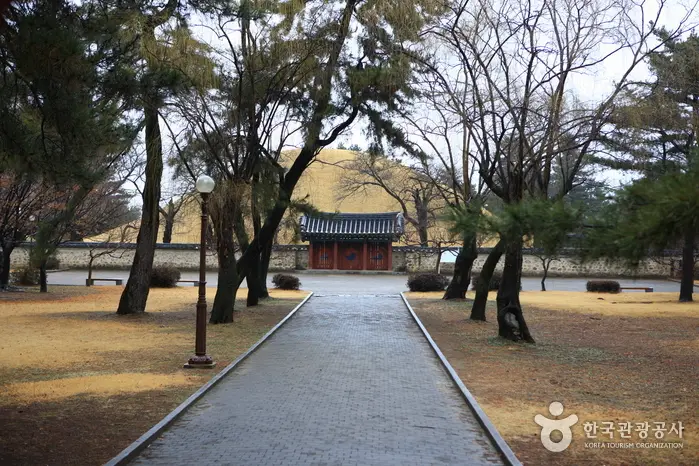
Excavated in 1973, Tomb No. 155, known as Cheonmachong Tomb, is a wooden chamber tomb with a stone mound unique to Silla. With a height of 12.7 meters and a diameter of 50 meters, the mound contains a stone layer made of river stones. Inside this stone layer is a wooden chamber measuring 6.5 meters long, 4.2 meters wide, and 2.1 meters high, with a wooden coffin placed in the center to enshrine the deceased. A total of 11,526 artifacts were unearthed, among which the Cheonmado (Painting of a Heavenly Horse) is a precious painting discovered for the first time in a Korean ancient tomb. MoreLess
- 2Cheomseongdae Observatory
경주 첨성대
Built during the reign of Queen Seondeok of Silla, Cheomseongdae is an astronomical observatory and the oldest and only existing stone structure of its kind in East Asia. Made of granite, it stands 9.17 meters high with a top diameter of 3.1 meters, a bottom diameter of 5.17 meters, and a foundation stone side length of 5.35 meters. The double-layered base and foundation are square-shaped, composed of 8 and 15 long stones, respectively. Above this, the cylindrical body is built with 27 layers, wide at the bottom and narrowing toward the top before becoming vertical at the very top. The number of stones used here is 365, representing the days of a year, and each layer is about 30 cm high. At the top, stones shaped like the Chinese character "井" (well) are stacked in two layers, where it is presumed that some astronomical observation instruments were placed. MoreLess
- 3
Gyeongju Gyerim Forest
경주 계림
Located between Cheomseongdae Observatory and Wolseong Fortress, this forest is a historic site associated with the legend of the birth of Alji, the progenitor of the Gyeongju Kim clan (Historic Site No. 19). During the reign of King Talhae of Silla, Hogong heard a rooster crowing in this forest. When he approached, he found a golden box glowing and hanging from a tree branch. He reported this to the king, who visited the forest himself and took down the golden box. When the lid was opened, a baby boy emerged from the box. Thus, his surname was given as Kim (gold) and his given name as Alji. The forest, originally called Sirim or Gurim, came to be known as Gyerim (Rooster Forest). MoreLess
- 4Gyeongju National Park
경주국립공원
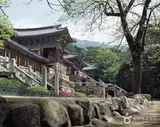
Unlike Seoraksan National Park or Hallyeohaesang National Park, which are centered on natural landscapes such as mountains and seas, Gyeongju National Park is a national park comprised of world-renowned cultural heritage. Gyeongju, where the splendid thousand-year culture of Silla flourished, is steeped in the brilliant traces of national culture left by our ancestors and the grand spirit of the unification of the Three Kingdoms. It is a representative tourist destination in Korea, preserving numerous cultural heritages such as scenic historic sites, legends, and unique folklore at every turn. MoreLess
Source: Korea Tourism Organization (TourAPI) · Machine-translated