Folk Village Road to Suncheon
7 stops · 1 day
Start from Boseong, the home of the Seopyeonje style of pansori, visiting the birthplace of Jeong Eung-min, who was renowned for Boseong Sori. Continue to the tea-scented Boseong Green Tea Plantation, and visit the memorial park of Seo Jae-pil, an independence activist and journalist, to honor his spirit of independence. In addition, take a walk through the tranquil and lyrical Songgwangsa Temple, and visit Suncheon's Naganeupseong Folk Village, which preserves its rich history and tradition.
- Duration
- 1 day
- Distance
- 101km
Along the way
- 1
Jeong Eung-min Historic Site (Pansori Park)
정응민예적지(판소리공원)
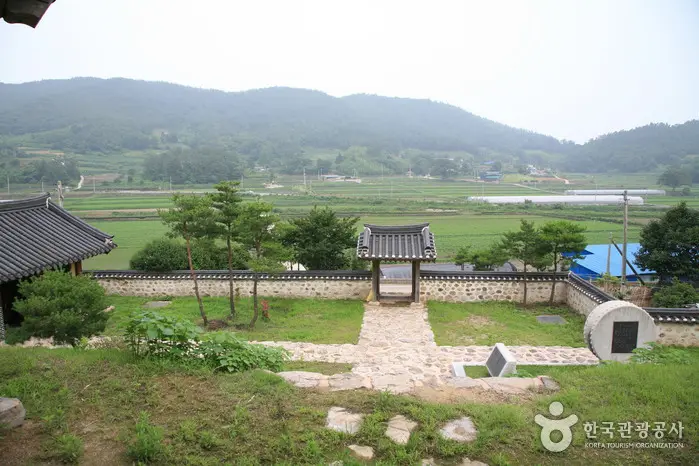
In Dogang Village, Yeongcheon-ri, Hoecheon-myeon, lies the birthplace site and artistic memorial monument of Songgye Jeong Eung-min, who established the prestigious Pansori family of Boseong Sori. Above the artistic memorial monument are the graves of three generations of the vocal lineage: Jeong Jae-geun, Jeong Eung-min, and Jeong Gwon-jin. The Boseongje style developed into a more majestic vocal school by complementing the shortcomings of the Gangsanje style. Today, in the pansori world, Boseongje is recognized not merely as a branch of Seopyeonje (Seopyeonje – Gangsanje – Boseongje), but as a distinct school standing shoulder to shoulder with Seopyeonje and Dongpyeonje. MoreLess
- 2Daehan Dawon Tea Plantation (Daehan Tea Tourist Farm)
대한다원(대한다업관광농원)
Located in Boseong, Jeollanam-do, this tourist tea farm was opened by Daehan Tea Co., Ltd. Boseong Tea Plantation. Established in 1957, it is a historic tourist tea farm with nearly half a century of heritage. In 1959, Daehan Tea Co., Ltd. established a large-scale green tea plantation around Oseonbong Peak at an altitude of 350 meters, and it currently produces over 120 tons of green tea annually. Daehan Tea Co., Ltd. consists of the 1st Tea Plantation in Bongsan-ri and the 2nd Tea Plantation in Hoecheon-ri; the 1st Tea Plantation is designated and operated as the only tourist tea farm in Korea. MoreLess
- 3
Birthplace and Memorial Park of Songjae Seo Jae-pil
송재 서재필선생 생가와 기념공원
Set against the beautiful scenery of Juamho Lake, this is a space where the spirit of Songjae Seo Jae-pil, an independence fighter who lived an unyielding life, rests. In front of his birthplace in Mun-deok-myeon, where he dedicated his entire life to the independence movement, a memorial park was built to commemorate him. It features a replica of the Independence Gate, which embodies his spirit, and exhibits around 800 of his personal relics.MoreLess
- 4
Suncheon Dolmen Park
순천 고인돌 공원
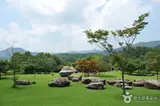
Suncheon-si, which expanded its area by merging with Seungju-gun, attracts many tourists with attractions such as Jogyesan Provincial Park, renowned temples like Songgwangsa and Seonamsa, Naganeupseong Folk Village, and the Daedaepogu reed beds. The Dolmen Park, established along the lakeside of Juamho in Songgwang-myeon, was created by relocating and restoring prehistoric relics that were in submerged areas due to the construction of the Juam Dam (1984–1991). The submerged area spans a vast region across 49 ri and 9 adjacent myeon within the three cities and counties of Suncheon, Boseong, and Hwasun along the Boseonggang River basin, a tributary of the Seomjingang River. MoreLess
- 5
Songgwangsa Temple
송광사
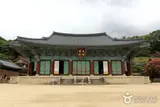
Located on the northern foot of Jogyesan Mountain, Songgwangsa Temple is known as one of Korea's Three Jewel Temples (Sambosachal), along with Haeinsa Temple in Hapcheon (Dharma Jewel) and Tongdosa Temple in Yangsan (Buddha Jewel). It began when Master Hyerin built a small hermitage in the late Silla period and called it Gilsangsa Temple. It became the Sangha Jewel Temple after National Preceptor Bojo Jinul moved the Jeonghye Gyeolsa (Samadhi and Prajna Community) here to make it a center for practice and meditation. It has produced 16 National Preceptors, including National Preceptor Bojo Jinul. MoreLess
- 6Naganeupseong Folk Village
낙안읍성민속마을
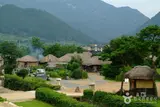
Having served as Mahan land during the Samhan period, Pajiseong during the Baekje period, and the county seat of Nagan-gun during the Goryeo period, its Joseon-era fortress, Dongheon (government office), Gaeksa (guest house), General Im Gyeong-eop monument, marketplace, and thatched-roof houses have been preserved in their original form. Together, the fortress and village were designated as Historic Site No. 302 for the first time in Korea. In the 6th year of King Taejo of Joseon (1397), when Japanese pirates invaded, General Kim Bin-gil (posthumous title Yanghye-gong), a native of this region, raised a righteous army and built an earthen fortress for defense. Three hundred years later, in the 4th year of King Injo (1626), General Im Gyeong-eop (posthumous title Chungmin-gong) was appointed magistrate of Nagan and rebuilt it into the current stone fortress. Unlike fortresses in other regions, it was built on flat land using 1–2m square natural stones, with a height of 4m, a width of 3–4m, and a total circumference of 1,410m. Firmly constructed in a rectangular shape as if embracing the residential grounds of three villages—Dongnae, Namnae, and Seonae—it remains unbroken and magnificent even today, after nearly 400 years. MoreLess
- 7Suncheonman Bay Nature Reserve
순천만 자연생태공원
Spanning Gyoryang-dong, Daedae-dong, and the villages of Jungheung-ri, Haechang-ri, and Seonhak-ri in Haeryong-myeon, Suncheon-si, the reed fields of Suncheonman Bay cover a total area of about 150,000 pyeong. Both sides of the approximately 3-kilometer waterway from the confluence of Dongcheon Stream, which runs through downtown Suncheon, and Isacheon Stream, flowing from Sangsa-myeon, down to the estuary are completely covered with reed beds. Unlike typical reed beds where reeds grow sparsely or in scattered patches, these reeds grow taller than a person's height and are densely packed without any gaps. Known as the largest reed colony in Korea, the fluffy clusters of reed seeds present a magnificent view as they are tinted in silver, gray, and gold depending on the sunlight. Furthermore, the scenery of the entire reed forest swaying in unison to the timely sea breeze is as majestic and beautiful as the rolling waves on a vast sea. MoreLess
Source: Korea Tourism Organization (TourAPI) · Machine-translated