Experience the Seas and Sights of Gangwon-do to the Fullest
6 stops · 1 day
While Gangwon-do is renowned for its sea, it is also a place where you can take in breathtaking mountain views. This enriching course lets you see the distinctive shingle-roofed houses (neowajib) unique to Gangwon-do, explore the culture of Samcheok in downtown, visit a natural cave with rare stalactites, and take in the charming coastal harbor and lighthouse.
- Duration
- 1 day
- Distance
- 70.61km
Along the way
- 1
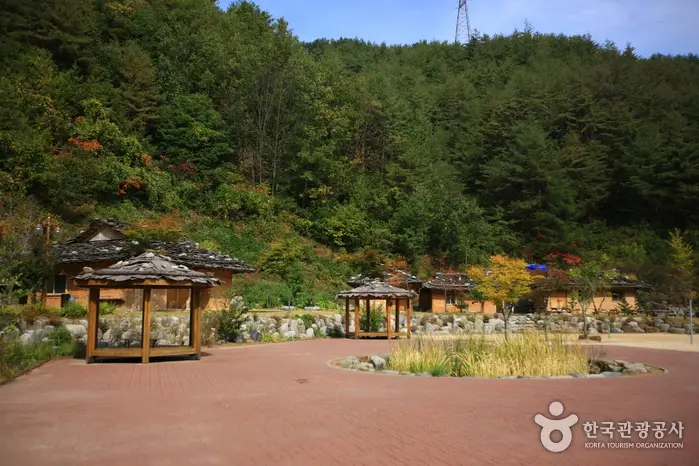
Samcheok Neowa Village
삼척 너와마을
Make memories enjoying mountain village kalguksu (noodle soup) on a snowy night. "Neowa" refers to wooden shingles cut from pine or oak to a thickness of 4–5 cm, width of 20–30 cm, and length of 40–60 cm, and a neowajib is a house with a roof made of these shingles. In Gangwon-do, they are also called nuejib or neung-ejib. A visit to Sin-ri Village allows you to see these traditional shingle-roofed houses that are gradually disappearing. MoreLess
- 2
Samcheok Culture & Art Center
삼척문화예술회관
Samcheok Culture & Art Center opened in June 1994 in Seongnam-dong near Jukseorugak Pavilion and Osipcheon Stream. A large-scale multipurpose facility equipped for performing arts such as music, theater, and dance, as well as exhibitions and film screenings, it has served as a center for regional arts alongside culture-loving locals. MoreLess
- 3
Lunch (Sanya)
점심식사(산야)
Designated as an "Exemplary Restaurant" by Donghae City and an "Eco-Friendly Restaurant" by the Donghae YMCA, this establishment serves fresh organic vegetables and raw meats. MoreLess
- 4
Cheongok Natural Cave
천곡천연동굴
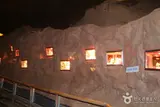
Cheongok Natural Cave in Donghae is a horizontal limestone cave measuring 1,400 meters in total length, estimated to have formed 400 to 500 million years ago. It is the only cave in Korea located right in the center of a city. Featuring the nation's longest ceiling dissolution troughs, curtain-like stalactites, travertine terraces, stalactite waterfalls, and rare rock formations, it holds great academic value while preserving its ancient mystique. Inside, approximately 20 types of secondary formations, including stalactites, stalagmites, and stone pillars, create an ideal natural learning environment for earth sciences. In addition, an exhibition hall and an audiovisual room are available to enhance educational benefits and foster an understanding of the overall cave ecosystem, the birth of the universe, and the formation process of caves. MoreLess
- 5Mukho Lighthouse
묵호 등대
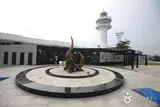
Mukho Port opened on August 11, 1941, initially functioning as a trading port focused on anthracite before developing into the fishing port it is today. Mukho Lighthouse was erected on June 8, 1963, contributing to the safe navigation of vessels. Perched at an elevation of 67 meters above sea level, the white circular reinforced-concrete lighthouse stands 12 meters tall with a two-story interior structure. In spring, forsythias bloom brightly around a small park offering panoramic views of the sea. MoreLess
- 6
Mukho Port
묵호항
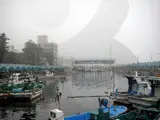
Mukho Port in Donghae-si, Gangwon-do, opened in 1941 as the premier trading port on the east coast and has since transformed into a major fishing base for the region. If you time your visit with the early morning arrival of fishing vessels, you can find freshly caught fish for sashimi at the fish market, and watching the live fish auctions is a uniquely fascinating experience. There are also shops where you can purchase dried seafood and other local specialties. MoreLess
Source: Korea Tourism Organization (TourAPI) · Machine-translated