A One-Day Historical Tour of Yeoncheon Looking North
7 stops · 1 day
This is a one-day course in Yeoncheon overlooking the northern lands. Though it is a rather long journey through deep mountain terrain with slow development, it offers a rare opportunity to experience untouched, pristine nature. From the deep valleys of Godaesan Mountain to various observatories, a water tower remaining since the Japanese colonial period, and the historic Jeongok-ri Prehistoric Site, discover the traces of history.
- Duration
- 1 day
- Distance
- 92.26km
Along the way
- 1
Godaesan Mountain
고대산
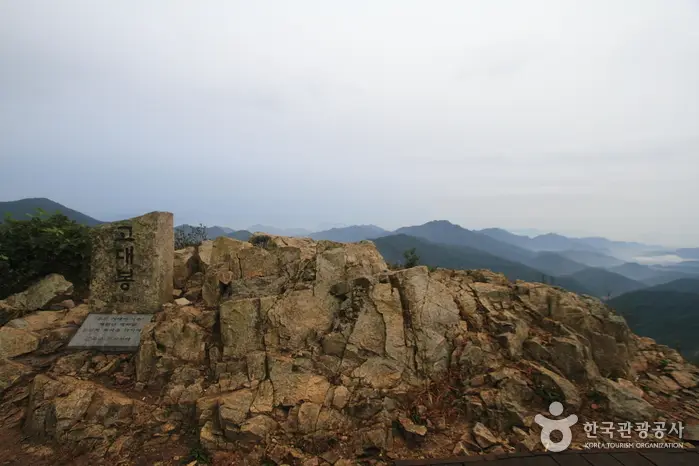
Located on the path to Mount Geumgang and adjacent to Sintan-ri Station, the terminal point where the Gyeongwon Line railway was severed, Godaesan Mountain (832.1 m) boasts blessed natural scenery and a well-preserved ecosystem. As the only place in the country where hikers can look out over the lands of North Korea, it is an ideal destination for hiking trips. The origin of the name Godaesan (高臺山) is locally associated with the word 'keungorae' (large furrow), which seems linked to the place name Sintan (firewood and charcoal) and refers to 'banggorae' (the flues beneath the ondol floor through which flame and smoke pass). With its deep valleys and high peaks, it came to be called Godaesan (High Terrace Mountain). MoreLess
- 2Key Observatory
열쇠전망대
Named with the hope of becoming the 'Key to Unification,' the Key Observatory was built on April 11, 1998, by the Republic of Korea Army's Key Division in Dapgok-ri, Sinseo-myeon, Yeoncheon-gun. It offers panoramic views of the North and opened to the public for security education and to console the longing of displaced people. Visitors go up to the observatory after soldiers finish a simple identity check and open the barricade leading to the site. From the observatory, one can see North Korean lands surrounded by lush greenery at a glance, though photography is strictly prohibited here. MoreLess
- 3Typhoon Observatory
태풍전망대
Built on December 3, 1991, by the Invincible Typhoon Division, Typhoon Observatory is located on Suribong Peak, the highest point of Bikkisan Mountain in Jung-myeon, about 65 km from Seoul and about 140 km from Pyongyang. Initially, the Southern Limit Line and Northern Limit Line were set 2 km from the Military Demarcation Line, but as North Korea erected fences close to the Armistice Line in 1968, South Korea also partially installed fences in 1978. Typhoon Observatory is located 800 meters from the Armistice Line and 1,600 meters from a North Korean guard post, making it famous as the closest observatory to North Korea along the 155-mile Demilitarized Zone. MoreLess
- 4
Lunch (Hanam Sikdang)
점심식사(하남식당)
This is the largest restaurant in the Hantangang National Tourist Site, famous for its exceptionally delicious freshwater spicy fish stew (maeuntang). MoreLess

- 5
Yeoncheon Water Tower
연천급수탑
Built in 1919 at the midpoint of the Incheon–Wonsan line, the Yeoncheon Station Water Tower supplied water to steam locomotives. Steam locomotives and water towers first appeared in September 1899 with the opening of the Gyeongin Line between Seoul and Incheon, serving as vital transportation infrastructure until their decline with the introduction of diesel locomotives in the 1950s. While other Yeoncheon Station facilities built during the Japanese colonial period were destroyed by bombing during the Korean War, the water tower remains well-preserved in its original form. At the time of its operation, it is said that bartering and commercial trade actively took place while water was being supplied to the locomotive tender, serving as a bustling marketplace. MoreLess

- 6
Jaein Falls
재인폭포
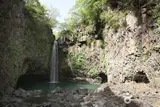
Originating from Jijangbong Peak (877 m), this waterfall is nestled deep on the western side of the Hantan River. The clear and cool stream cascading down the approximately 18-meter-high waterfall combined with the surrounding dense forest creates picturesque scenery. It attracts many visitors, especially in summer and autumn. According to legend, a local magistrate fell in love with the striking beauty of a tightrope entertainer's (jaein) wife, so he made the entertainer walk a tightrope over the waterfall to fall to his death in an attempt to claim the wife, after which the wife took her own life. Since then, people have called this waterfall Jaein Falls, reflecting the tragic sorrow of the entertainer. MoreLess
- 7
Historic Site in Jeongok-ri, Yeoncheon
연천 전곡리 유적
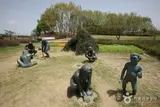
A representative Paleolithic site in Korea, this area gained attention in the winter of 1978 when an American soldier visiting the Hantangang Resort discovered stone tools on the surface. The soldier brought the collected stone tools to the late Professor Kim Won-yong of Seoul National University. Together with Professor Jeong Young-hwa of Yeungnam University, they identified them as Acheulean-type Paleolithic artifacts, bringing worldwide recognition to this historic Paleolithic site. MoreLess
Source: Korea Tourism Organization (TourAPI) · Machine-translated