Exploring the Culture and Nature of Gochang, Jeonbuk
10 stops · 6 hours
Gochang in Jeollabuk-do is a place blessed with fine mountain scenery and delicious food. Enjoy the charm of Gochangeupseong Walled Town, the dolmen sites, and tranquil Seonunsa Temple, and visit the birthplace of poet Midang. This course lets you fully experience the rich flavors of Jeonbuk, from the art of Gochang to its local delicacies.
- Duration
- 6 hours
- Distance
- 30.62km
Along the way
- 1Gochangeupseong Walled Town
고창읍성
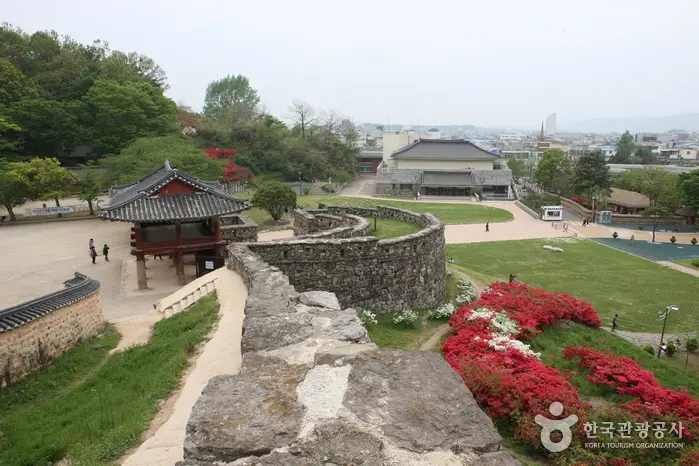
Gochang has the highest concentration of dolmens among all county-level areas in Korea. Home to Gochangeupseong Walled Town (Moyangseong Fortress), Seonunsa Temple, pansori theorist Dongni Shin Jae-hyo, and poet Midang Seo Jeong-ju, Gochang began its history as "Morobiri-guk" among the 54 small states of Mahan during the Samhan period. In the Baekje period, it was called "Moryangburi-hyeon" or "Moyang-hyeon," and has been called "Gochang-hyeon" since the Goryeo dynasty. Gochang is a historic settlement nestled against the long Noryeong Mountain Range with Bangjangsan Mountain at its back and facing the West Sea. In particular, Gochang was established along the trailing ridge of Bangjangsan Mountain, one of the three sacred mountains of Jeonbuk.MoreLess
- 2
Gochang Dolmen Site
고창 고인돌 유적
About 4 km from Gochang-eup, beside the platform for crocks behind the house of Mr. Kim Yeong-in in Jidong Village, Dosan-ri, stands one well-preserved northern-style dolmen (two flat stones set upright on both sides with a capstone laid on top). Heading about 3 km toward Seonunsa Temple brings you to a dolmen cluster stretching 2 km across Sanggap-ri in Asan-myeon, and Jukrim-ri, Maesan-ri, and Songam-ri in Gochang-eup. Here, 447 dolmens, including a massive one estimated at 150 tons (5 m long, 4.5 m wide, and 4 m high), are individually marked with white paint and unique identification numbers. This dolmen cluster offers a glimpse into village settlements and life as early as the Bronze Age. On November 29, 2000, it was registered as a UNESCO World Heritage site alongside the dolmen sites in Ganghwa and Hwasun, and around that time, the historic sites around Sanggap-ri and Jukrim-ri were neatly refurbished. MoreLess
- 3
Gochang Dolmen Site
고창 고인돌 유적
About 4 km from Gochang-eup, beside the platform for crocks behind the house of Mr. Kim Yeong-in in Jidong Village, Dosan-ri, stands one well-preserved northern-style dolmen (two flat stones set upright on both sides with a capstone laid on top). Heading about 3 km toward Seonunsa Temple brings you to a dolmen cluster stretching 2 km across Sanggap-ri in Asan-myeon, and Jukrim-ri, Maesan-ri, and Songam-ri in Gochang-eup. Here, 447 dolmens, including a massive one estimated at 150 tons (5 m long, 4.5 m wide, and 4 m high), are individually marked with white paint and unique identification numbers. This dolmen cluster offers a glimpse into village settlements and life as early as the Bronze Age. On November 29, 2000, it was registered as a UNESCO World Heritage site alongside the dolmen sites in Ganghwa and Hwasun, and around that time, the historic sites around Sanggap-ri and Jukrim-ri were neatly refurbished.MoreLess
- 4
Seonunsa Temple (Gochang)
선운사(고창)
Said to have been founded in 577 (the 24th year of King Wideok of Baekje) by Master Geomdan, Seonunsa Temple is one of the two head temples of the Jogye Order in Jeollabuk-do, along with Geumsansa Temple. According to historical records preserved at the temple, it was once a grand monastery housing 89 hermitages and over 3,000 monks practicing asceticism at its peak. Today, only the main temple and the hermitages of Dosoram, Chamdangam, Dongunam, and Seoksangam remain. MoreLess
- 5
Lunch (Gohyang Sikdang)
점심식사(고향식당)
The main menu item at Gohyang Sikdang is grilled pungcheon eel. Pungcheon eel is a type of freshwater eel found in places where river water and sea water meet, but the pungcheon eel of Seonunsan Mountain is exceptionally clean-tasting and savory.MoreLess
- 6
Birthplace of Midang Seo Jeong-ju
미당 서정주 생가
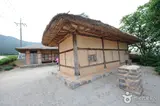
Midang was born on May 18, 1915, in Jinma Village, Seonun-ri, Buan-myeon, Gochang-gun, Jeonbuk. He studied Chinese classics in his youth and attended the Central Buddhist Academy before making his literary debut in 1936 when his poem "Wall" won the Dong-A Ilbo New Spring Literary Contest. He engaged in full-fledged literary activities while leading the literary coterie magazine "Siinburak" (Poet's Village) alongside Kim Gwang-gyun, Kim Dal-jin, and Kim Dong-ni. MoreLess
- 7Gochangeupseong Walled Town
고창읍성
Gochang has the highest concentration of dolmens among all county-level areas in Korea. Home to Gochangeupseong Walled Town (Moyangseong Fortress), Seonunsa Temple, pansori theorist Dongni Shin Jae-hyo, and poet Midang Seo Jeong-ju, Gochang began its history as \"Morobiri-guk\" among the 54 small states of Mahan during the Samhan period. In the Baekje period, it was called \"Moryangburi-hyeon\" or \"Moyang-hyeon,\" and has been called \"Gochang-hyeon\" since the Goryeo dynasty. Gochang is a historic settlement nestled against the long Noryeong Mountain Range with Bangjangsan Mountain at its back and facing the West Sea. In particular, Gochang was established along the trailing ridge of Bangjangsan Mountain, one of the three sacred mountains of Jeonbuk. MoreLess
- 8
Seonunsa Temple (Gochang)
선운사(고창)
Said to have been founded in 577 (the 24th year of King Wideok of Baekje) by Master Geomdan, Seonunsa Temple is one of the two head temples of the Jogye Order in Jeollabuk-do, along with Geumsansa Temple. According to historical records preserved at the temple, it was once a grand monastery housing 89 hermitages and over 3,000 monks practicing asceticism at its peak. Today, only the main temple and the hermitages of Dosoram, Chamdangam, Dongunam, and Seoksangam remain.MoreLess
- 9
Lunch (Gohyang Sikdang)
점심식사(고향식당)
The main menu item at Gohyang Sikdang is grilled pungcheon eel. Pungcheon eel is a type of freshwater eel found in places where river water and sea water meet, but the pungcheon eel of Seonunsan Mountain is exceptionally clean-tasting and savory. MoreLess
- 10
Birthplace of Midang Seo Jeong-ju
미당 서정주 생가
Midang was born on May 18, 1915, in Jinma Village, Seonun-ri, Buan-myeon, Gochang-gun, Jeonbuk. He studied Chinese classics in his youth and attended the Central Buddhist Academy before making his literary debut in 1936 when his poem 'Wall' won the Dong-A Ilbo New Spring Literary Contest. He engaged in full-fledged literary activities while leading the literary coterie magazine 'Siinburak' (Poet's Village) alongside Kim Gwang-gyun, Kim Dal-jin, and Kim Dong-ni.MoreLess
Source: Korea Tourism Organization (TourAPI) · Machine-translated