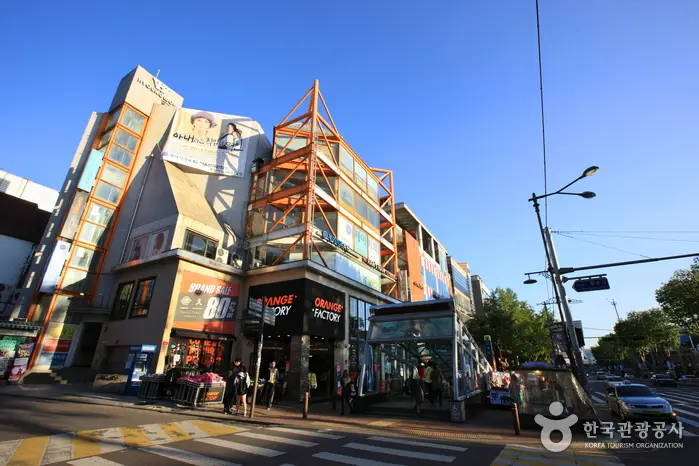
Past and Present of Hyehwa-dong, a Village Inside the City Walls
4 stops · 6 hours
Take a moment to escape the bustle of the world while enjoying the endless feast of colors offered by nature around Myeongnyun-dong, passing through Hyehwa-dong Rotary to Sungkyunkwan, Jonggyo, and the Native Botanical Garden of Changgyeonggung Palace. This ancient neighborhood inside the fortress walls is where the past and present blend more seamlessly than anywhere else. Let us share and enjoy this special beauty. Source: Walking Hanyangdoseong City Wall Along Stories.
- Duration
- 6 hours
- Distance
- 9.22km
Along the way
- 1
Daehak-ro
대학로
Extending 1.1 km from the Jongno 5-ga Intersection in Jongno-gu, Seoul, to Hyehwa-dong Rotary, this street was opened as a street of culture and arts by capitalizing on the area's unique characteristics and was given the name "Daehak-ro." Centered around Marronnier Park, Daehak-ro has developed into a street of art and culture densely packed with cultural facilities, including the Korean Culture and Arts Foundation, art centers, various arts organizations, performance venues, and galleries. It is the heart of Korean theatrical performance and a vibrant multicultural zone filled with large and small theaters, unique fashion shops, cultural spots, and popular restaurants. Colorful street performances take place every weekend around Marronnier Park opposite Seoul National University Hospital, and distinctive street festivals are also held in spring and summer. MoreLess
- 2
Seoul Munmyo Shrine and Sungkyunkwan
서울 문묘와 성균관
This site is a shrine honoring Confucius, who synthesized Confucian teachings, along with other ancient sages, and served as the highest national educational institution. During China's Tang Dynasty, Confucius was posthumously honored as King Munseon (King of Culture and Propagation), so it was called Munseonwangmyo, and from the Yuan Dynasty onward, it became known as Munmyo. It consists of Daeseongjeon (Confucian shrine architecture) and Myeongnyundang (lecture hall architecture), along with the former dormitories of Dongjae and Seojae, as well as Jongyeonggak and Hyanggwancheong. In front of Myeongnyundang stands a ginkgo tree designated as Natural Monument No. 59, and in spring and autumn, the Seokjeon rite is held to honor Confucius and other sages. The eastern and western dormitories (Dongjae and Seojae) of Munmyo are also referred to as Sungkyunkwan. MoreLess
- 3Jongmyo Shrine [UNESCO World Heritage]
종묘 [유네스코 세계문화유산]
Jongmyo is a royal shrine where the spirit tablets of the successive kings and queens of the Joseon Dynasty, as well as posthumously honored kings and queens, are enshrined. Spanning an area of 56,500 pyeong, the grounds house buildings including the Main Hall (Jeongjeon), the Yeongnyeongjeon Hall of Eternal Peace, Jeonsacheong, Eosuksil, Hyangdaecheong, and Sindang. The Jongmyo Daeje ancestral rite performed here was a national event dating back to the Three Kingdoms period. Rituals offering ancestral rites to past monarchs were the nation's foremost events and the foundation of the ruling order during the dynastic era. MoreLess
- 4
Native Botanical Learning Ground
자생식물학습장
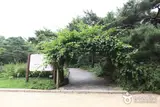
There is a botanical garden located inside Changgyeonggung Palace. Next to it is the Native Botanical Learning Ground, a small garden or arboretum-like area; both the botanical garden and the learning ground are quite cozy and well-maintained. Jongmyo Shrine is connected via a footbridge, and you might even spot Eurasian red squirrels scurrying across the walking paths. This educational ground gathers various plants native to Korea's mountains and fields so that urban children can learn about their ecology. MoreLess
Source: Korea Tourism Organization (TourAPI) · Machine-translated